Elham Asaad Buaras
The International Court of Justice (ICJ) has ruled that Myanmar committed genocide against its Rohingya Muslim minority, holding the state responsible for atrocities carried out during its military crackdown in 2017.
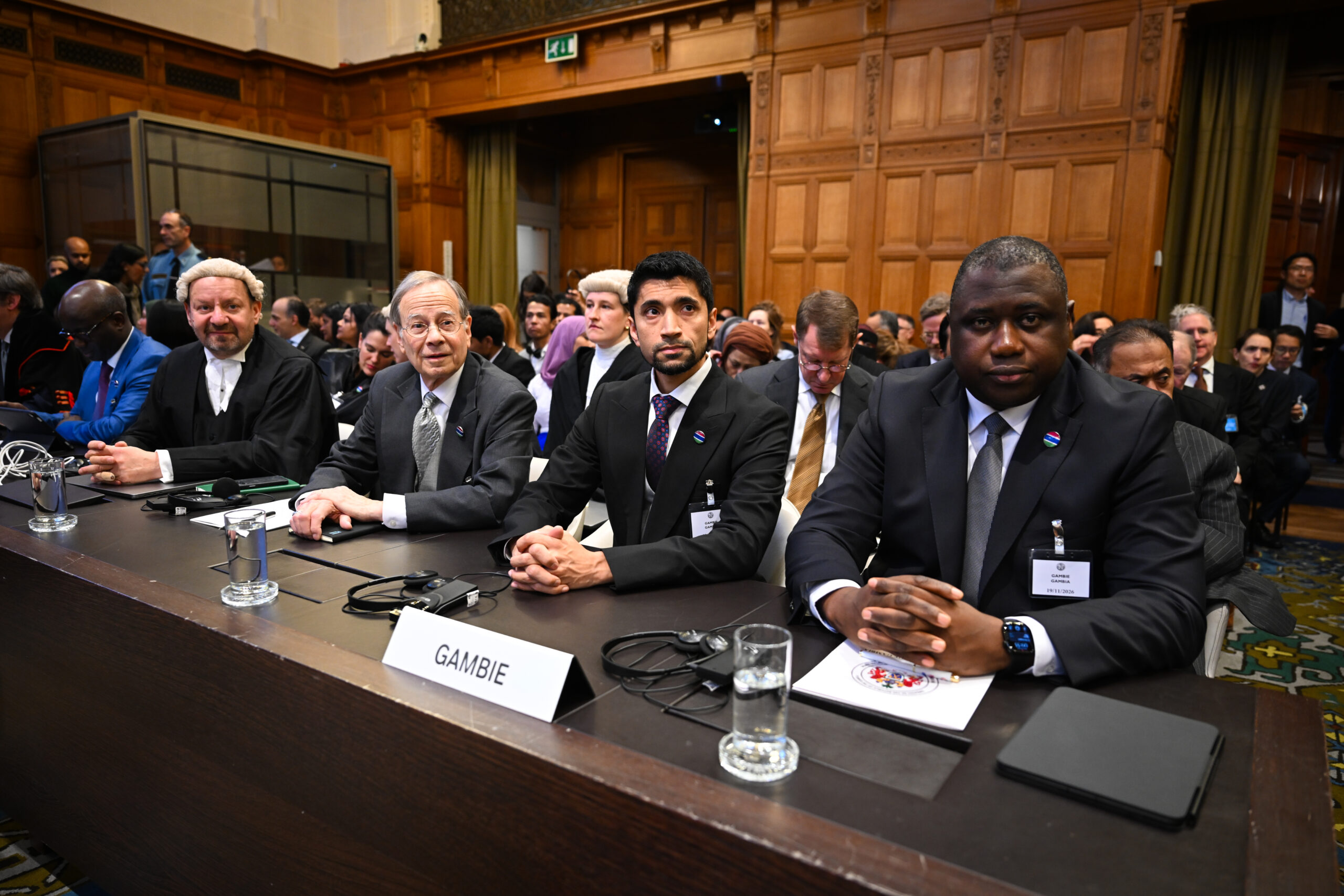
In a judgment delivered in The Hague on November 19, the United Nations’ highest court found, by nine votes to six, that Myanmar had violated the 1948 Genocide Convention through its treatment of Rohingya Muslims in northern Rakhine State.
The 191-page ruling marks a major legal victory for the Rohingya and The Gambia, which brought the case in November 2019 after years of evidence documenting mass killings, rape, torture and the destruction of villages.
The court declared: “The Republic of the Union of Myanmar has committed genocide against the Rohingya group in northern Rakhine State.”
Judges found that Myanmar’s security forces had committed acts prohibited under Article II of the Convention, with the specific intent to destroy a substantial part of the Rohingya population.
“The Court is fully convinced that Myanmar committed acts falling under Article II (a), (b) and (d) of the Genocide Convention with an intent to destroy a substantial part of the Rohingya population of Myanmar,” the judgment stated in paragraph 468.
These provisions cover killing members of a protected group, causing serious bodily or mental harm, and imposing measures intended to prevent births within that group.
The court also found that Myanmar had failed to prevent genocide by individuals operating alongside its security forces and had breached its obligation to punish those responsible.
It ordered Myanmar to investigate individuals reasonably suspected of involvement and prosecute and punish them where warranted. The country must also compensate Rohingya victims where restitution would be inadequate, with the amount to be determined in subsequent proceedings.
Myanmar must report to the court within two years. The judgment further requires it to facilitate the safe, voluntary and dignified return of displaced Rohingya, including refugees in Bangladesh, and restore or replace property lost through its unlawful actions.
The case examined the military campaign against one of the world’s most persecuted minority populations.
In August 2017, Myanmar’s military launched what it described as clearance operations in Rakhine State following attacks by the Arakan Rohingya Salvation Army (ARSA) on security positions.
The crackdown involved widespread killings, sexual violence, torture and the burning of villages, as well as attacks on civilians attempting to flee. More than 700,000 Rohingya crossed into neighbouring Bangladesh, joining an already displaced population in refugee camps around Cox’s Bazar.
Estimates presented in the case put the death toll during the military operations at approximately 10,000. Médecins Sans Frontières estimated that between 6,700 and 9,867 people were violently killed during the first month alone, including at least 730 children under five.
Evidence also documented at least 1,834 victims of rape, alongside widespread physical injuries and severe psychological trauma.
Judges examined atrocities in villages including Min Gyi, Chut Pyin and Maung Nu, where civilians were killed, sexually assaulted and driven from their homes. They also considered discriminatory legislation, anti-Rohingya propaganda and the systematic marginalisation of the community.
A central issue was whether Myanmar’s actions demonstrated the specific intent to destroy the Rohingya, in whole or in substantial part, as required under international law.
Myanmar maintained that its security forces were responding to ARSA attacks and seeking to restore stability in Rakhine State. It argued that civilian deaths could have resulted from fighting with armed groups or collateral damage, and that allegations of unlawful killings and excessive force did not, in themselves, establish genocidal intent.
It also challenged the credibility of evidence gathered by United Nations investigators, arguing that it had investigated allegations of military misconduct and prosecuted some perpetrators.
The ICJ’s majority rejected these arguments, finding that the pattern of killings, serious bodily and mental harm, sexual violence, attacks on children and destruction of Rohingya settlements demonstrated the required genocidal intent.
The Gambia initiated proceedings in November 2019, arguing that Myanmar had breached the Convention through a campaign of mass killings, sexual violence and the destruction of the Rohingya population.
Although the atrocities took place thousands of miles from The Gambia, it brought the case on the basis that obligations under the Genocide Convention are owed collectively by states parties, giving each a legal interest in ensuring compliance. The proceedings were backed by the Organisation of Islamic Cooperation.
In January 2020, the ICJ ordered Myanmar to take provisional measures to prevent acts of genocide, protect evidence and report on its compliance. The latest judgment also found that Myanmar had failed to preserve evidence relating to allegations of genocide, despite that earlier order.
The court did not uphold The Gambia’s separate claim that Myanmar had directly and publicly incited private individuals to commit genocide.
The ruling establishes Myanmar’s responsibility as a state but does not amount to criminal convictions against individual military commanders. Any prosecutions would require separate legal proceedings.
The Rohingya remain largely confined to refugee camps in Bangladesh, where hundreds of thousands have lived since fleeing Myanmar. They continue to face restrictions on movement, limited access to education and healthcare, and persistent insecurity. Renewed violence and instability inside Myanmar have further undermined prospects for their safe return.
The judgment has wider implications for the enforcement of the Genocide Convention, adopted in 1948 in the aftermath of the Holocaust. It reinforces the principle that states can be held internationally responsible for genocide and that all parties to the Convention have a legal interest in ensuring its provisions are upheld.
The case adds to a growing number of proceedings before the ICJ concerning alleged violations of the Convention, including South Africa’s separate case against Israel over its military campaign in Gaza. Although the cases involve distinct circumstances and evidence, both highlight the court’s role in determining state responsibility under international law.
Myanmar now faces further proceedings over compensation and pressure to investigate and prosecute those responsible. For the Rohingya, the ruling provides long-awaited legal recognition of the genocide, but does little to resolve the immediate uncertainty surrounding their safety, rights and prospects of returning home.
Feature photo: Gambia’s lawyer Arsalan Suleman attends a hearing at the International Court of Justice (ICJ) in The Hague, Netherlands, on November 19, 2026, as the court delivers its landmark judgment finding Myanmar responsible for genocide against the Rohingya Muslim minority. The ruling found, by nine votes to six, that Myanmar had violated the 1948 Genocide Convention through its treatment of the Rohingya in northern Rakhine State. (Credit: Mouneb Taim/AA)