Elham Asaad Buaras
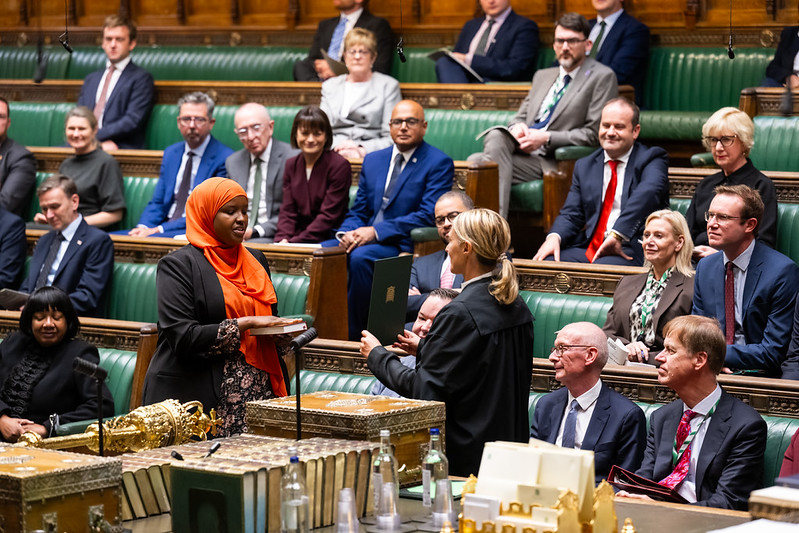
Sagal Abdi-Wali delivered her maiden speech in the House of Commons on November 2, marking several historic firsts. She became the first woman, black person and Muslim to represent Holborn and St Pancras, and the first British Somali woman to sit in the House.
“It is also an extraordinary honour to become the first woman, black person and Muslim to represent Holborn and St Pancras in Parliament, and the first British Somali woman to sit in this House,” she told MPs.
Reflecting on her journey from arriving in Camden as a six-year-old refugee fleeing Somalia’s civil war to becoming an MP, the Labour politician said she hoped her election would inspire young women and girls to pursue public life, regardless of their background. She urged them not to let their heritage or circumstances limit their ambitions.
Abdi-Wali won the Holborn and St Pancras by-election on October 8 with 12,292 votes, defeating Green Party candidate Zack Polanski, who received 8,928.
Her campaign was marked by racist abuse targeting her Somali origins. Reform UK’s home affairs spokesperson, Zia Yusuf, attracted criticism after posting on X that Labour’s prospective candidate had been born in Somalia, adding: “Do you understand what’s happening?”
Following her victory, she faced further online hostility, including AI-generated images depicting her wearing a lifejacket and messages describing her as a “traitor”. Abdi-Wali said she had not seen most of the images and slurs and had never felt personally unsafe during the campaign. She warned, however, that such abuse could discourage others from entering public life.
Her election brings the estimated number of Muslim MPs in the Commons to 26, around four per cent of its membership. Muslims accounted for 6.5 per cent of the population of England and Wales in the 2021 Census, compared with 4.9 per cent in 2011. These figures relate to different populations and should not be treated as directly comparable measures of representation.
Neither the Commons nor the Lords maintains an official register of members’ religious affiliations, so estimates are based on publicly available information.
Muslim representation in Westminster has grown since Mohammad Sarwar became Britain’s first Muslim MP in 1997, winning Glasgow Govan. The political routes into Parliament, however, have become more varied.
The 2024 general election saw four Muslim independent candidates defeat Labour MPs: Adnan Hussain in Blackburn, Ayoub Khan in Birmingham Perry Barr, Iqbal Mohamed in Dewsbury and Batley, and Shockat Adam in Leicester South.
Their campaigns were shaped largely by anger over Gaza and dissatisfaction with Labour’s position on the conflict. Adam, who defeated Labour’s Jonathan Ashworth by 979 votes, held up a Palestinian keffiyeh during his victory speech and declared: “This is for the people of Gaza.”
Issues including the NHS, housing, the cost of living and public services also featured in the campaigns. The results highlighted the diversity of Muslim voters’ political priorities and challenged assumptions about established party loyalties.
Party affiliations have continued to change. Zarah Sultana left Labour in July 2024, initially sitting as an independent before joining Your Party in November 2025.
Of the 26 MPs identified in this analysis, 19 sit as Labour MPs, two as Conservatives, four as independents and one as a member of Your Party.
These developments have prompted wider questions about how mainstream parties engage with Muslim voters, particularly on foreign policy, human rights and international conflicts. The independent victories also demonstrated that Muslim representation in Parliament is not confined to established party structures.
Muslim representation extends to the House of Lords, where an estimated 21 current peers are publicly identified as Muslim.
They include Lord Khan of Tooting, formerly Sadiq Khan, who became a life peer in August 2026 and took his seat in September while continuing as Mayor of London. Before becoming mayor, Khan served as an MP and became the first Muslim to attend the British Cabinet.
Other Muslim peers include Baroness Manzila Pola Uddin, the first Muslim woman to sit in the Lords, Baroness Sayeeda Warsi and Baroness Farmida Bi, CBE, British corporate solicitor and the EMEAPAC Chair of Norton Rose Fulbright who became life peer in January 2026.
Abdi-Wali’s experience has renewed attention on the barriers facing Muslim and minority ethnic candidates in public life. The racist abuse directed at her, including attacks on her Somali origins and AI-generated images, raised concerns about the environment in which candidates from minority backgrounds campaign and seek elected office.
The distinction between legitimate scrutiny of a candidate’s policies and hostility directed at their ethnicity, religion or family background remains important.
In March 2026, the Government adopted a non-statutory definition of Anti-Muslim Hostility, providing a framework for further parliamentary scrutiny and work by organisations addressing discrimination and community relations.
Campaigners have warned that racism and Islamophobia can deter political participation, particularly among Muslim women and candidates from refugee and immigrant backgrounds. Organisations monitoring anti-Muslim incidents and supporting Muslim women in public life have called for greater action against intimidation and discrimination.
The wider question is whether Westminster adequately reflects the society it represents and whether people from all backgrounds can participate in public life without intimidation. Muslim MPs, like all parliamentarians, are elected to represent their entire constituencies, not exclusively people who share their faith.
Based on publicly reported Muslim identification and current parliamentary affiliations. Parliament does not maintain an official register of MPs’ religious affiliations. Constituency and year refer to the MP’s first election to the Commons.
Working list of 21 current peers, based on publicly available identification and biographies. The House of Lords does not maintain an official register of members’ religious affiliations.
Note: Lord Ahmed of Rotherham retains his life peerage and title but is no longer a member of the House of Lords. He resigned from the House in November 2020 and is therefore excluded from the current membership count.
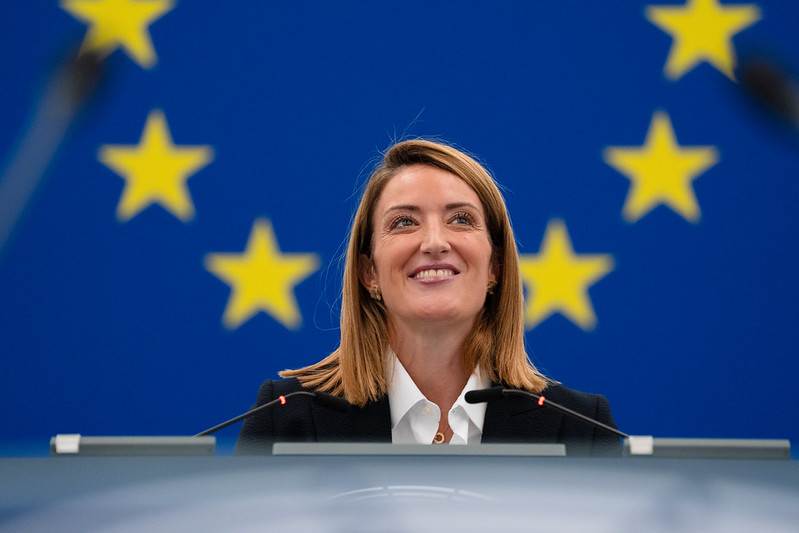
Feature photo: Sagal Abdi-Wali, Labour MP for Holborn and St Pancras, is sworn in at the House of Commons on 12 October 2026. Her election as the first British Somali woman MP, celebrated in her maiden speech, has brought renewed attention to Muslim representation in Westminster. (Credit: House of Commons/Flickr CC)