Harun Nasrullah
British military equipment continued to be exported to Israel during its war on Gaza under both Conservative and Labour governments, according to previously undisclosed records showing that at least 35 export licences were used to supply military goods between October 2023 and July 2025.
An investigation by Channel 4 News’s FactCheck team, published on November 13, found that 67 licences naming the Israeli government as an end user remained active when the Conservatives left office in July 2024. At least 25 had been used to export military goods since Israel launched its assault on Gaza.
The licences covered components for combat aircraft, helicopters, military vehicles, missile systems, targeting equipment and military communications systems.
Their combined authorised value was approximately £164 million. However, this represented the maximum value permitted under the licences, not the actual value of goods exported. Some open licences also allowed unlimited exports.
The findings are based on previously undisclosed records obtained from the Department for Business and Trade following repeated Freedom of Information requests. They provide details of individual export licences in July 2024, July 2025 and July 2026, including whether they had been used.
The records raise questions about Britain’s continued military exports to Israel despite mounting evidence of serious violations of international law in Gaza.
In January 2024, the International Court of Justice (ICJ) ruled that Palestinians in Gaza had plausible rights under the Genocide Convention and that there was a real and imminent risk of irreparable prejudice to those rights.
Three months later, hundreds of British lawyers, including former Supreme Court justices, called on the government to suspend arms exports to Israel. The Conservative government declined to impose a general suspension.
Among the licences used during this period were permissions covering targeting equipment, military aircraft engines, combat and trainer aircraft, and surface-to-air missile components.
One licence, valued at £25 million, covered parts and software for military aero engines, potentially including engines used in military aircraft or drones. Another, worth £88 million, authorised exports of combat aircraft components.
The combined authorised value of licences recorded as having been used was approximately £150 million, although the actual value of exports was likely considerably lower.
Two licences had been fully exhausted: one worth approximately £66,000 for trainer aircraft components and another valued at £109,000 for combat aircraft parts. However, the records did not establish whether their full authorised values had been exported during the Gaza war.
Professor Janina Dill, Dame Louise Richardson Chair in Global Security at the University of Oxford’s Blavatnik School of Government, said Britain should have used its influence as a major arms exporter to Israel.
While acknowledging that allegations of genocide remained contested, she said it was “hardly contestable in 2024” that Israel was committing grave breaches and war crimes.
The Conservative Party did not respond to repeated requests for comment from Channel 4 News.
When Labour took office in July 2024, it announced a partial suspension of arms export licences to Israel, pledging to halt exports that could be used by the Israeli military in Gaza.
In September 2024, the government confirmed that approximately 30 licences were being suspended after concluding there was a clear risk that certain military exports could be used to commit or facilitate serious violations of international humanitarian law.
The restrictions covered targeting equipment and components for military aircraft, including helicopters, fighter jets and drones.
However, two significant exemptions remained. Military training equipment could still be exported on the grounds that it would not be used directly in combat. The government also continued to allow exports of components for the F-35 fighter jet, arguing that British-made parts formed part of an international supply chain serving several countries and that withdrawing them would undermine the wider programme.
The newly disclosed records suggest that substantial export permissions remained in place despite the suspensions.
By July 2025, 55 licences naming the Israeli government as an end user were still active. At least 10 had been used to export military goods since Labour took office.
These included components for combat aircraft, military aero engines, aircraft ground equipment, cockpit displays, communications systems, surface-to-air missiles, trainer aircraft and training ammunition.
Channel 4 News confirmed that licences covering surface-to-air missile components, combat aircraft, trainer aircraft and military aircraft displays had been used since September 2024.
The combined authorised value of active licences had risen from approximately £164 million in July 2024 to £498 million a year later.
Five major licences covering combat aircraft components accounted for £454 million of that total. Channel 4 News understood that these were connected to the F-35 global supply chain.
These figures represent the maximum value permitted under the licences, not the amount actually exported. They also exclude open licences allowing unlimited exports. The combined authorised value of licences recorded as having been used under Labour by July 2025 was approximately £2.3 million.
The investigation also identified discrepancies between the government’s description of some exports as training-related and the equipment specified in the licensing records.
In a November 2025 letter to Parliament’s Committees on Arms Export Controls, then-minister Chris Bryant said that 33 of the 55 remaining licences naming the Israeli government as an end user related to trainer aircraft.
However, Channel 4 News identified only 16 licences explicitly describing trainer aircraft components. A further five appeared to cover trainer aircraft alongside components for other military or combat aircraft.
Several other licences referred specifically to combat aircraft and military aero engines, without mentioning training.
The investigation understood that some components designed or manufactured for combat aircraft or drones had been authorised for export to Israel on the basis that they would be used in trainer aircraft.
This raised questions about how the government had presented the exports to Parliament, particularly as an annex to Bryant’s letter described the components as having “no combat utility”.
Professor Dill warned that even equipment supplied for training could have wider military consequences by freeing up other resources for combat operations.
She said the government’s obligations under the Genocide Convention and Geneva Conventions required it to consider whether military supplies could indirectly facilitate violations of international law.
“We have to contend with the fungibility of weapons and the awareness that the government must have that other states are unwilling to suspend their own licences,” she told Channel 4 News.
She pointed to continued American and German arms supplies to Israel, arguing that British exports ostensibly intended for training could free up other weapons for use in Gaza and the occupied West Bank.
The latest records, covering July 2026, showed that the number of active licences naming the Israeli government as an end user remained at 55, with their combined authorised value standing at approximately £492 million.
The five major combat aircraft licences associated with the F-35 programme continued to account for most of the total.
The investigation found no evidence that these licences had been used, although it cautioned that government usage data was incomplete and might not capture every export.
The July 2026 records also showed changes to the licensing portfolio, including new permissions covering military guidance and navigation equipment. Some earlier licences, including those for training ammunition, were no longer listed.
Responding to the investigation, the Labour government disputed Channel 4 News’s characterisation of the export licensing system, arguing that the documents provided only a partial picture.
A government spokesperson said: “Our suspension of licences that might be used by the IDF in Gaza remains fully in place, and we have suspended or refused over 80 export licences on this basis.”
The spokesperson added that all remaining licences had been “rigorously assessed” to ensure they could neither be used by the Israeli military in Gaza nor materially contribute to the occupation.
The government said the remaining permissions largely covered training equipment, submarine components and missile defence systems.
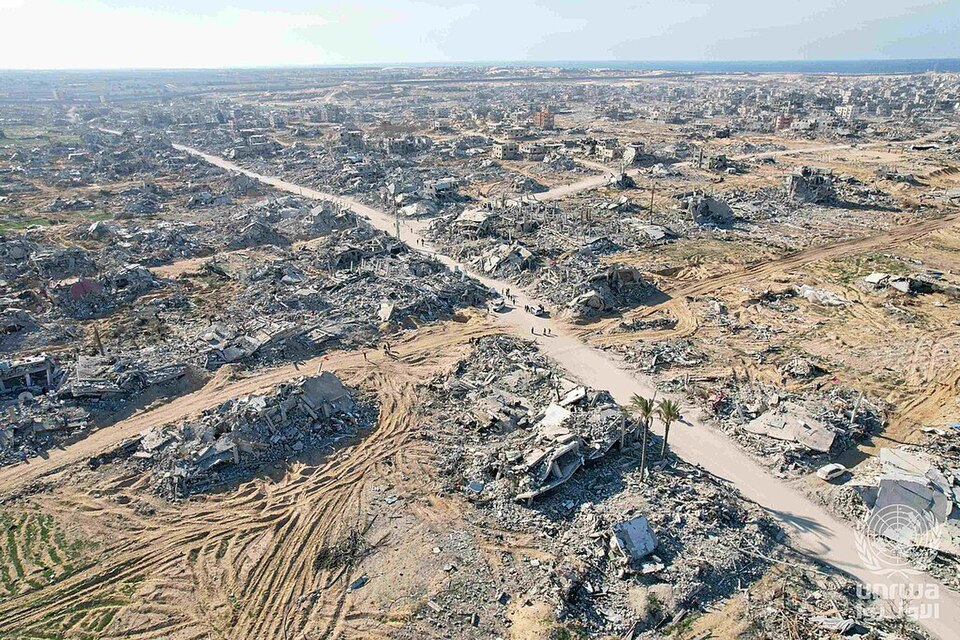
Feature photo: An aerial view shows widespread destruction in Rafah, Gaza, on January 12, 2025, following the withdrawal of Israeli forces and the start of the ceasefire. Newly disclosed records reveal that UK military exports to Israel continued under both Conservative and Labour governments during the war. (Credit: Ashraf Amra/UNRWA CC)
Petition demanding public inquiry into Britain’s role in Gaza passes 100,000 signatures
Eight in 10 Britons regard Israel as serious threat to world peace, survey finds
Lewisham mosque hits back at Charity Commission over Palestine sermons