Elham Asaad Buaras
Social media accounts allegedly linked to Israeli officials and America’s MAGA movement amassed millions of views promoting narratives associating last month’s unrest in France with Islam and uncontrolled immigration, according to an internal French Foreign Ministry assessment.
Reported on November 9, it found that the 10 most-viewed posts from MAGA-linked officials, media and influencers attracted more than 49 million views on X between October 16 and 18. The equivalent Israeli-linked posts generated more than 35 million views, compared with 2.8 million for pro-Russian accounts.
An EU assessment found that a covert Russian network exploited the unrest with fake Western media videos and false claims about immigrants, sexual violence and imminent terrorist attacks.
The findings document alleged efforts to associate unrest with Muslim communities and migration, but do not establish foreign instigation.
US President Donald Trump urged France to “close your borders”, linking the unrest to immigration, although most people arrested were French citizens, Le Monde reported on October 23.
Israeli Prime Minister Benjamin Netanyahu invoked Hamas, saying: “If we don’t stop Hamas here, you will see them in the streets of Paris, and it is exactly what’s happening right now.”
President Macron condemned the comments as “unacceptable as they are stupid”.
Le Monde documented how MAGA-linked figures, Russian state media and European far-right commentators connected the demonstrations with migration, Arab identity, Islam and terrorism, describing the international response as an alliance of reactionary political forces exploiting the unrest.
The EU assessment also examined activity between October 7 and 21 and identified a covert Russian network known as “Operation Overload”. It circulated videos impersonating Western media outlets, including false claims that migrants had raped protesters or terrorist attacks were imminent. It sought to “depict the French leadership as weak and increasingly authoritarian”.
The restricted-circulation document said such events offered opportunities to “undermine national governments, fuel fear and division” and shape perceptions ahead of elections.
It found no evidence that Moscow or other foreign actors had instigated or escalated the protests, describing the activity as “the opportunistic exploitation of unrest”.
The Russian Foreign Ministry did not respond. In August, spokesperson Maria Zakharova rejected allegations of Russian disinformation about France’s 2027 elections, saying they would “not be the last concoction” used to manipulate public opinion.
An Alliance4Europe investigation published on October 22 analysed 547,471 posts and 12,839 comments across social media and news websites in nine languages, tracing Russian-linked activity to September 1.
Researchers identified a bot network attributed with high confidence to Russia’s Doppelganger operation. It published 639 coordinated messages in French, German, English and Polish during the six weeks before October 17, attracting about 7.4 million views. The campaign exploited genuine grievances, including rising living costs, to turn anger against Ukraine and European support for Kyiv. Researchers found no foreign role in originating the protests, but documented efforts to amplify anger, applaud violence and deepen divisions.
Alliance4Europe found that about one in 33 French-language posts directly blamed migrants or Islam, compared with almost one in five English-language posts.
A false claim that immigrants had set fire to Limoges town hall circulated 3.6 times more frequently in English than French, appearing in the dataset about six hours earlier in English.
Researchers identified 1,018 articles across 28 websites belonging to the Russian Pravda network, which circulated material in nine languages, often copying content between sites within minutes. Researchers said the network targeted search engines and AI systems as well as readers, citing chatbots repeating its misleading claims.
A Le Monde investigation on October 23 examined misleading images, fabricated claims and politically motivated reporting around the October 17 and 18 demonstrations.
France’s AI-assisted fact-checking service Vera received 9,500 questions between October 1 and 19; 49 per cent concerned the authenticity of reports about violence and incidents following the demonstrations.
The Disinformation Commission identified videos falsely presented as scenes from the unrest, including Kurdish demonstrations in Paris, a 2023 school bus fire in Nîmes and destruction after Paris Saint-Germain’s 2025 Champions League celebrations. They drew nearly 10 million views. Fabricated material also included an AI-generated image of a Pink Panther-costumed demonstrator confronting French riot police, based on photographs from Kenya.
Monitoring organisation Droit à l’info found that audiovisual segments linking immigration and insecurity increased 4.7-fold from October 17, from 12 to 57 a day across 20 TV channels and radio programmes. Of 170 segments identified, 130 explicitly linked immigration with violence surrounding the demonstrations.
Droit à l’info identified about 1,420 accounts publishing 2,090 posts linking immigration to insecurity; they attracted 125,600 likes, 13,200 shares and an estimated 1.8 million to 5.4 million views. On CNews, cases at risk of misinformation rose from 5.4 to 23 a day after October 17.
Far-right figures amplified claims challenged by authorities. European Parliament member Marion Maréchal called the violence “ethnic riots” on BFM-TV. CNews journalist Paul Amar claimed Jewish-owned businesses were specifically targeted in Marseille, contradicted by police and the Representative Council of French Jewish Institutions.
CNews journalist Lara Tchekov claimed rioters had Kalashnikov rifles and Skorpion submachine guns. France’s domestic intelligence agency, DGSI, disputed this; Tchekov later apologised for an “approximation”.
Le Monde reported that far-right commentators attributed violence to the supposed ethnic backgrounds of those involved, overlooking the varied backgrounds of detainees, shortcomings in police deployment and the role of live TikTok videos in mobilising participants.
Le Monde documented how Russian, Iranian, Algerian, Turkish and Chinese state media circulated images of the unrest, while international influencers reframed the demonstrations around migration and national identity.
RT circulated in 13 languages a video falsely presenting a Madrid counterfeit-goods market as a Paris riot scene. It drew more than 2.4 million views, according to Spanish fact-checker Maldita.
In Brazil, pro-Bolsonaro influencer Rosane Cabral Barbosa Lima accused Macron of having “destroyed Paris” and shared an AI-generated image of the Eiffel Tower topped by a Jordanian flag, which she presented as Palestinian. The British Disinformation Commission also identified about 40 misleading publications circulating through Russian influence networks, some under fabricated Agence France-Presse or Le Monde identities.
French officials said there had been no visible foreign interference behind the protests but acknowledged “foreign manipulation of information”.
The Institute for Strategic Dialogue has described Operation Overload as a persistent Russian operation impersonating trusted sources. France’s watchdog Viginum published a report on it and similar operations in 2024.
The French and EU assessments, Le Monde and Alliance4Europe document efforts to shape perceptions of the unrest by associating Muslims and immigrants with violence and insecurity. They do not show that these actors caused the demonstrations; they show how the unrest was used to amplify misleading claims and hostility towards Muslim communities.
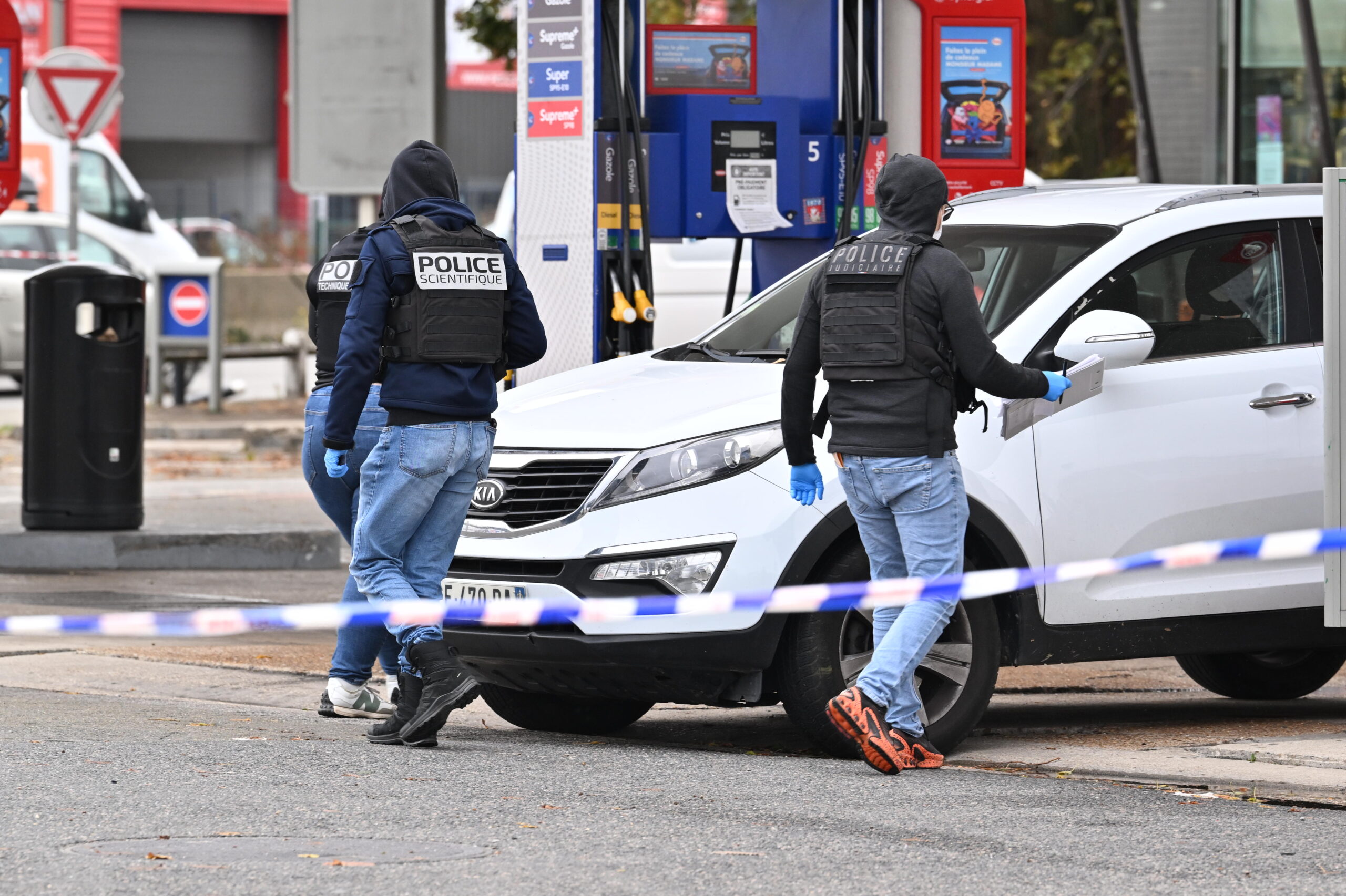
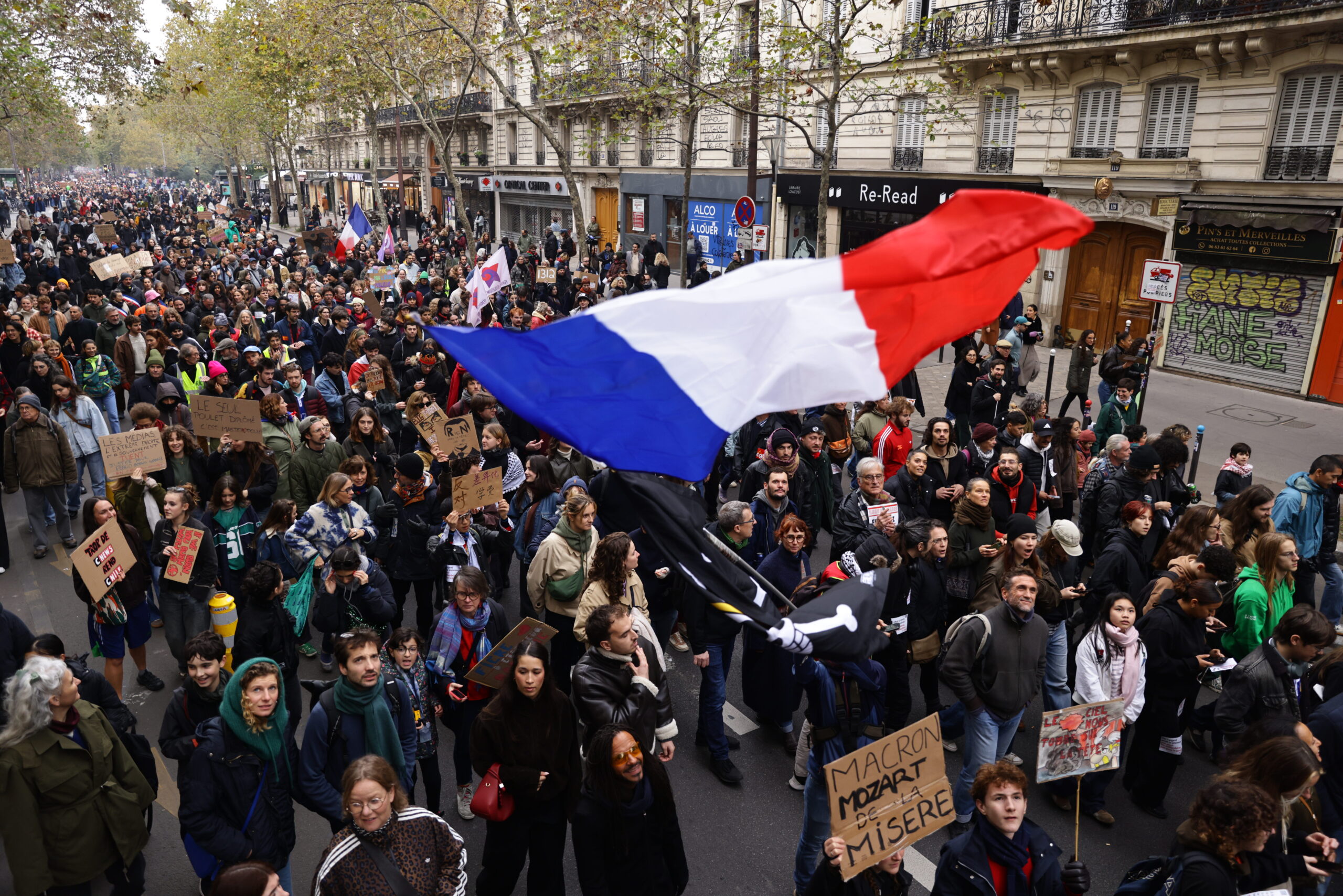
Feature photo: Demonstrators gather at Place de la République during a protest in Paris, France, on November 7, amid unrest that became the subject of competing international influence campaigns, with Israeli-linked, MAGA and Russian accounts circulating misleading narratives associating violence with Muslims and immigration (Credit: İbrahim Ezzat/AA)