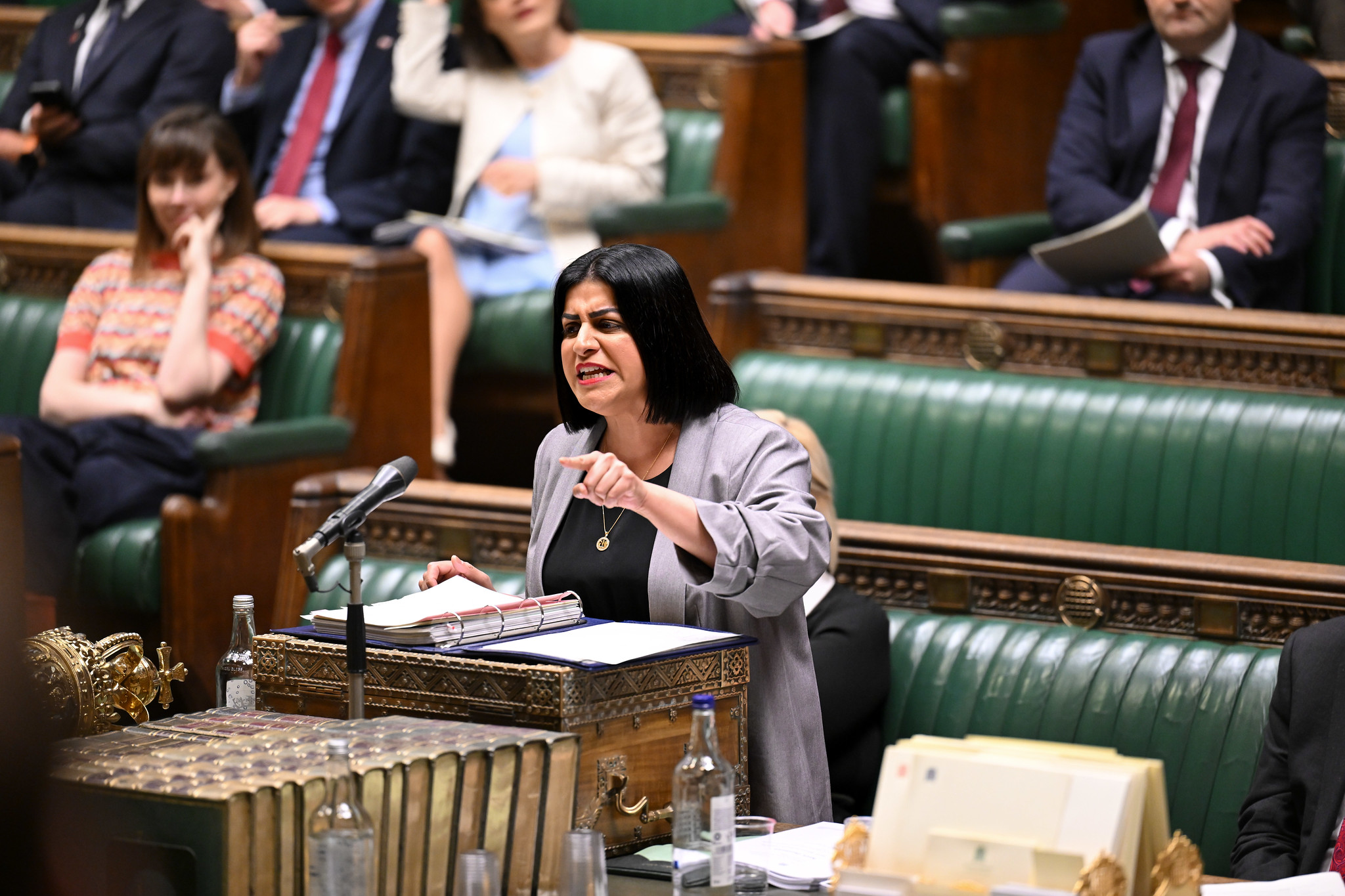
In her recent statement, the Home Secretary announced a series of changes to Britain’s immigration system, including doubling the qualifying period for indefinite leave to remain (ILR) from five to ten years. Throughout her statement, the word ‘fair’ was used 21 times. This raises a fundamental question: is humanity and fairness truly at the heart of the Government’s approach to immigration?
Sections of Britain’s political and media elite would have us believe that many of the country’s problems can be attributed solely to immigration. It is a narrative that appears to have increasingly shaped the Home Secretary’s approach, and her policy changes fall hardest on those who came through the proper legal routes. This is despite the clear economic benefit migration brings to the UK. The Migration Advisory Committee’s own analysis found that Skilled Worker visa holders make a positive net contribution to the public finances over their lifetimes, with median earnings of £56,600. The Office for Budget Responsibility has gone even further, stating that a migrant arriving at 25 on average earnings contributes more over their lifetime than a British-born worker on the same salary, because Britain did not pay for their schooling.
Of course, our immigration system needs reform, but it should be guided by evidence, humanity and a genuine understanding of the people whose lives are shaped by it, rather than by political expediency.
Consider the position of many asylum seekers who arrive in Britain. They enter a kind of ghost-like existence, suspended in limbo, often for prolonged periods, unable to properly rebuild their lives. They are restricted from working and contributing to the economy, despite the skills, experience and ambition many bring with them. This is surely one of the most glaring shortcomings of our immigration system. If the Government is serious about creating a fairer system that benefits Britain, why is it not prioritising reforms that allow people to become productive members of society while their claims are being considered?
Instead, the Home Secretary has chosen to introduce changes that risk creating an even greater sense of injustice, punishing people who have already followed the rules.
Take someone who came to Britain legally, earns £40,000 a year, pays their taxes and makes a meaningful contribution to our economy. They arrived with the understanding that, after five years, they would have a route to settlement. Now, through no fault of their own, that route is being doubled retrospectively. What message does that send to someone who has done everything asked of them?
This is not simply a hypothetical concern. My office has been inundated with emails from people directly affected by these proposed changes. Only recently, I was in contact with a constituent whose child was studying for their GCSEs. Having lived in this country since the age of ten, this child had been working towards their exams, as any young person would, with the expectation that their hard work would help secure their future. Yet, upon hearing about the proposed changes to indefinite leave to remain, they became so disillusioned that they decided to give up studying altogether.
Consider the impact of that for a moment. A child who has spent years building a life in this country, studying, integrating and preparing for their future, suddenly feels that the future they had been working towards is no longer within reach. What incentive is there to work hard when the goalposts can be moved at any moment? What does that uncertainty do to a young person’s sense of belonging, ambition and hope?
What is at stake here is about far more than an additional five years. We risk undermining the very pipeline of hardworking, talented and ambitious people who contribute to Britain’s economy and society. We risk telling people that no matter how much they contribute, how diligently they follow the rules or how deeply they put down roots, their future in this country can still be fundamentally altered by a political decision.
People like my young constituent should understand that Britain is a country in which hard work, ambition and contribution are recognised and rewarded. Yet what message do these changes send? That the promises made by Government are not necessarily promises at all, but temporary arrangements that can be withdrawn at the political convenience of a minister who has never met the people whose lives they are changing.
Need I remind the Home Secretary of the young Shabana Mahmood, the beneficiary of an immigration system which sought to integrate people like her and reward hard work? Her parents came to this country from Kashmir. Their immigration status did not prevent her from studying at Oxford, having a successful career and becoming one of the most powerful people in the country.
So, I return to the question posed at the beginning: is this really a fair and humane immigration system? One that encourages hard work, rewards contribution, promotes integration and delivers a net benefit to Britain?
I would argue that it is not. And repeating the word ‘fair’ 21 times does not make it so.
Feature photo: Home Secretary Shabana Mahmood speaking in the House of Commons. Her proposed immigration reforms, including doubling the qualifying period for indefinite leave to remain from five to ten years, have raised questions about fairness, contribution and the Government’s treatment of those who have followed the rules. (Credit: House of Commons/Flickr CC)