Elham Asaad Buaras
A Somali-American Uber driver remains in critical condition after a passenger allegedly strangled him and repeatedly ran him over with his own vehicle, as anger mounts among Minnesota’s Somali and Muslim communities over prosecutors’ decision not to pursue the attack as a hate crime.
Mohamed Yusuf, 51, suffered life-threatening injuries in the November 14 assault in Hopkins, near Minneapolis. His family believes he was targeted because of his Somali identity, citing the passenger’s alleged remark that he did not like the name Mohamed.
Although the suspect, 25-year-old Samit Apurva Patel, has been charged with second-degree attempted murder and first-degree carjacking, Hennepin County prosecutors say there is insufficient evidence to establish a racial or ethnic motive. The decision has prompted calls for further investigation and criticism from community representatives, who argue that the alleged remark warrants closer scrutiny.
According to the criminal complaint, Yusuf was speaking to his brother, who was also working as an Uber driver, when Patel asked his name. After Yusuf introduced himself as Mohamed, Patel allegedly responded: “I don’t like that name.”
Yusuf reportedly told his brother that the passenger appeared drunk. The journey continued until Patel instructed him to turn away from his home.
Moments later, Yusuf’s brother heard him screaming in Somali that he was being killed and that the passenger was choking him with a belt. He subsequently heard Yusuf shouting that he was being run over.
Investigators allege Patel strangled Yusuf with his seat belt, dragged him from the vehicle and drove over him several times before leaving the scene.
Yusuf was found in a roadside ditch, approximately a mile from where he had dropped off the passenger. Police used location data from his smartwatch and a thermal-imaging drone to locate him.
He suffered multiple broken bones, including fractured ribs and a leg, spinal injuries, collapsed lungs and extensive internal bleeding. Several organs had to be removed, according to the criminal complaint.
Yusuf has undergone multiple operations and remained in critical condition at Hennepin County Medical Centre as of November 19, with prosecutors describing his prognosis as poor.
Patel, of Hopkins, was arrested and subsequently charged by Hennepin County prosecutors on November 17 with second-degree attempted murder and first-degree carjacking.
According to the complaint, Patel’s parents contacted police requesting a welfare check after he returned home appearing intoxicated, distressed and behaving belligerently. Officers found Yusuf’s damaged vehicle outside the family home.
Patel initially claimed the vehicle belonged to him before acknowledging that he had taken an Uber home. He reportedly told officers he had been drinking with friends at a birthday celebration and later said he had “freaked out at something that’s not there”.
The charges carry potential prison sentences of up to 20 years each.
Patel was released from custody on November 18 after posting $800,000 bail, subject to conditions including electronic home monitoring, restrictions on alcohol and drugs, and a prohibition on leaving Minnesota without permission. He is due back in court on December 16.
Yusuf’s family has described the assault as a hate crime, pointing to the alleged remark about his name and the circumstances of the attack.
Although Hopkins police initially said they were examining all possible motives, including ethnic bias, Hennepin County Attorney Mary Moriarty subsequently said prosecutors lacked sufficient evidence to prove beyond reasonable doubt that the attack was motivated by racial or ethnic prejudice.
No bias-related charge or sentencing enhancement was pursued alongside the attempted murder and carjacking charges.
The decision has prompted anger among Somali and Muslim community representatives, who argue that the alleged remark should be examined as a possible indication of anti-Somali or anti-Muslim hostility.
The Minnesota chapter of the Council on American-Islamic Relations (CAIR-MN) welcomed the criminal charges but called for investigators to continue examining whether prejudice played a role.
Its Executive Director, Jaylani Hussein, said the alleged statement about Yusuf’s name raised serious questions that should not be dismissed. The organisation urged authorities to examine Patel’s background, statements and any potential history of bias.
Yusuf’s niece, Fartuun Mohamed, also questioned the significance of the alleged remark.
“Need I remind people that you don’t choose your name at birth; it’s given to you,” she said at a press conference, adding that the passenger’s alleged declaration that he disliked the name Mohamed carried a deeper significance because of its association with Islam.
The case has also prompted renewed calls to strengthen Minnesota’s response to hate crimes. State Senator Zaynab Mohamed discussed potential legislative changes in an interview with MPR News on November 18, following the decision not to pursue a bias-related charge.
The assault has deeply shaken Minnesota’s Somali rideshare community, with drivers expressing concern about their safety while working, particularly overnight.
Eid Ali, President of the Minnesota Uber/Lyft Drivers Association, said the organisation had received hundreds of calls from concerned drivers, community members and supporters following the attack.
Some Somali drivers have become frightened to continue working overnight shifts, amid concerns that they could face similar hostility.
Community members held a candlelight vigil in downtown Hopkins on November 18 in support of Yusuf and his family, while further demonstrations and calls for accountability followed.
Minnesota State Senator Omar Fateh previously condemned the assault and demanded an immediate and transparent investigation.
“Nobody should have to fear for their life because of who they are,” Fateh said.
Uber expressed shock over the attack, confirmed that Patel had been banned from its platform and said it would cooperate with law enforcement.
The incident comes amid heightened concerns about hostility towards Minnesota’s Somali community. In October, CAIR-Minnesota warned that President Donald Trump’s remarks targeting Somali Americans risked encouraging anti-Somali hostility.
Hussein said Trump was “placing a target on the backs of Somali Americans” and called for stronger protection for mosques, Somali-owned businesses and community centres.
Yusuf’s relatives have described him as a devoted father and hardworking family man who was earning a living as an Uber driver when he was attacked.
His family launched a GoFundMe appeal to help cover medical treatment, rehabilitation and household expenses. The fundraiser had raised more than $460,000 by November 19, surpassing its original target.
While Patel faces attempted murder and carjacking charges, the dispute over whether Yusuf was targeted because of his Somali identity remains unresolved. His family and community supporters continue to seek answers as he fights for his life.
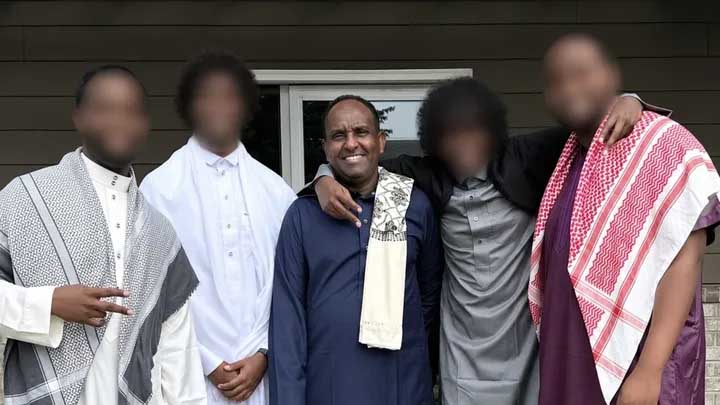
Feature photo: Mohamed Yusuf, a Somali-American Uber driver, remains in critical condition following an alleged passenger attack in Hopkins, Minnesota, on November 14. (Credit: Mukhtar Osman/GoFundMe)