Nadine Osman
CBS News reportedly faced internal opposition over an investigation into alleged links between Abdul El-Sayed, the first Muslim elected to the US Senate, and the Muslim Brotherhood. Senior editorial staff questioned the strength of the evidence and warned that the report risked reinforcing anti-Muslim stereotypes.
The dispute centred on an article published on October 29, days before El-Sayed defeated Republican candidate Mike Rogers in Michigan’s Senate election.
According to a November 13 report by Zeteo, two CBS News sources said the investigation faced resistance from the network’s standards officials, who questioned whether it contained sufficient evidence to support its claims.
They reportedly criticised its reliance on insinuations, guilt by association and anti-Muslim stereotypes rather than direct evidence linking El-Sayed to the organisation.
The disagreement followed an October 18 report by Semafor, which revealed that CBS News editor-in-chief Bari Weiss had personally urged journalists to devote significant resources to investigating El-Sayed’s alleged Brotherhood connections.
Weiss reportedly raised the issue during editorial meetings and assigned the network’s investigative unit to examine the Michigan Democrat’s background, despite his repeated denials of any affiliation with the group.
Written by CBS reporter Isabel Vincent, the October 29 investigation examined El-Sayed’s family background and political associations.
It reported that his estranged mother, Fatten Elkomy, had worked as a nurse for the Islamic American Relief Agency (IARA) in Missouri. The organisation was raided by the FBI in 2004 and later shut down by US authorities over sanctions violations and providing support to al-Qaeda and other terrorist groups.
CBS noted that Elkomy had not been accused of any wrongdoing.
The investigation also cited 2012 social media posts by El-Sayed’s half-sister, Eman Abdelhadi, a University of Chicago professor. In the posts, she described their mother’s alleged involvement in the Muslim Brotherhood’s activism in Egypt during the early 1970s.
El-Sayed rejected attempts to link him to his relatives’ alleged associations, saying he was not raised by his mother and knew nothing about her activities.
The report also examined his involvement in a 2012 open letter signed by Egyptian Americans supporting then-president Mohamed Morsi, a senior Muslim Brotherhood figure elected after the 2011 uprising that ended Hosni Mubarak’s rule.
While backing Morsi’s government, the letter called for limits on his authority. According to Mediaite’s account of the CBS investigation, El-Sayed’s Republican opponent, Rogers, had also supported US aid to Morsi’s government in 2012.
Zeteo’s reporter, Maxwell Tani Baragona, said Weiss’s deputies, Charles Forelle and Adam Rubenstein, supported publication, while standards officials sought additional context. CBS News president Tom Cibrowski was also reportedly involved in the disagreement.
However, one CBS insider rejected suggestions of an extraordinary confrontation, describing the exchanges as a “very normal editorial process” in which the article was “debated among a senior team”.
The source also denied that Forelle and Rubenstein had aggressively pushed for publication, although both were involved in editing the piece.
The latest dispute follows an earlier controversy over CBS coverage of El-Sayed’s social media posts comparing COVID-19 deaths with the September 11 attacks. Weiss had reportedly intervened in that coverage, which also attracted accusations of anti-Muslim bias.
During the election campaign, US President Donald Trump and Rogers repeatedly sought to associate El-Sayed with the Muslim Brotherhood. Rogers alleged that the Democrat had pledged support to the organisation, but neither he nor his campaign produced evidence to substantiate the claim, according to an October 23 Washington Post investigation.
El-Sayed consistently denied any affiliation. In an interview with Fox News, he said: “I have never been a member of the Muslim Brotherhood, I never will be a member of the Muslim Brotherhood.”
He defeated Rogers on November 3, becoming the first Muslim elected to the US Senate, the 100-member upper chamber of Congress representing the country’s 50 states.
Responding to Baragona’s report, a CBS News source told Mediaite that Zeteo was open about its political and foreign policy positions, as well as its support for El-Sayed.
The source dismissed claims of internal conflict as an attempt to manufacture controversy around what CBS described as a thoroughly reported investigation that had passed through normal editorial channels. The network added that none of the article’s reporting had been called into question.
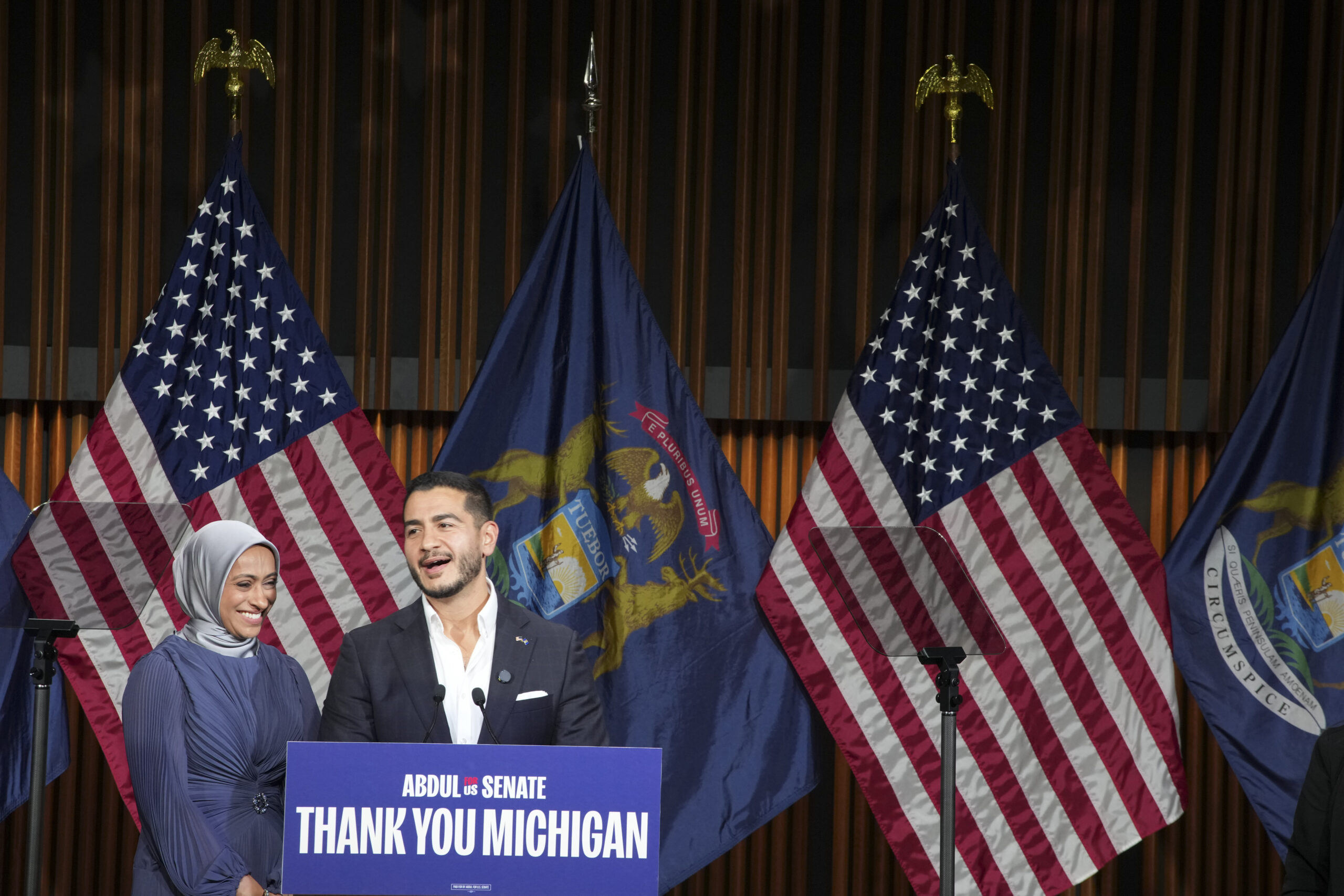
Feature photo: Abdul El-Sayed celebrates his election victory in Michigan, becoming the first Muslim elected to the US Senate. His campaign became the focus of an investigation that reportedly sparked an internal dispute among senior CBS News editorial staff over the strength of the evidence and concerns about anti-Muslim stereotyping. (Credit: Katie McTierman/AA)