Elham Asaad Buaras
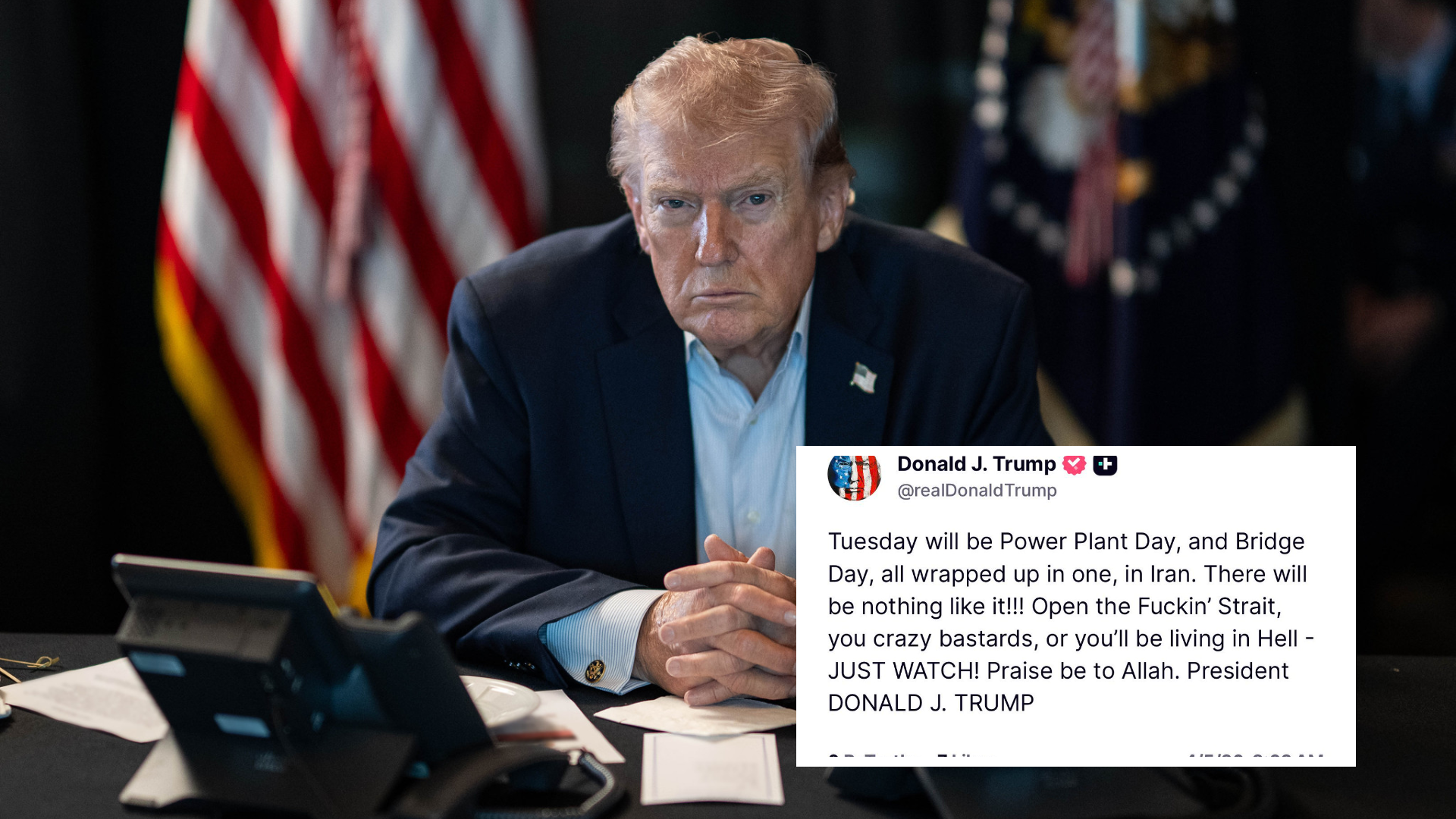
US President Donald Trump has sparked outrage after threatening attacks on Iranian civilian infrastructure and closing his message with the Islamic phrase “Praise be to Allah,” raising concerns over the misuse of religious language in the context of potential war crimes.
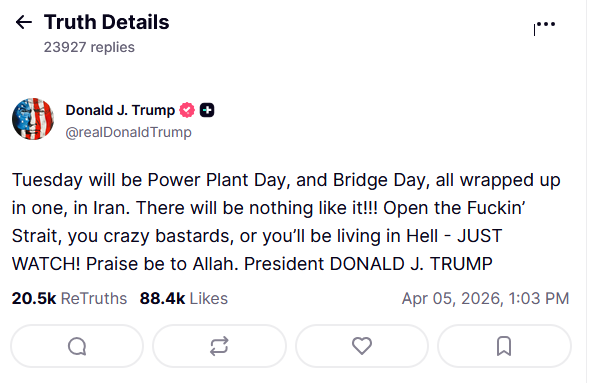
On April 2, Trump wrote on his social media platform Truth Social: “Tuesday will be power plant day, and bridge day, all wrapped up in one, in Iran,” demanding that Tehran reopen the strategic Strait of Hormuz. “Or you’ll be living in hell — just watch! Praise be to Allah,” he added.
The Council on American-Islamic Relations (CAIR) condemned the post, describing the combination of violent threats with an Islamic invocation as “reckless, dangerous” and reflective of “indifference to human life and contempt for religious beliefs.” CAIR said the use of “Praise be to Allah” alongside threats demonstrated a “willingness to weaponize religious language while simultaneously denigrating Islam” and urged Congress to reconvene to reassert its constitutional authority over war powers.
“These statements are not made in a vacuum,” CAIR said. “They follow a long pattern of anti-Muslim rhetoric and policies that have dehumanised Muslims at home and abroad.”
The post also drew strong reactions from US lawmakers. Senate Majority Leader Chuck Schumer warned that such rhetoric risks endorsing potential war crimes and undermining international alliances. Bernie Sanders called the comments “dangerous and mentally unbalanced,” while Chris Murphy described them as “completely, utterly unhinged.” In a rare dissenting voice from within Republican ranks, Marjorie Taylor Greene criticised the use of religious language to justify military escalation.
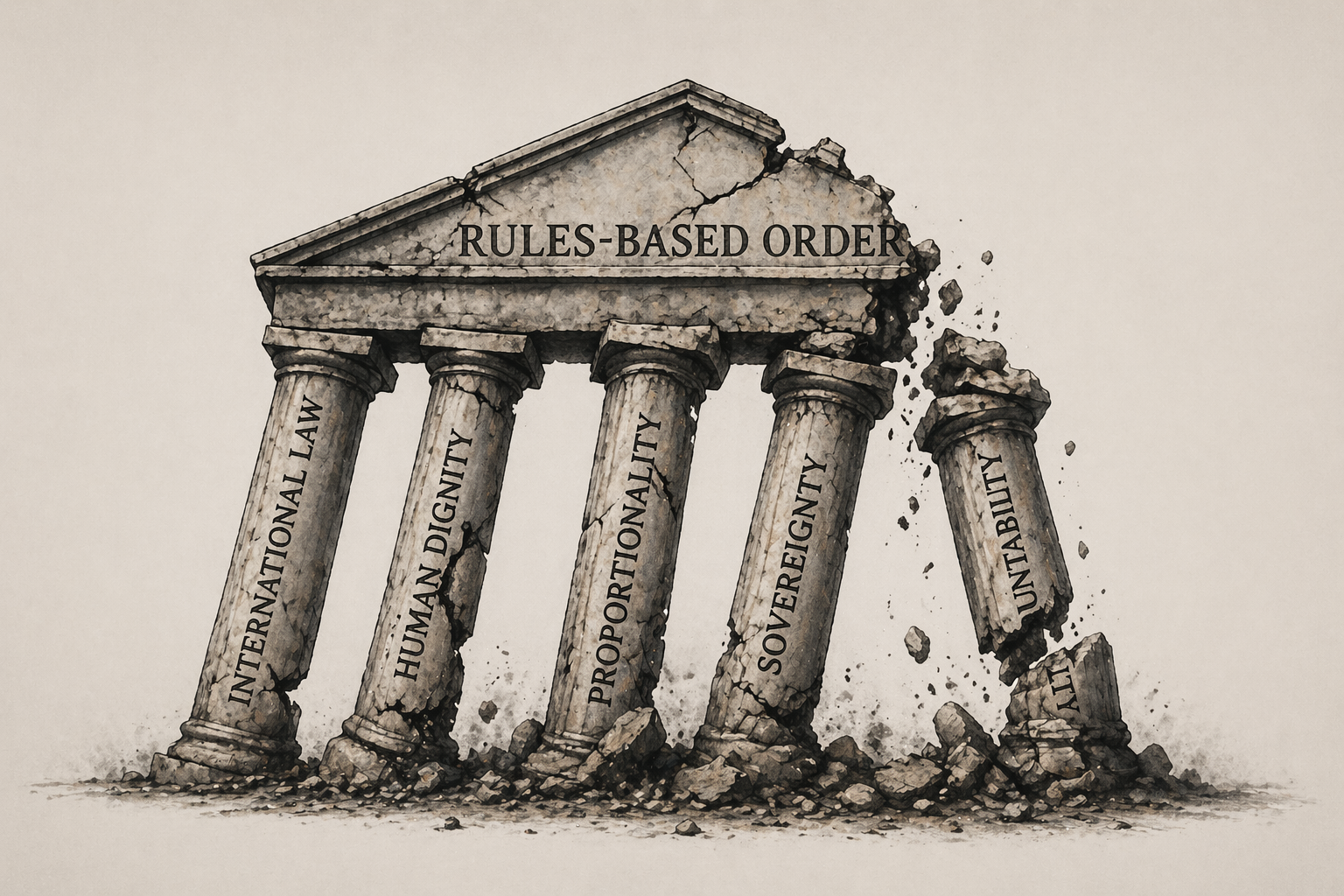
Legal analysts have warned that attacking civilian infrastructure could breach international humanitarian law. Milena Sterio, a Cleveland State University international law professor, said bombing civilian targets such as power plants “would give rise to a war crime,” while Stuart Ford of the University of Illinois‑Chicago stressed that intentionally attacking civilians can never be justified even if facilities have military use. Brian K.A. Greenawalt of Pace University noted that a blanket threat to hit civilian objects regardless of distinction would itself be unlawful, and UN Secretary‑General António Guterres said there are “reasonable grounds to think” such strikes could constitute war crimes.
Christian religious leaders have also criticised the unusual fusion of faith and military threat, with Pope Leo XIV saying that “God does not listen to the prayers of those who wage war but rejects them” and urging leaders to lay down weapons and embrace peace. Archbishop Timothy Broglio emphasised that Jesus’ teachings make clear war must
be a “last resort,” condemning the use of religious language to justify escalations that contradict core teachings of compassion and nonviolence.
A letter signed by over 100 international law experts added that recent conduct in the conflict “raises serious concerns about violations of international humanitarian law, including potential war crimes.”
The remarks come amid escalating regional conflict following joint US-Israeli illegal military action against Iran on February 28, with Iranian authorities reporting over 1,340 deaths, including the then-Supreme Leader Ali Khamenei. Tehran has retaliated with missile and drone attacks targeting Israel and US-allied states targeting US military bases, while Israel has carried out strikes in southern Lebanon and the Beirut suburbs, killing more than 1,460 people to date.
The head of the World Health Organization, Tedros Adhanom Ghebreyesus, has also warned that attacks on Iran’s nuclear facilities, including the Bushehr Nuclear Power Plant, could trigger a catastrophic nuclear accident with long-lasting health impacts.
Observers say the combination of aggressive military rhetoric, explicit threats against civilian infrastructure, and the weaponisation of religious language has alarmed human rights groups, lawmakers, and religious leaders alike, highlighting the risks of further escalation in an already volatile Middle East.