Elham Asaad Buaras
More than 500 people were arrested in central London during a protest against the government’s ban on Palestine Action, as police enforced the proscription despite a court ruling that found it unlawful.
The demonstration in Trafalgar Square on April 11 was the first major protest since the High Court ruled in February that the decision to designate the direct-action group as a terrorist organisation was “disproportionate and unlawful”. The ban, however, remains in place pending a government appeal.
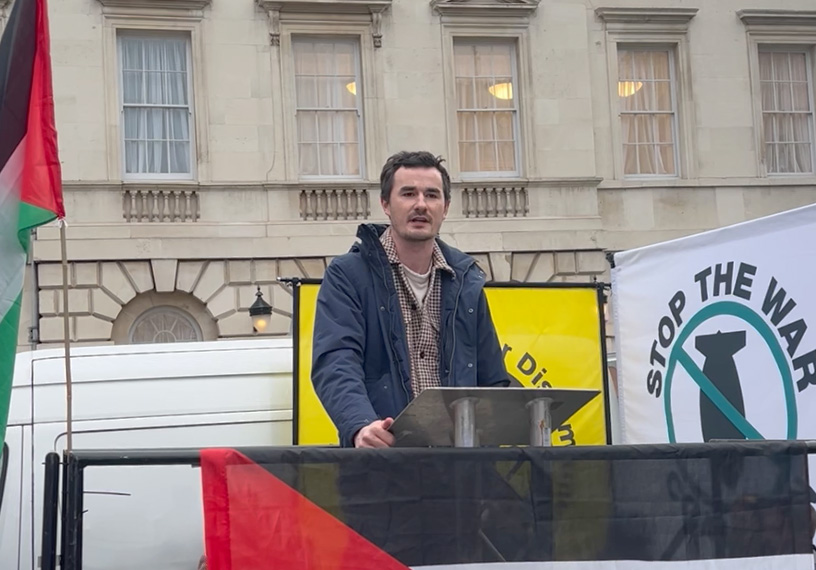
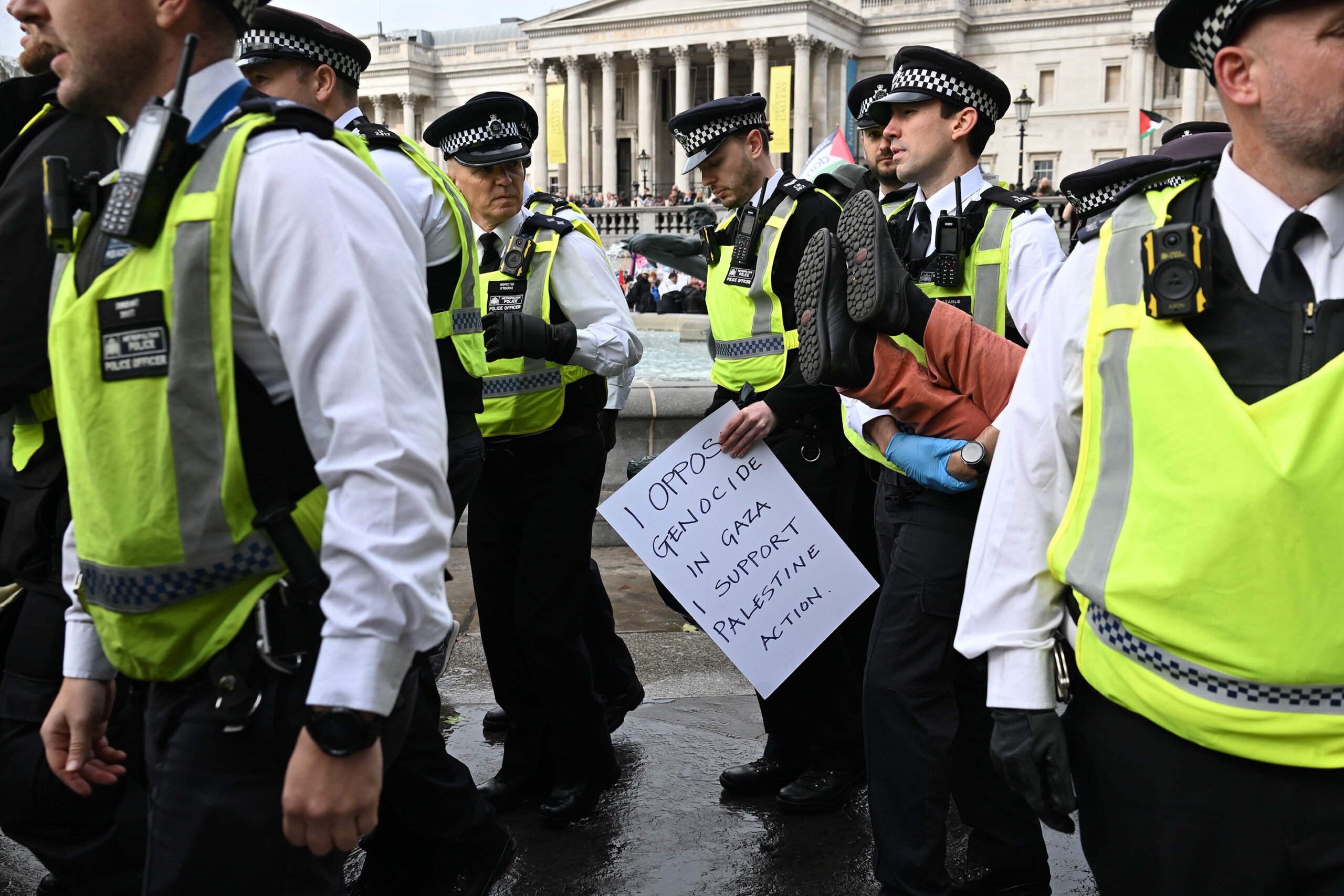
Protesters held placards reading “I oppose genocide. I support Palestine Action”, while others called for greater transparency in legal proceedings and accountability over the war in Gaza. Some demonstrators wore suffragette-style clothing or masks depicting political figures.
The Metropolitan Police said 523 people had been arrested by midnight. Those detained ranged in age from 18 to 87, with officers seen carrying away both elderly protesters and individuals sitting on the ground.
The arrests mark a change in approach by the Met following the High Court ruling. Initially, police said they would avoid arrests based solely on expressions of support and instead gather evidence for potential prosecutions.
But in a March 25 statement, the force said “anyone showing support for the group is likely to be arrested”, citing clarification that the legal effect of the ruling had been suspended pending appeal.
Deputy Assistant Commissioner James Harman said the proscription remained enforceable.
“While the High Court has found the proscription of Palestine Action to be unlawful, it has confirmed the impact of that judgment will not take effect until the government’s appeal has been considered,” he said. “That means it is still a criminal offence to support Palestine Action.”
The Home Secretary, Shabana Mahmood, has been granted permission to appeal, with hearings scheduled for April 28–29.
Organisers from Defend Our Juries said the arrests were unjustified.
“The Met are choosing to make arrests despite the government’s ban on the group being ruled unlawful by the High Court,” the group said, calling the situation “truly surreal”.
Some protesters raised concerns about civil liberties and the right to protest, arguing that legal uncertainty had created confusion over what constitutes an offence.

Qesser Zuhrah, a former prisoner linked to Palestine Action, said demonstrators would continue to mobilise.
“We’re here fighting, showing them that despite everything they put us through, we never forsake our cause,” she said.
Others focused on free speech. Andy Simons, a retired British Library curator, said: “Free speech, as long as it’s not violent, is something we should have.”
The government banned Palestine Action last year under the Terrorism Act 2000. Since then, more than 2,700 people have been arrested for allegedly expressing support for the group.
The High Court ruled that most of the group’s activities did not meet the legal threshold for terrorism designation, but allowed the ban to remain temporarily while the appeal proceeds.
Chief Magistrate Paul Goldspring has paused trials involving hundreds of defendants pending the outcome of the appeal.
Policing the protests has cost an estimated £6 million to £12 million, covering officer deployment, arrests and investigations.
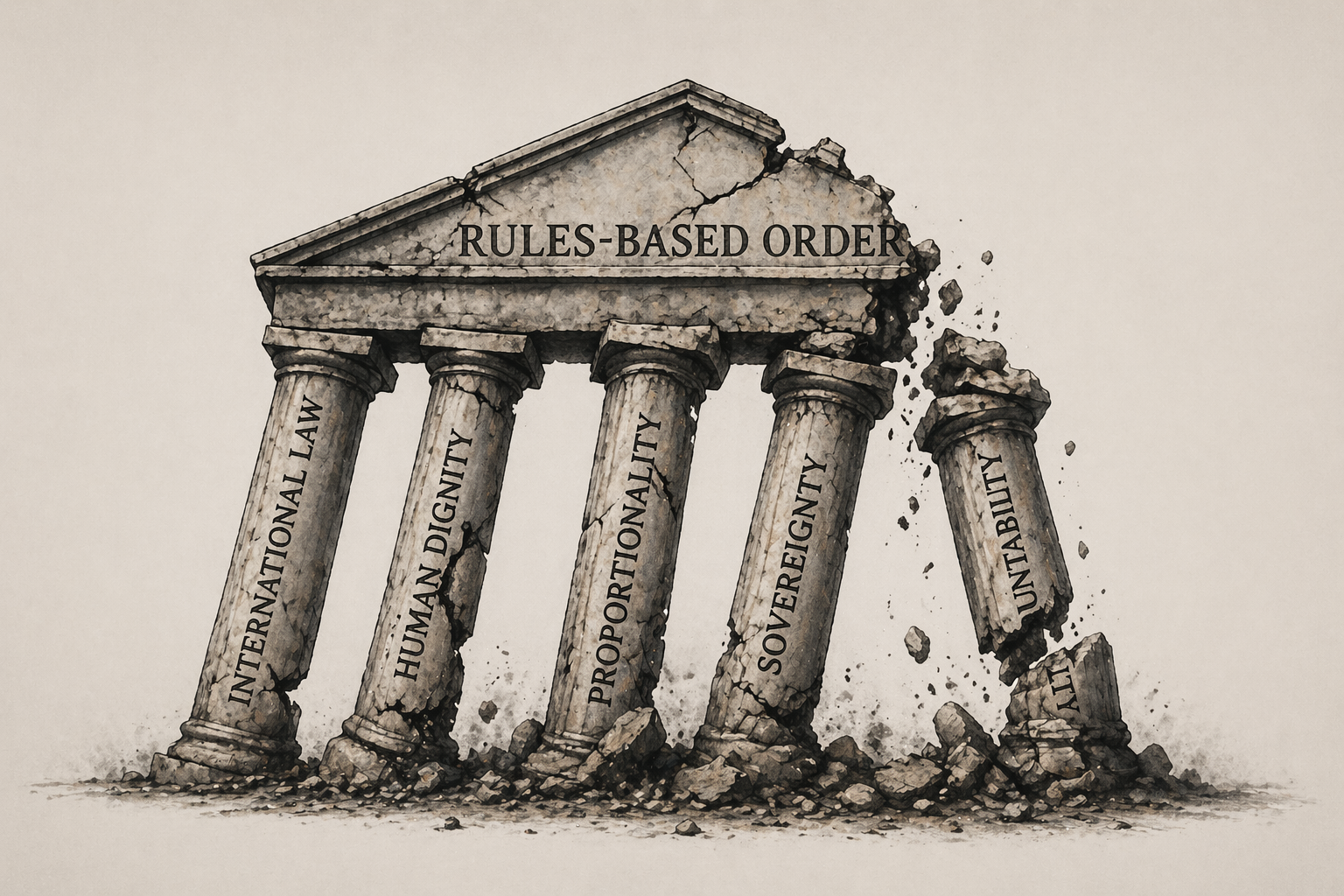
Critics say the scale of spending raises questions about proportionality, particularly given the ongoing legal challenge.
An open letter signed by academics and public figures described the proscription as “an attack on fundamental freedoms of expression, association, assembly and protest”.
The government maintains that Palestine Action’s activities justify its designation, arguing the group is not purely non-violent.
Activists, meanwhile, continue to organise demonstrations, signalling that tensions are likely to persist.
With the appeal imminent, the legal status of Palestine Action—and the wider implications for protest rights in the UK—remain unresolved.
Feature photo: London, UK – October 4, 2025: Police detain demonstrators at Trafalgar Square during a protest urging the government to lift its ban on the activist group Palestine Action. The event was organized by Defend Our Juries, which said over 1,500 people had pledged to attend. (Credit: Raşid Necati Aslım/AA)