Dawd Ashari
On June 29, major provisions of the newly enacted Crime and Policing Act 2026 will officially come into force across England and Wales. While the sprawling legislation covers everything from knife crime to antisocial behaviour, one specific element relates specifically to increased powers to restrict protests in “the vicinity of a place of worship.”
Under previous legislation (primarily the Public Order Act 1986), police could only impose conditions on public assemblies or marches if they reached a very high threshold, such as a risk of serious public disorder or intentional intimidation.
The Crime and Policing Act 2026 fundamentally lowers that barrier for protests “in the vicinity of a place of worship”. According to the Home Office factsheet, a senior police officer can now pre-emptively impose restrictions if they reasonably believe a demonstration “may create an intimidating atmosphere” for individuals “seeking to access a place of worship”. Crucially, such restrictions can be imposed, “regardless of whether the organizers intended to cause that effect”.
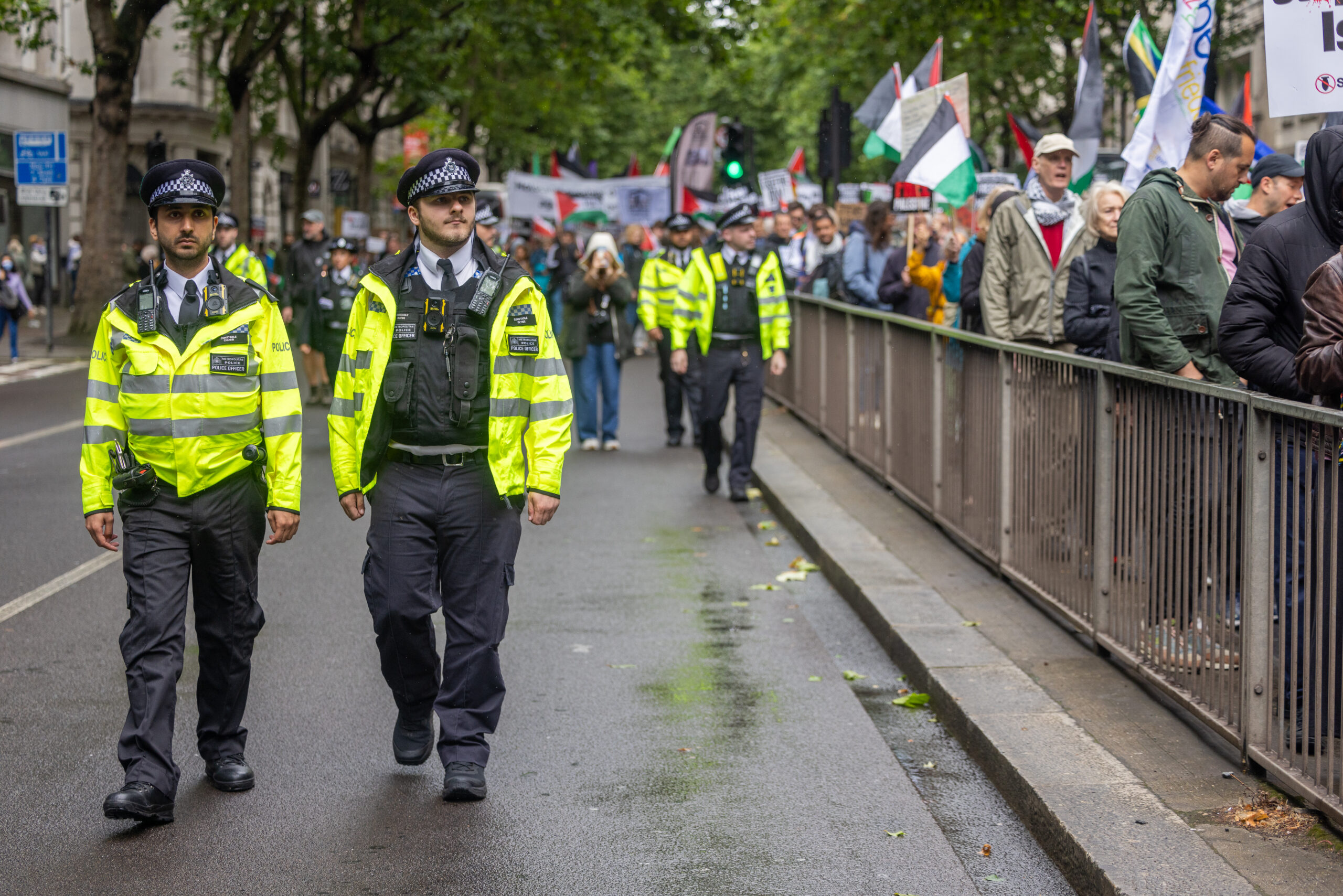
In such cases, Police officers will have the power to instantly alter protest routes, enforce strict noise limits, or divert demonstrators entirely away from the area.
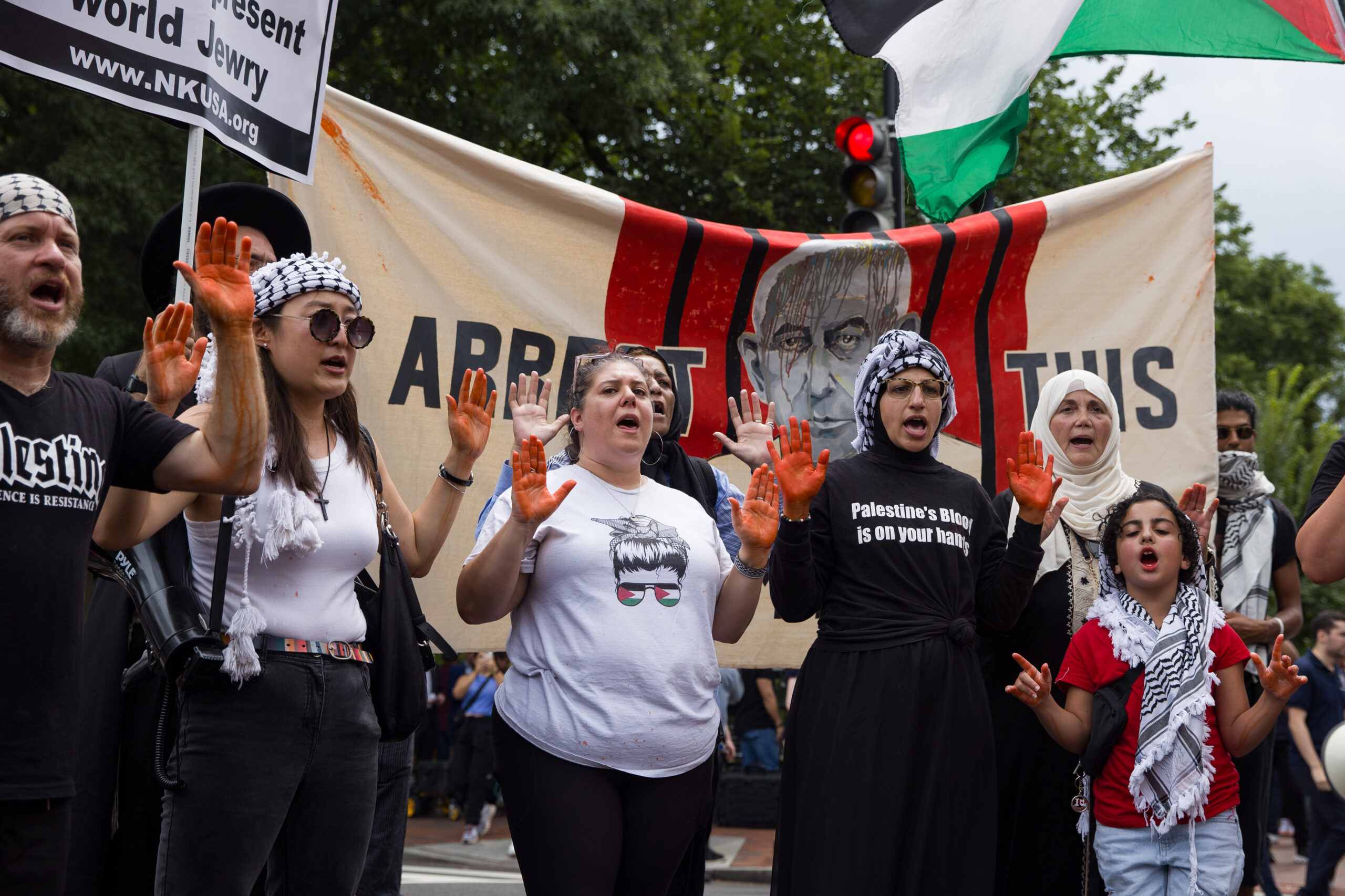
While the legislation overtly covers all places of worship, it is widely acknowledged that it was introduced after advocacy from British Jewish groups in response to pro-Palestine protests. The Home Office press release first announcing plans to introduce such powers in March 2025 outlines that “Concerns have been raised repeatedly in recent months after protests near synagogues have caused the cancellation of events on the Sabbath and have forced congregants to stay at home due to fears about travelling to their places of worship during large-scale demonstrations.”
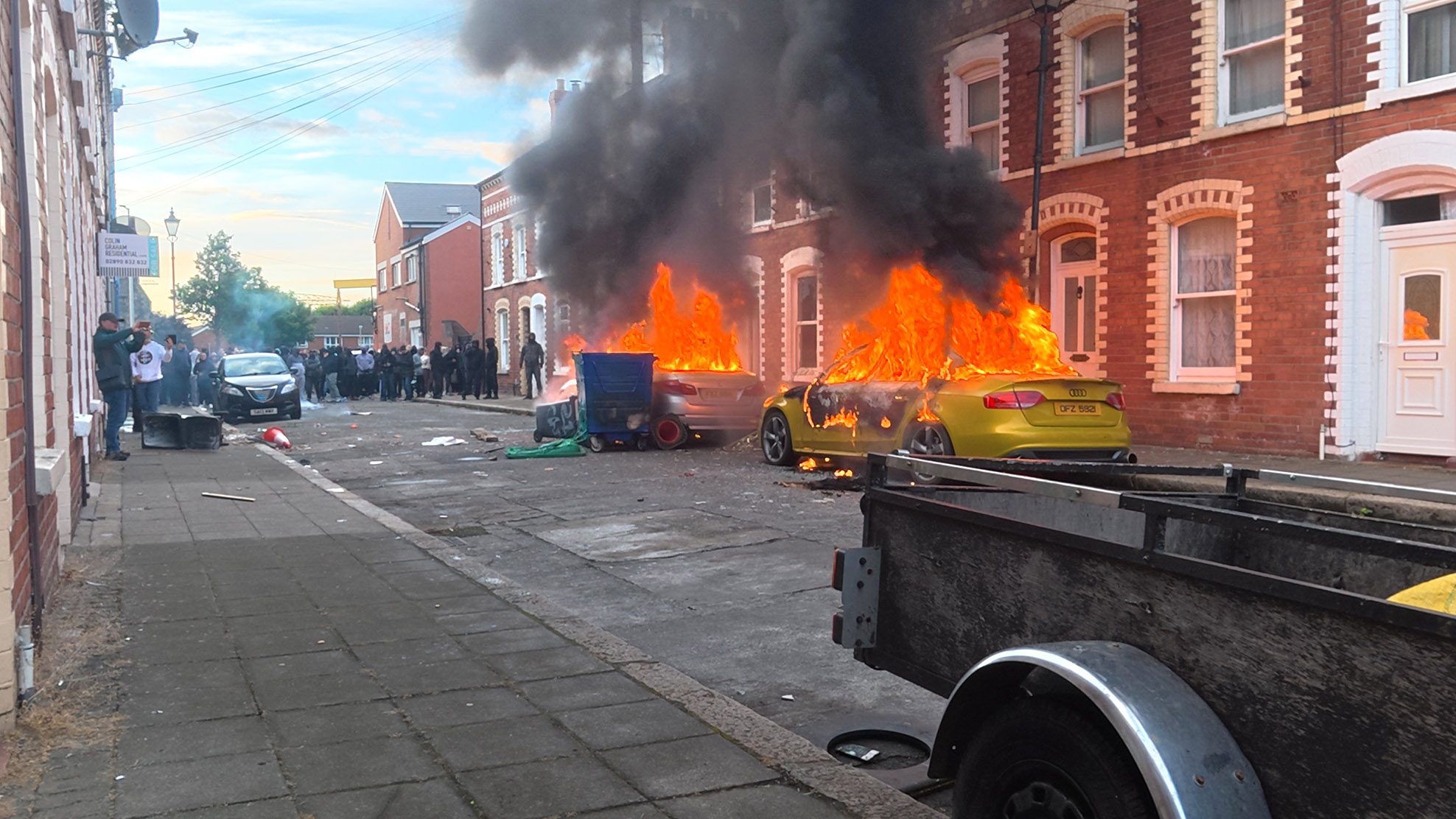
The press release continued by referring to the riots in summer 2024 where “thugs targeted mosques in Southport, Hull, Sunderland and other areas, causing significant distress to members of the local community.”
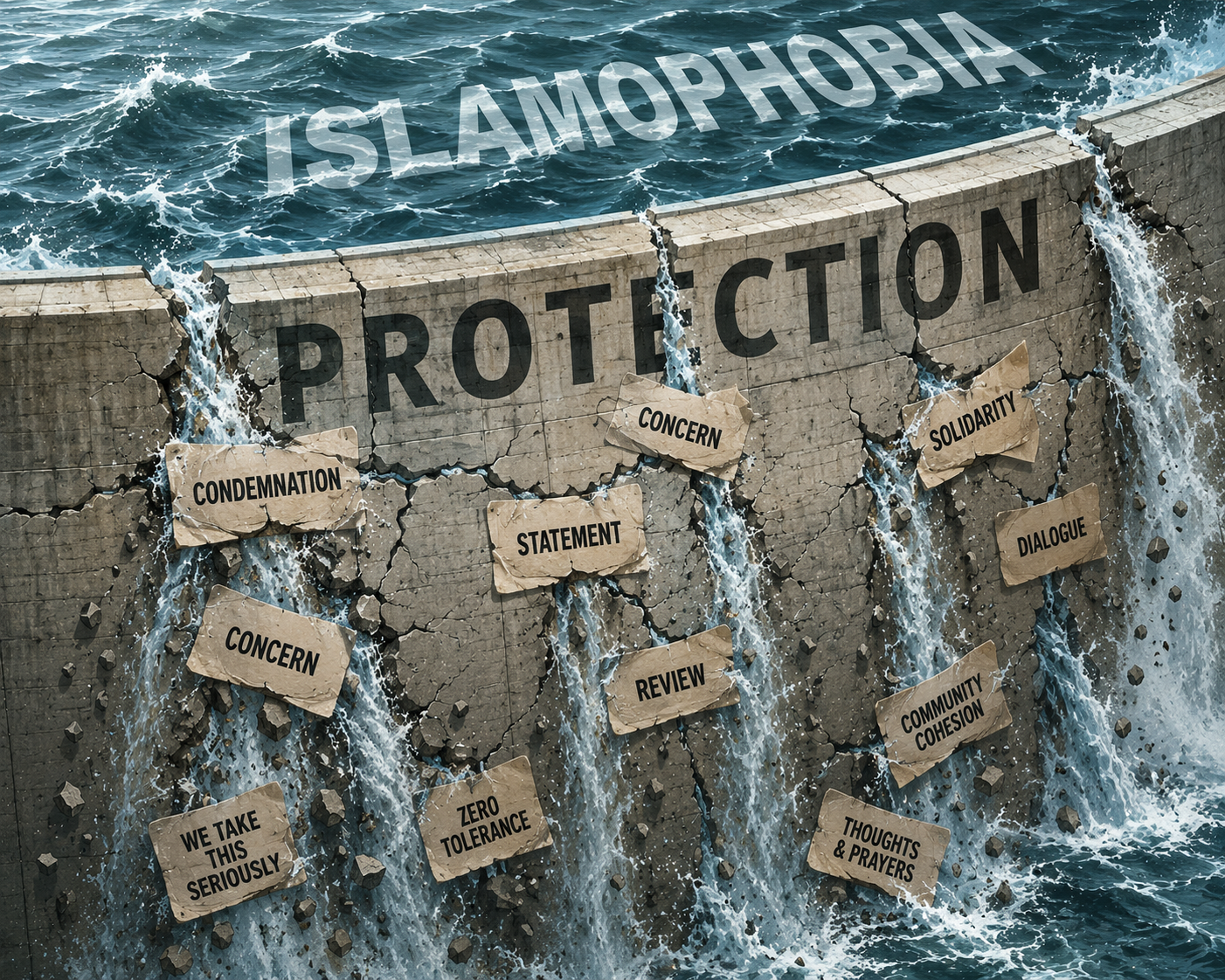
Those critical of the Police having such powers have highlighted that “vicinity” is vaguely defined and could cover a wide area that subject to Police interpretation. Other objections towards the Act focus on its introduction of a requirement for Police officers to consider the ‘cumulative impact’ of protests, arguing it will be used to effectively ban recurring weekly demonstrations or peace vigils in town centres.
A joint letter by faith leaders coordinated by Quakers in Britain in April 2026 urged MPs to vote against the amendment introducing the ‘cumulative impact’ clause to the then Crime and Policing Bill, however the amendment was passed. The letter stated “Peaceful protest is allowed by international conventions to be disruptive, and successful campaigns for positive change have always involved cumulative action, from the suffragettes to villagers standing up against proposed fracking sites.”
Concerns have been raised that the powers will also be used to block legitimate protests against events taking place inside a place of worship. In February 2026, Na’amod – which describes itself as a movement of Jews in the UK seeking to end our community’s support for Israel’s occupation and apartheid – heckled Reform party leader Nigel Farage at a launch event for the Reform Jewish Alliance (RJA) hosted at Central Synagogue in central London, and later protested outside the synagogue entrance.
In June 2026, Edgware United Synagogue in North London hosted the Great Israeli Real Estate event which saw marketing material openly promoting the sale of properties in Israeli settlements in the West Bank and East Jerusalem which are illegal under international law, despite the organisers stating such properties would not be advertised. Over 1,000 protestors and counter-protestors demonstrated near the synagogue on the event day, resulting in 14 people being arrested (7 pro-Israel protestors, 6 pro-Palestine and two unclear).
In response to the protests arising at the Great Israeli Real Estate event, The Board of Deputies of British Jews commented in a statement that, “New measures under the Crime and Policing Act, called for by the Board and community partners, will from the end of the month give police new powers to impose conditions on protests near places of worship. We are calling on the police to ensure such protests are kept a significant distance from places of worship to prevent intimidation to members of the Jewish community.”
Also immediately following this event, Metropolitan Police Commander Adam Slonecki said: “We are mindful that Jewish communities are experiencing heightened fear and concern following two-and-a-half years of sustained protest and, in recent months, a series of arsons and other attacks. There is a distinction between protesting in central London and protesting in the heart of communities where the potential to cause serious disruption and intimidation is greater and our policing plan reflects that.”
It remains to be seen how protests in the vicinity of mosques – many of whom have been the subject of hostile or far-right activity in recent years – will be handled by Police under the new powers.
In March 2026 far-right protestors – including UKIP leader Nick Tenconi – gathered in a protest outside the South Lakes Islamic Centre in Cumbria and were faced off by anti-fascist counter-protestors. The UKIP leader and others held placards and crosses, and chanted slogans into a portable audio system including “send them home” and “People might say it’s too far but they hate our Christian society, so let’s send them home.”
At the height of the US-Israel war on Iran in 2026, pro-Pahlavi protesters intimidated worshippers entering and exiting the Imam Reza Cultural Centre in central Birmingham, including by waving Israeli flags, blasting loud music, and vandalising the building by breaking windows and daubbing obscene and Islamophobic graffiti on its main entrance.
In summer 2024 following the Southport stabbings, rioters targeted mosques in Hartlepool, Sunderland and Middlesborough to name a few, threatening to storm their way inside, throwing bricks, beer cans and glass bottles, alongside shouting Islamophobic chants.
With the rise of independent live-streaming platforms, there has also been a rise in online influencers travelling to areas where a Muslim community resides to film content. Often this involves walking past a local mosque, filming the building and/or worshippers entering and exiting the building, and making commentary to their live chat about “the Islamification of the area” and using derogatory language towards worshippers like “foreigners” and “scumbags”.