Nadine Osman
A leading Canadian Muslim organisation has launched a policy handbook on Islamophobia, urging the federal government to implement long-standing recommendations and strengthen efforts to combat anti-Muslim hatred.
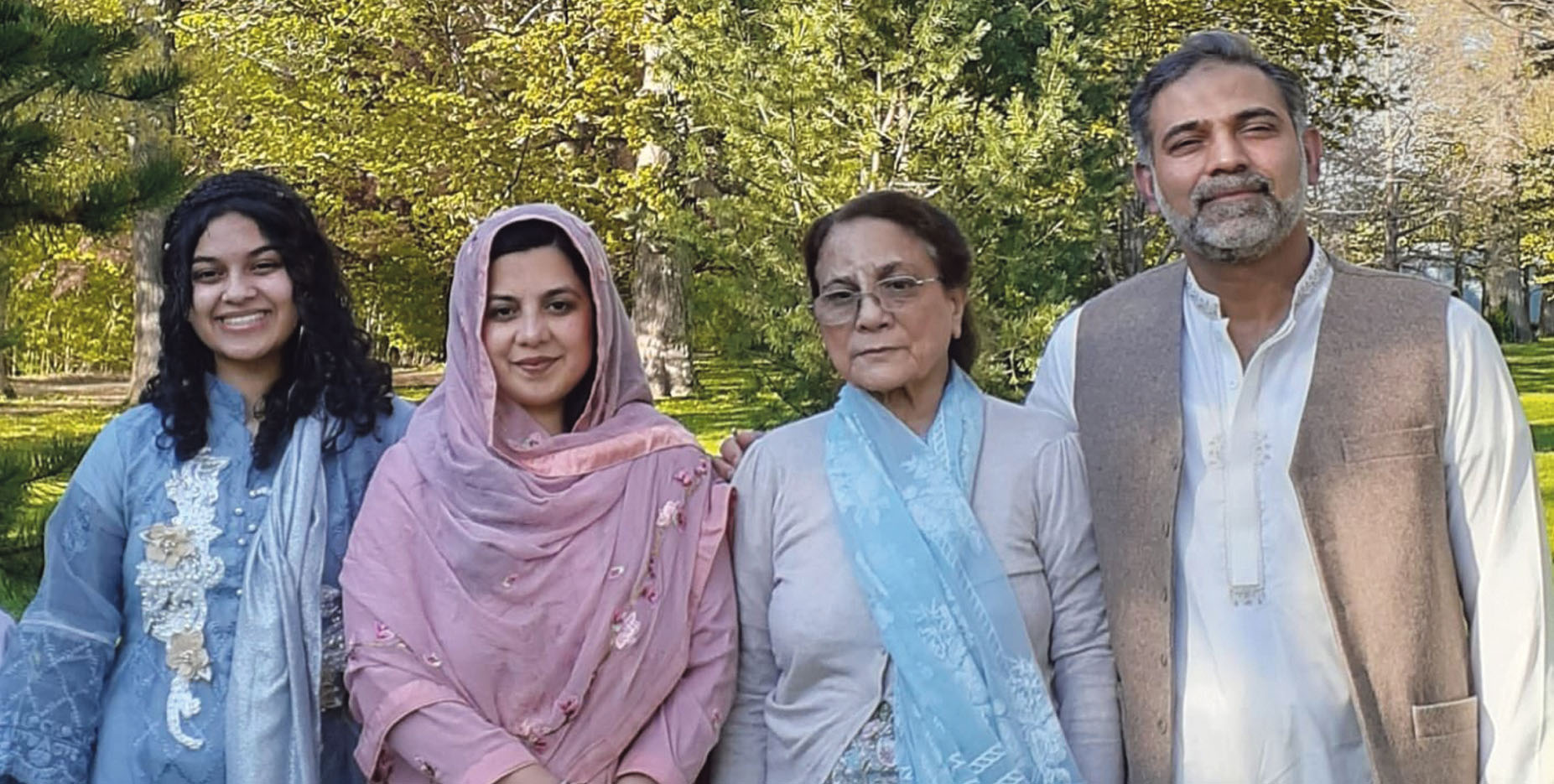
The Canadian Muslim Public Affairs Council (CMPAC) unveiled the 30-page handbook on June 4, ahead of the fifth anniversary of the murder of four members of the Afzaal family in London, Ontario, in what prosecutors described as a terrorist attack motivated by white nationalist ideology.
At a press conference in Ottawa, CMPAC Executive Director Khaled Alqazzaz said the June 6, 2021, attack highlighted the dangers facing Muslim communities across Canada.
“Five years ago, our London family was murdered in a hate-motivated attack, simply because they were Muslim,” Alqazzaz said.
He added: “It exposed the reality that Muslim communities across Canada have long warned about.”
Alqazzaz said Islamophobia extends beyond individual acts of hatred and is embedded within wider social and institutional systems.
“Despite years of studies, consultations, and public commitments, Muslims in Canada continue to face discrimination, harassment, violence, and unequal treatment,” he said.
Drawing on parliamentary reports, academic research and government studies, the handbook recommends stronger protections for mosques and Islamic schools, dedicated federal funding and greater accountability within public institutions.
The launch comes amid changes to the federal government’s approach to tackling Islamophobia. Asked about Prime Minister Mark Carney’s decision to replace the Special Representative on Combatting Islamophobia with an advisory council, Alqazzaz said Muslim organisations expected the new body to deliver meaningful results.
“So when the Prime Minister (Mark Carney) dismantles the office and replaces it with the advisory council, we have even higher expectations from the new council to address Islamophobia in a real and direct way,” he said.
The handbook was endorsed by several organisations combating anti-Muslim hatred.
Taha Ghayyur, Executive Director of Justice For All Canada, said anti-Muslim violence is driven by a transnational ideology.
“The same ideology that inspired the attack on the Afzaal family was present when six worshippers were murdered at the Islamic Cultural Center of Quebec City in 2017,” he said.
He noted that similar patterns could be seen in attacks in New Zealand and the United States.
“Different countries, different perpetrators, different circumstances, but a common thread is the dehumanization of Muslims,” he said.
Ghayyur cited Statistics Canada data showing hate crimes targeting Muslims rose by 94 per cent in 2023, while overall hate crimes have more than doubled since 2019.
“These are not just the statistics. Behind every one of these numbers is a person, a child afraid to wear hijab, a family worried about attending the mosque, a community wondering whether they truly belong,” he said.
Responding to questions from journalists, Ghayyur identified white supremacy, transnational hate movements and foreign interference as factors contributing to anti-Muslim hostility, specifically naming India and China as governments linked to the persecution of Muslim minorities.
New Democratic Party House Leader Heather McPherson said, “Muslim Canadians report ongoing discrimination, intimidation, exclusion and the need for heightened security.”
McPherson said efforts to combat Islamophobia must form part of a wider strategy addressing antisemitism, anti-Palestinian racism, anti-Indigenous racism, anti-Black racism and anti-Sikh racism.
The handbook’s four main recommendations are implementing existing parliamentary guidance, improving security for Muslim communities and places of worship, addressing structural Islamophobia within institutions, and increasing investment in education and community engagement.
CMPAC said governments must move beyond symbolic recognition of Islamophobia and take concrete action to ensure Muslim Canadians’ safety and equal treatment.
The handbook was published in memory of the Afzaal family, whose deaths drew national and international attention to anti-Muslim extremism.
Three generations of the Pakistani-origin family were killed when a pickup truck mounted the pavement and struck them as they walked in London, Ontario.
The victims were Salman Afzaal, 46; his wife Madiha Afzaal, 44; their 15-year-old daughter Yumna Afzaal; and Salman’s 74-year-old mother, Talat Afzaal.
The couple’s nine-year-old son was the sole survivor.
In 2023, Nathaniel Veltman was convicted of four counts of first-degree murder and one count of attempted murder. Prosecutors argued successfully that the attack constituted an act of terrorism motivated by white nationalist ideology.