Zahra Adoul
Ask the average person about Kensington’s must-sees, and many will mention Holland Park’s Kyoto Garden, where koi fish glide through the pond beneath proud peacocks. Yet few realise that just half a mile away lies another hidden sanctuary where water, fish and peacocks appear once more – not in a Japanese garden, but in a spectacular Victorian interior inspired by the art and architecture of the Islamic world.
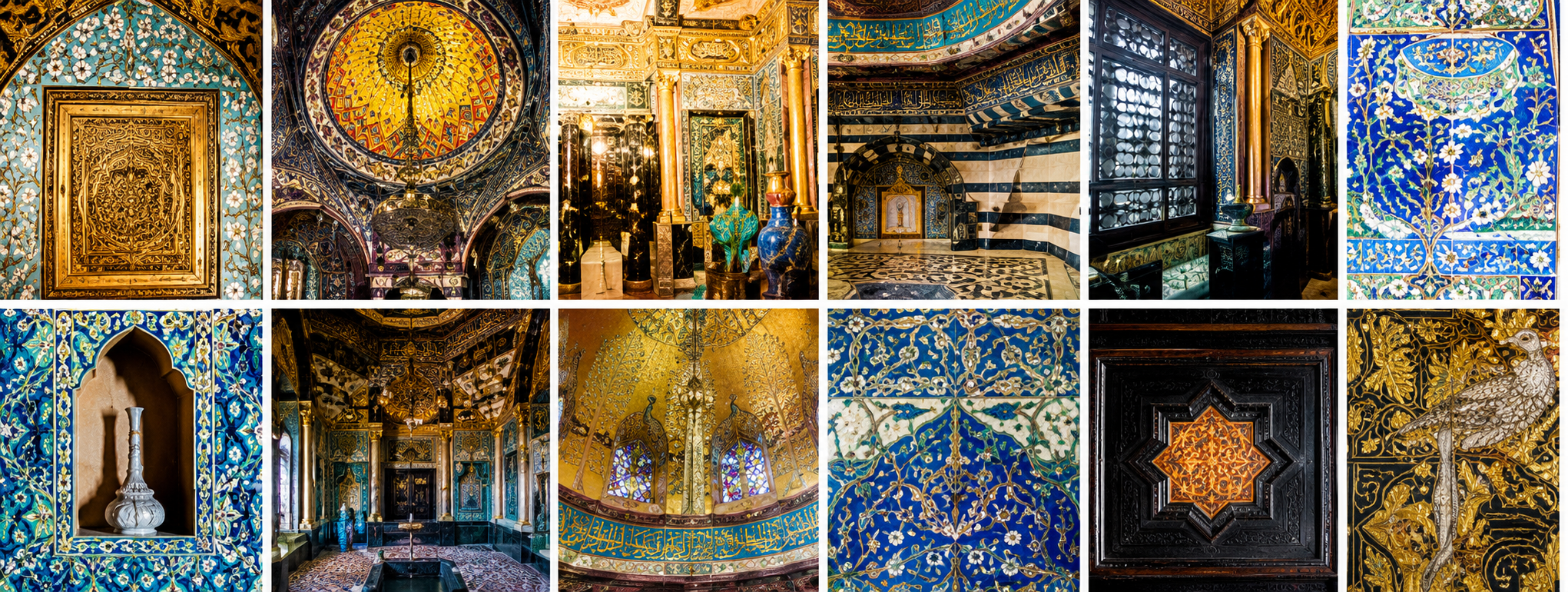
At the heart of Leighton House, the Arab Hall encompasses a fountain, marble columns, glittering mosaics and centuries-old tiles from Damascus, Turkey and Iran. Their rich blues, greens and golds create one of London’s most unexpected oases. Now, a new exhibition is inviting visitors to look beyond its beauty and explore the stories, craftsmanship and cultural exchanges that brought it into being.
It is this extraordinary space that forms the focus of The Arab Hall: Past and Present, a new exhibition at Leighton House Museum that shines a fresh light on one of Britain’s most significant displays of Islamic artistic heritage.
Through contemporary artistic commissions, a new film and a research publication, The Arab Hall: Past and Present examines how Victorian artist Frederic Leighton created the space and why it continues to inspire conversations about cultural exchange, heritage and identity today.
Built between 1877 and 1881 by renowned Victorian artist Frederic Leighton, the Arab Hall was conceived as a setting for his growing collection of Islamic ceramics gathered during travels across North Africa and the Middle East.
“The most ambitious, costly and extraordinary addition he made was the Arab Hall,” Daniel Robbins, Senior Curator of Leighton House and Sambourne House, told The Muslim News in an exclusive interview.
“He had been travelling to the Middle East and North Africa and collecting tiles. The Arab Hall was built really as a way of celebrating this extraordinary collection of Islamic tiles that he had amassed,” explained Robbins.
The hall combines intricate Damascene tiles, mosaics, marble and gilded decoration, creating one of Britain’s most distinctive interiors inspired by Islamic architecture and craftsmanship.
Despite its fame, Robbins says much of the hall’s history has remained little understood.
“The Arab Hall has always been really the thing that this house has been best known for because it’s such an unusual, unique space,” he said. “But one of the things we were aware of is still how little its history was known about.”
The exhibition seeks to address that through three interconnected elements: a gallery exhibition exploring the hall’s creation, contemporary artistic commissions responding to the space, and a new film by award-winning Syrian filmmaker Soudade Kaadan.
Kaadan’s film, When the Tiles Spoke, gives voice to the historic tiles themselves, imagining their journey from their original homes to Victorian London.
“Often when the Arab Hall has been written about, it’s described as something that Leighton and his architects created,” Robbins explained. “But of course it features these tiles, which had already had hundreds of years of life before they came here.”
In her film, Kaadan imagines those tiles speaking about their origins and journey to London, opening up questions about movement, belonging and cultural exchange without seeking to resolve them.
Robbins acknowledges that debates about cultural appropriation are among the contemporary issues the hall raises today.
“One of the very current issues for many museums is cultural appropriation,” he said. “How did those tiles lining its walls come to be here and what are the circumstances in which they were acquired?”
Rather than seeking to impose a single interpretation on the Arab Hall, Robbins encourages visitors to consider both the questions it raises and the care with which the space was created. “What everyone can determine is that whatever his motivations were, Leighton placed great value on that material and those tiles and was very invested in creating a space where they could be appreciated.”
For many visitors of Muslim, Arab and Middle Eastern heritage, the hall evokes a strong sense of recognition and connection.
Robbins recalled how visitors from a range of backgrounds often respond emotionally to the space because it reflects familiar architectural and artistic traditions.
“What’s so wonderful is when we have visitors who may have heard about the Arab Hall and then find this amazing sense of recognition and identification with spaces and places that different communities are familiar with,” he said.
I pointed out the green and gold painted dome, which reminded me of the Hagia Sophia in Turkey.
He recalled: “I always remember, after the [2023] earthquakes in Turkey, we had a group of Turkish women visiting the house, and they found it incredibly emotional to be in that space.”
Robbins points to the wider history of artistic exchange reflected in the Arab Hall’s design, noting that one of Leighton’s inspirations was La Zisa Palace in Palermo, Sicily, a structure that combines Norman, Byzantine and Islamic influences.
He adds that visitors often interpret the Arab Hall through similar ideas of cultural blending and layered identity.
“Audiences today have made the point that it contains, broadly, those elements of East and West mixed together,” Robbins said. “And I think a lot of people can relate to that idea of identity being mixed from different parts and elements.”
At a time when communities can feel increasingly divided, Robbins believes museums have an important role in fostering dialogue and understanding.
“I do very much think that’s one of the functions that Leighton House can do really well,” he said. “A genuinely inclusive space where everybody can find elements of it that speak to them.”
He added that this extends beyond the exhibition itself, through workshops, craft-focused activities and recorded visitor responses that capture how people engage with the Arab Hall in different ways.
“We do lots to explore just the creativity and traditional craft and making techniques,” he said. “We did a series of recordings called Perspectives on the Arab Hall, where we invited people from different heritage backgrounds to talk about how they first discovered the Arab Hall and what it meant to them.”
Rather than prescribing a single interpretation, the museum encourages visitors to bring their own experiences and perspectives to the space.
“It’s not for us to say, ‘This is what this space means’,” Robbins added. “It’s about making it accessible and encouraging expressions of what it means to people from wherever their starting point is.”
“Our job is to try and encourage an understanding of that space, not just as a nineteenth-century creation, but also what it means now and its importance to different audiences today.”
The Arab Hall: Past and Present runs at Leighton House Museum until 4 October 2026.