Elham Asaad Buaras
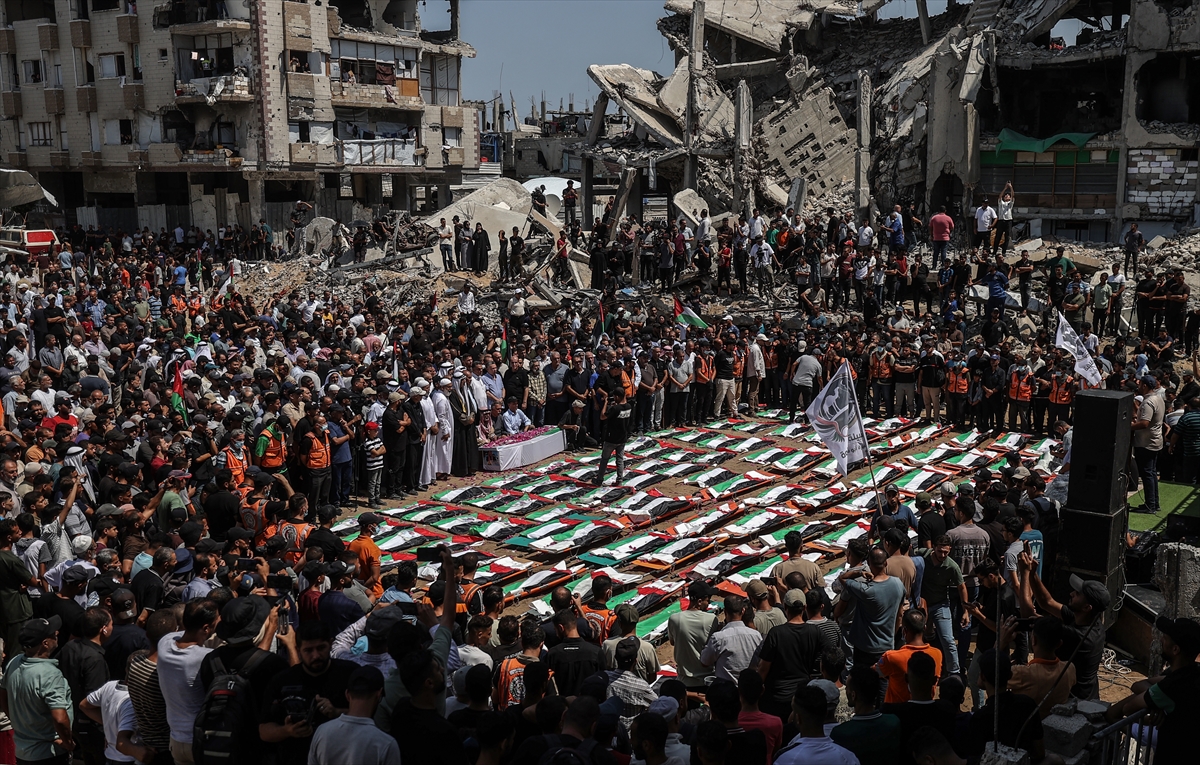
Four Israeli military intelligence soldiers have described attacks on residential buildings in Gaza that proceeded despite warnings of mass civilian casualties, including one strike for which intelligence assessments predicted between 250 and 300 civilian deaths.
“We did not carry out an evacuation because it was important to kill him without allowing him to escape,” one soldier told Haaretz, describing a strike on October 31, 2023, targeting Hamas commander Ibrahim Biari in Jabalia refugee camp.
The soldiers’ testimonies, published by Haaretz on October 12, detail how Israel relaxed targeting restrictions after launching its military campaign in October 2023, allowing heavy bombs to be used against residential buildings despite anticipated civilian casualties.
A soldier identified as D said the military did not know which buildings stood above the tunnel where Biari was believed to be hiding.
“They chose buildings that were still inhabited and decided to destroy all the buildings above the tunnel where he was located,” D told Haaretz, explaining why residents were not evacuated.
Another soldier, identified as A, said intelligence assessments had predicted between 250 and 300 civilian deaths. The chief of staff was asked to approve the strike directly.
“After the strike, as time passed, we understood that the number of dead was around 250,” A said.
He said he was shocked that several densely populated buildings had been destroyed to kill a commander who, only weeks earlier, would not have been considered a target.
The Israeli military disputed the account, saying it had not expected hundreds of civilian casualties. It said the strike had been replanned several times to reduce civilian harm, but the damage exceeded its initial assessment.
A said targeting criteria had been loosened after the war began, alongside a shift towards heavier weapons and greater tolerance for civilian deaths classified as “collateral damage”.
“We knew almost nothing about Hamas and its military wing at the field level,” he said, describing how intelligence officers initially identified operatives from scratch.
The testimonies also describe other attacks in which soldiers said concerns about civilian casualties did not prevent strikes from proceeding.
A said an intelligence officer disregarded a warning that Hamas commander Ali Qadi was behaving unusually before an attack on October 13, 2023. Qadi was the only person to survive the strike, A said, adding that those killed had no connection to the intended target.
A third soldier, identified as C, described how his unit was asked to identify high-rise buildings that could threaten Israeli forces ahead of the Gaza City offensive, which began on October 27, 2023.
An intelligence assessment indicated that about a quarter of residents remained in their homes. When the unit questioned whether it was reasonable to proceed without a full evacuation, C said it was told the remaining residents were targets for Israeli forces on the ground.
“Defending the soldiers was given priority, which is understandable, but the numbers (of civilian casualties) kept growing and became unreasonable,” he said.
A soldier identified as B, who served in a drone unit, said attacks expected to injure up to 20 non-combatants did not require approval from a senior official outside the targeting cell under arrangements introduced after the war began.
The accounts echo findings by Human Rights Watch (HRW) and Amnesty International into Israeli attacks on residential buildings that killed scores of Palestinians.
In an investigation published on April 4, 2024, HRW reported that an Israeli strike on a six-storey apartment building in central Gaza on October 31, 2023, killed at least 106 civilians, including 54 children.
HRW found no evidence of a military target nearby. Witnesses said they had received no warning. The organisation described the strike as an apparent war crime and said Israeli authorities had not publicly explained its justification or the precautions taken to protect civilians.
Amnesty International investigated four Israeli strikes on residential buildings in Rafah, southern Gaza: three in December 2023 and one in January 2024. Its findings, published on February 12, 2024, said at least 95 civilians, including 42 children, were killed.
The organisation found no indication that the buildings or their occupants were legitimate military targets and raised concerns about the absence of effective warnings.
“Entire families were wiped out in Israeli attacks even after they sought refuge in areas promoted as safe and with no prior warning from Israeli authorities,” said Erika Guevara-Rosas, Amnesty’s senior director of research, advocacy, policy and campaigns.
Amnesty called for the attacks to be investigated as possible war crimes.
A UN human rights report published on June 19, 2024, examined six Israeli military operations in Gaza between October and December 2023. It raised serious concerns about compliance with international humanitarian law, including the principles of distinction, proportionality and precautions in attacks. It said violations, if committed intentionally, could amount to war crimes.
International humanitarian law requires parties to distinguish between civilians and combatants, avoid attacks expected to cause excessive civilian harm relative to the anticipated military advantage, and take feasible precautions to minimise casualties.
In a separate report published on November 14, 2024, HRW examined 184 Israeli evacuation orders issued between October 2023 and August 2024. It found that instructions were often inaccurate, inconsistent or issued too late for civilians to leave safely. The organisation also documented attacks on evacuation routes and areas where people had been directed to seek safety.
HRW concluded that the forced displacement of Palestinians across Gaza amounted to war crimes and crimes against humanity. Israel has said its evacuation measures were intended to protect civilians and facilitate military operations against Hamas.
Nadav Weiman, executive director of Breaking the Silence, an Israeli organisation that collects testimonies from former soldiers, condemned the targeting practices described in the Haaretz investigation.
“We cannot allow the killing of 300 civilians to assassinate a battalion commander,” he said, calling for those who issued the orders to be held accountable.
The revelations come amid international legal scrutiny of Israel’s conduct in Gaza. In November 2024, the International Criminal Court issued arrest warrants for Israeli Prime Minister Benjamin Netanyahu and former Defence Minister Yoav Gallant over alleged war crimes and crimes against humanity.
The International Court of Justice is separately hearing a case brought by South Africa, joined by several other countries, alleging that Israel has violated the Genocide Convention in Gaza. Israel denies the allegations.