Elham Asaad Buaras
Italy’s restriction on pupils wearing the niqab at school has drawn criticism from Muslim representatives, education unions and constitutional lawyers, who warn that it risks stigmatising Muslim families despite the small number of pupils affected.
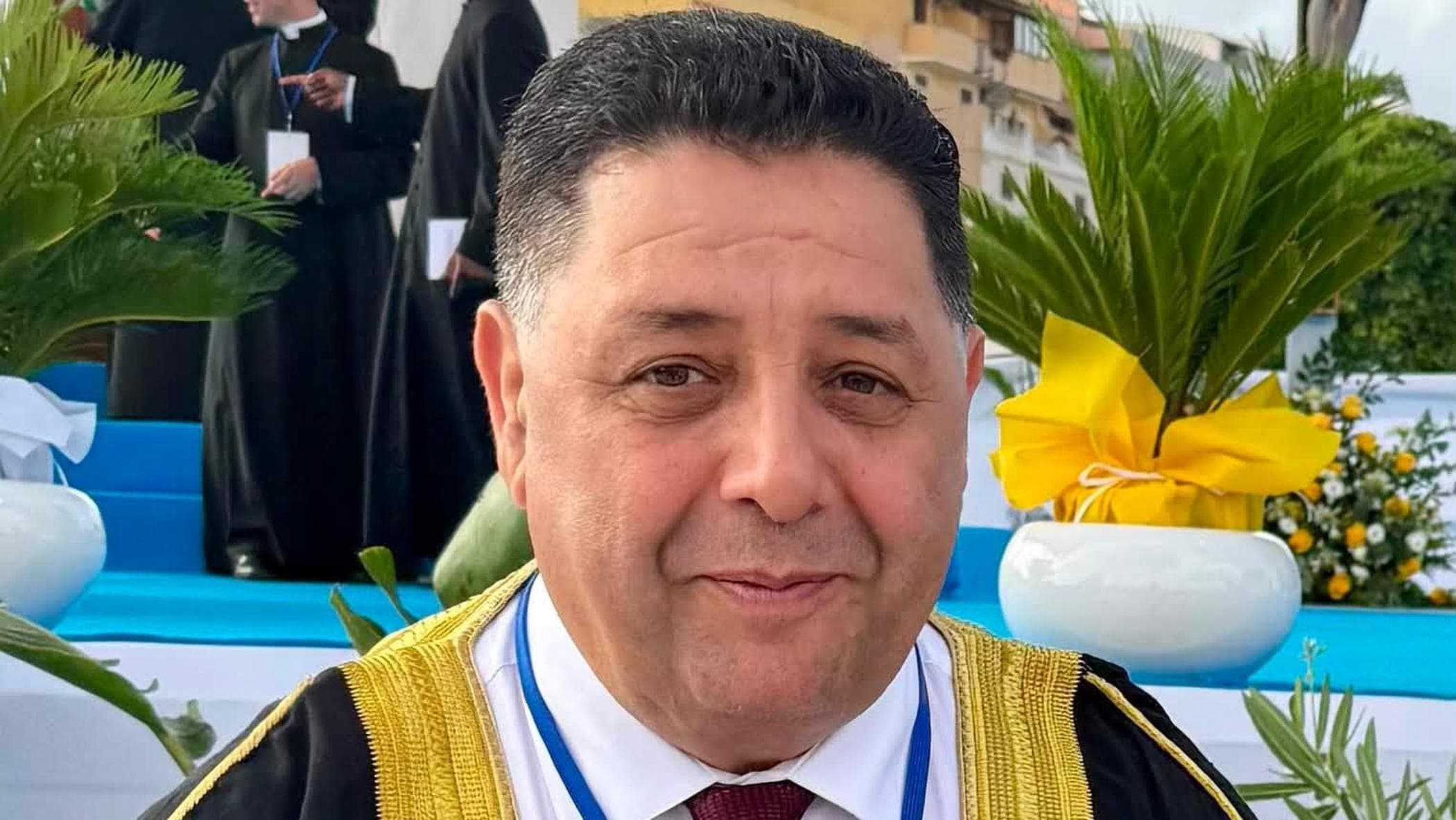
Abdelhafid Kheit, Imam of Catania and President of the Islamic Community in Sicily, told la Repubblica that the number of pupils wearing the niqab in Italian schools was “completely irrelevant”, estimating there were “barely 10” nationwide.
He said there was “no reason to ban” the garment, arguing that schools should focus on education rather than divide communities.
“The issue should not concern the origins of the students, but the quality of teaching and the opportunities offered to everyone,” he said. “School must include, educate and build citizens, not divide communities.”
Ahamed Vall, President of the Roman Islamic Community, said Muslims did not want to face discrimination or become the subject of a political campaign. He said the community was prepared to challenge the measure before Italy’s Constitutional Court.
Raisa Labaran, a Muslim councillor in Brescia who wears the hijab, questioned how many niqab-wearing pupils Education Minister Giuseppe Valditara had encountered. While supporting the principle that people should be identifiable, she warned that restrictions could eventually extend to other Islamic dress.
“If today I ban the niqab, tomorrow will I also ban the hijab?” she asked.
The restriction does not prohibit the hijab, which leaves the face visible. It applies to pupils whose faces are covered and who therefore cannot be identified during school activities and school-family meetings.
Prime Minister Giorgia Meloni announced the proposal on September 20 at Fenix, an event organised by the youth wing of her Brothers of Italy party in Rome. She said pupils should attend school with their faces visible, presenting the measure as a way to promote women’s equality and social integration.
The government approved the decree on September 24. Violations carry fines of €200 to €1,000, with fines for minors imposed on the person with parental responsibility. Exceptions apply for specific health or security reasons.
Valditara defended the restriction, arguing that the niqab had no place in Italian schools and that face coverings conflicted with women’s dignity and social interaction.
Muslim sociologist and writer Sumaya Abdel Qader challenged the assumption that wearing a niqab necessarily involves coercion.
“It is not up to the prime minister to establish what wearing the hijab, niqab or any other garment means for a Muslim woman,” she said. “Sexism is not measured by a veil, but by whether someone decides on behalf of the woman.”
Estimates of the number of pupils who may be affected vary. While Kheit put the number wearing the niqab at “barely 10” nationwide, Italian news agency ANSA cited a separate estimate of 500 to 600 foreign female pupils who may wear the burqa. The figure, based on calculations by education publication La Tecnica della Scuola, is not an official count. The estimates also refer to different garments.
The debate has focused attention on Monfalcone in northeastern Italy, which has a large Bangladeshi community. ANSA reported that a 16-year-old pupil at ISIS Pertini school wears the niqab and is one of four pupils at the school who cover their faces.
Born and raised in Monfalcone to a Bangladeshi family, the teenager said wearing the niqab was her personal choice.
“I have many friends and not only girls originally from Bangladesh,” she said. “Here I feel integrated.”
The school already has procedures allowing staff to verify the identity of pupils wearing face coverings. Other pupils interviewed by ANSA said they did not regard classmates wearing the hijab or niqab as a problem.
Constitutional lawyers have also questioned the restriction. Alfonso Celotto, Professor of Constitutional Law at Roma Tre University, raised concerns about its constitutionality and the fines imposed on parents, citing the principles of equality and religious freedom.
Giuseppe Arconzo, another constitutional law professor, told la Repubblica that cases involving the niqab in Italian schools were “truly isolated”. He said Italy already had rules governing face coverings.
Article 5 of the 1975 Reale Law prohibits helmets or other means of concealing identity in public or publicly accessible places without a “justified reason”. It does not specifically name the niqab or burqa.
Gianna Fracassi, General Secretary of the Flc Cgil Education Union, said she had never seen a girl wearing the burqa in an Italian school and that cases involving the niqab could be counted on one hand.
She said the government had “lost its sense of priorities” and warned that the measure risked stigmatising Muslim pupils and their families.
President Sergio Mattarella, meanwhile, described schools as “the most effective lever of integration” for people arriving from other countries and young people born in Italy to immigrant families.
“School is open to everyone,” Mattarella said on September 21, referring to Article 34 of the Italian Constitution.
On September 28, Valditara said discussions with the Quirinal Palace over the decree had been “very positive” and described the text as balanced.