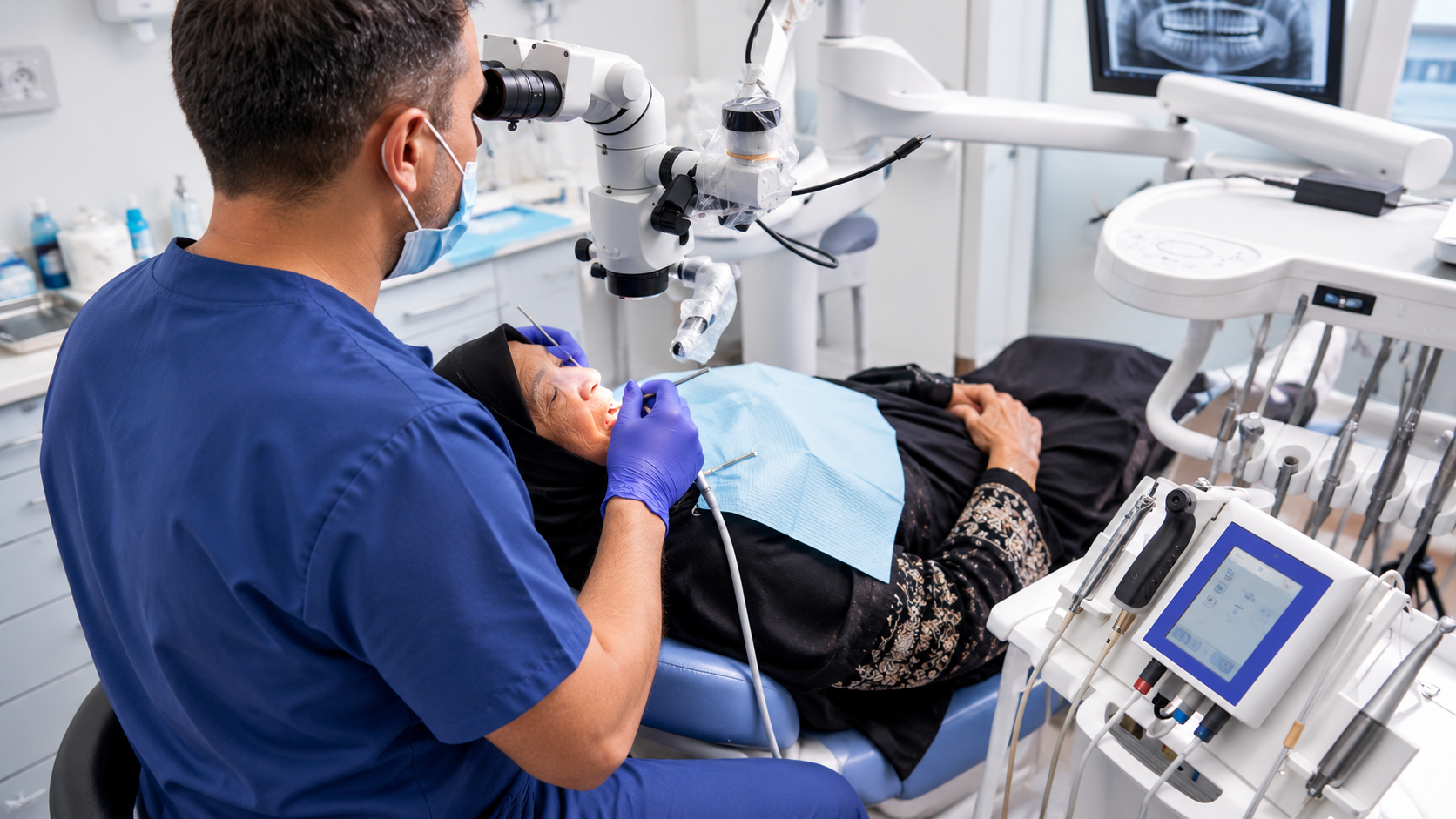
Dental implants offer an effective solution for tooth loss, but new research has found that around half of patients undergoing dental implants procedures routinely receive bone grafts to help ensure the implants’ success.
Bone grafts are used when the jawbone is not strong or thick enough to support a dental implant. The procedure aims to strengthen the bone and create a solid base so the implant can be securely placed and last for many years. In the UK around 1.5 million people may already have undergonea dental bone graft, with around 130,000 procedures performed each year.
However, many of these patients may not have been aware of the origin of the material used in their bone graft, which could come from a range of sources including cows, pigs, human bone material, or synthetic materials.
This raises serious ethical considerations about informed consent from patients, especially for many religious groups and others who may have ethical concerns about animal derived products.
Dental implants can use material from a range of sources these can be Xenografts using cow (bovine) or pig (porcine) bone, Allografts using donated human bone, Autographs using the patients own bone or synthetic alloplasts using synthetic material. The type of material used will be of concern to patients, especially those from certain religious groups (Muslim, Jewish, Hindu) or those who refrain from using animal products in their diets and lifestyles (vegetarians, vegans).
The General Dental Council (GDC) requires dentists to obtain valid consent from patients before starting treatment and this should include explaining treatment options, risks, benefits, and reasonable alternatives. A person’s religious, ethical and personal views should be considered as part of this process, and information should be given that could affect their decision-making.
However, in practice many patients may be unaware of what product is being used and what the alternatives are. A 2026 study reported in Dentistry magazine found that 63 per cent of implant patients said their clinician did not discuss different bone graft materials with them before treatment, potentially leaving them unaware of the source of the graft material. With 25 per cent saying they were not asked if their religious or ethical beliefs may affect their choice. In addition, 40 per cent said they would have preferred a synthetic material had they known the graft came from an animal or human source. This lack of information raises important ethical questions about patient autonomy and the right to make informed decisions based on personal, religious or cultural values. According to the study, half of Muslim patients said they would make a complaint if animal-derived products had been used without clear disclosure.
Dental professionals are calling for the consent process to cover not only which material is best suited to the procedure but also the source of the graft material and any reasonable alternatives, where clinically appropriate. This would give patients greater transparency about the materials used in their treatment help ensure that their consent and is properly informed. informed
Dr Mohsin Ali, an experienced dental implant surgeon and member of the British Islamic Medical Association, said, “Trust is at the heart of healthcare, and it is critical to ensure that for certain groups of patients holding particular beliefs, that materials used in their treatment do not conflict with their faith or deeply held values. For many Muslim patients, the origin of a bone graft is not a technical detail. It can be central to whether that treatment feels acceptable, respectful and properly consented to.”
The report, was published by Ethoss Regeneration, a UK dental company that manufactures synthetic bone graft material used by dentists, and warns that the information gap could leave patients feeling distressed, misled and unable to give properly informed consent.
Rachel Kayani,
Science tutor and writer