Harun Nasrullah
Lithuanian intelligence has found no evidence that the country’s Muslim community poses an extremist threat to national security, following incidents outside a mosque in Kaunas and the reported burning of a Qur’an in Vilnius.
Interior Minister Martynas Katelynas disclosed the assessment on September 23 after a closed meeting of the parliamentary National Security and Defence Committee examining the activities of the Lithuanian Council of Muslim Religious Communities, known as the “second Muftiate”.
“According to the State Security Department, there are no extremist threats to national security,” Katelynas said.
Giedrius Krupauskas, Deputy Director of the State Security Department, confirmed the assessment but declined to comment further.
Committee Chair Rimantas Sinkevičius said intelligence services had found no evidence of radicalisation within the Muslim community, while raising concerns about radicalisation among some Lithuanians.
“The services do not notice that the Muslim community is becoming radicalised,” he said, referring to the bikers involved in the Kaunas incident and the person who burned the Qur’an.
On September 11, about 100 bikers gathered outside Kaunas Mosque in Ramybės Park during Friday prayers. They revved their motorcycles, played loud music, shouted patriotic slogans and displayed a pig’s head.
Police opened a pre-trial investigation into possible incitement against a religious or other group and interference with religious rites. By September 29, prosecutors had not formally notified anyone of suspicion in the case.
Mufti Aleksandras Beganskas said the gathering targeted Muslims rather than addressing practical concerns about worshippers congregating outside the mosque.
“Regarding a breach of public order, one can contact the Kaunas municipality or the police, but if they brought a pig’s head instead of the Lithuanian flag, started insulting the community chairman and his assistant, and loudly intimidated them, I do not think this was a peaceful protest or rally,” he told Lithuanian public broadcaster LRT.
Beganskas said he had received threats to burn the mosque and harm him and his family. He called for greater protection for Muslims in Kaunas.
The Kaunas Archdiocese also condemned the incident. Archbishop Metropolitan Kęstutis Kėvalas said religious differences did not justify humiliating people.
“We can disagree, we can have different views, we can criticise, but we cannot humiliate a person because of their faith,” he said.
A separate incident was reported in central Vilnius on September 13, when a book believed to be a Qur’an was allegedly burned on Etmonų Street. Police opened an investigation into suspected hooliganism after footage circulated online.
On October 5, prosecutors confirmed that four people had been formally notified of suspicion in connection with the incident. Investigators were examining suspected public-order offences and incitement against a group on religious grounds.
An open letter signed by 60 representatives of Lithuania’s civic, cultural, academic, journalistic and political communities condemned the disruption of Muslim prayers and called on authorities to identify those responsible. The signatories warned that such incidents could potentially be exploited as part of Russian hybrid influence operations, without alleging Russian involvement.
On September 24, the State Security Department warned that hate speech against Muslims had increased in recent months and that the risk of violent crimes against Muslim community members and their institutions had risen.
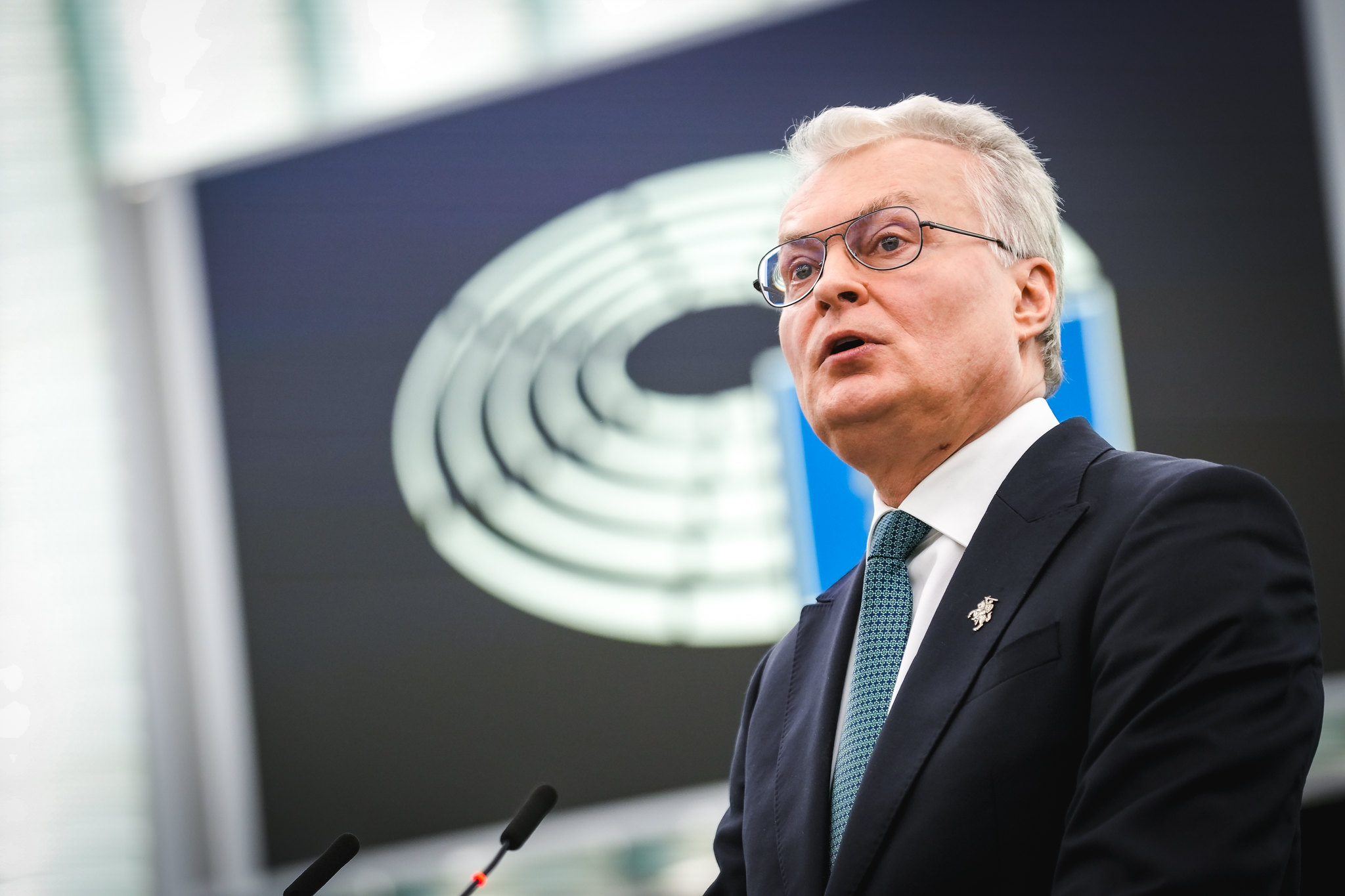
President Gitanas Nausėda said on September 30 that investigators should examine whether the incidents had been organised.
“The recurrence of incidents – alleged and real – over a relatively short period of time leads me to believe that these are not random outbursts of emotion, but campaigns for which organisers should be sought,” he told LNK television.
He said those responsible could include actors from countries to Lithuania’s east, but did not identify anyone behind the incidents.
Nausėda also opposed dividing migrants into Christian and non-Christian groups, saying people from different cultural backgrounds were not automatically hostile to Lithuania.
The incidents have coincided with a political dispute over immigration. Opposition Homeland Union leader Laurynas Kasčiūnas has proposed reducing the annual foreign-worker quota from about 24,700 to roughly 10,000, while exempting highly skilled workers. He has also called for greater scrutiny of the countries from which workers are recruited.
The 2026 quota was exhausted during the summer, according to the Migration Department. Business representatives have warned that tighter restrictions could worsen labour shortages, particularly in logistics.
Katelynas has said the existing quota system is not working and that a new migration policy model is being prepared. Social Security Minister Inga Ruginienė has defended the current system as strict and effective.
Prime Minister Mindaugas Sinkevičius has called for migration protests to be conducted responsibly, while Democratic Union “For Lithuania” MP Tomas Tomilinas has accused unnamed political figures of contributing to social discord.
The intelligence assessment followed concerns raised by conservative MP Dalia Asanavičiūtė-Gružauskienė, who had asked the parliamentary committee to examine whether the second Muftiate posed a national-security risk.
Established in 2019, the organisation has faced allegations that its creation contributed to divisions within Lithuania’s Muslim community and questions about its links with organisations abroad.
The September 23 assessment found no evidence that the second Muftiate or the wider Muslim community posed an extremist threat to national security.
Lithuania’s Muslim presence predates the current migration debate by centuries. Lithuanian Tatars, also known as Lipka Tatars, have lived in the region since the late 14th century. The Kaunas Mosque was built by the Tatar community between the two world wars.