Harun Nasrullah
The UK has summoned Serbia’s chargé d’affaires over the funeral of former Bosnian Serb military commander Ratko Mladić, whose burial in Belgrade drew thousands of supporters and featured military honours.
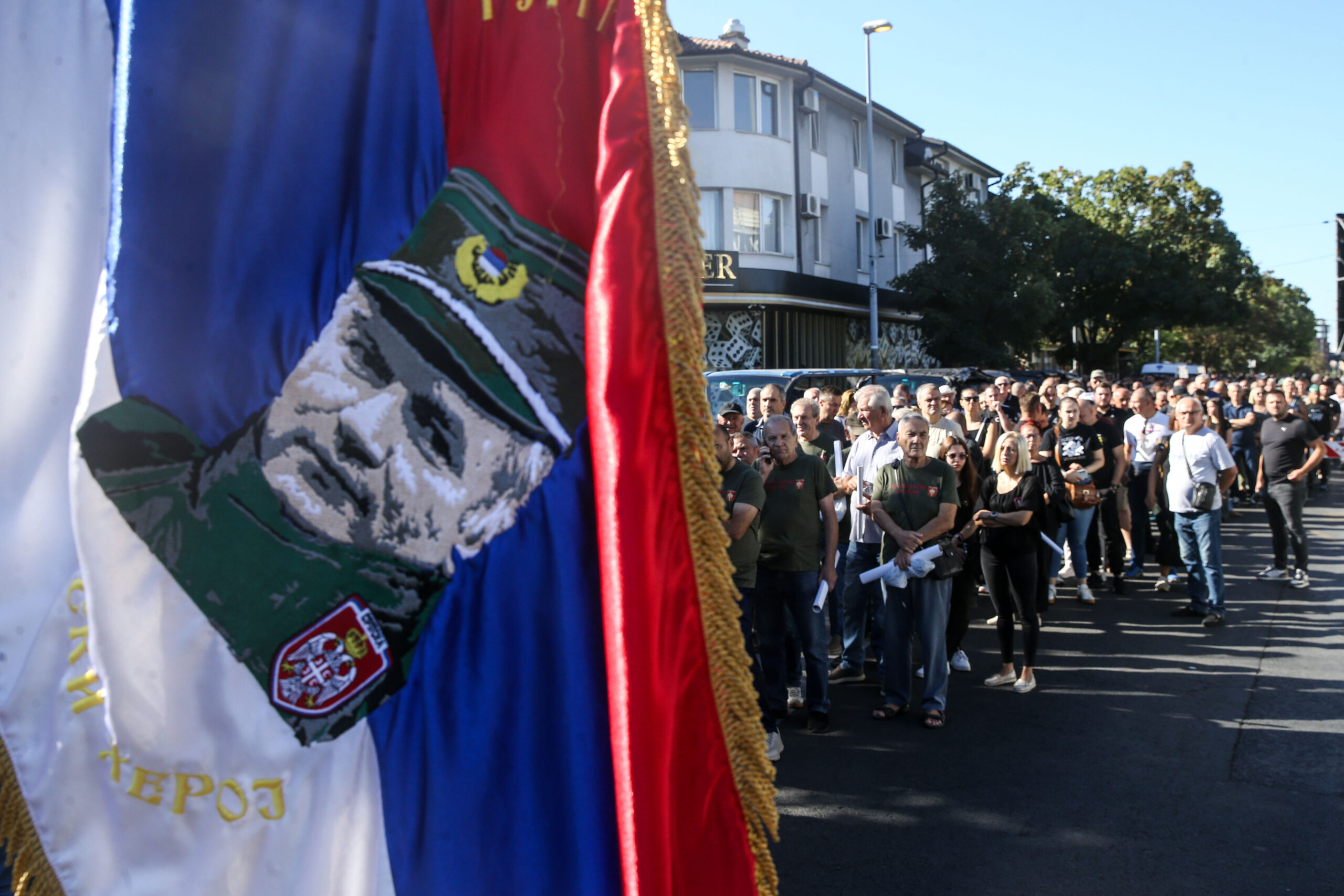
Mladić, 84, died on August 27 in The Hague while serving a life sentence for genocide, crimes against humanity and war crimes. His funeral on September 7 was attended by Serbian ministers and other supporters, while the head of the Serbian Orthodox Church presided over the service.
The UK’s Special Envoy to the Western Balkans, Dame Karen Pierce, summoned the Serbian chargé d’affaires on September 8 to protest the involvement of Serbian state and military officials. The Foreign, Commonwealth and Development Office said the move was prompted by the “glorification of a convicted war criminal”.
Britain’s Minister for Europe, Lord Wood of Anfield, said Mladić had presided over crimes “among the worst committed in Europe since the Second World War”.
“The denial and whitewashing of his crimes is an affront to international law and directly undermines regional stability and trust,” Wood said, adding that Mladić’s victims and their families deserved “respect, compassion and accountability, not efforts to rewrite proven history”.
The European Union also condemned the ceremony. European Commission President Ursula von der Leyen and European Council President António Costa described images from the funeral as “shocking”, saying the presence of senior Serbian officials and elements of official support were “deeply regrettable”.
They said the ceremony showed a failure to confront “a dark chapter in Europe’s recent history” and contradicted the values underpinning Serbia’s path towards EU membership.
The reaction has renewed scrutiny of Serbia’s handling of the legacy of the 1992–95 Bosnian war and its ambitions to join the EU.
Mladić’s coffin was displayed publicly in Belgrade before the burial, drawing mourners, veterans and nationalist supporters. For some in Serbia and Republika Srpska, he remains a symbol of Serb resistance during the war, with his image appearing on murals and other material celebrating him.
The public honours have angered survivors and relatives of those killed at Srebrenica and elsewhere in Bosnia. The UK Government said Serbia was obliged to respect the judgments of the International Criminal Tribunal for the former Yugoslavia (ICTY), established by the UN Security Council.
Mladić was convicted by the ICTY of genocide for his role in the 1995 Srebrenica genocide, in which more than 8,000 Bosniak Muslim men and boys were killed.
In July 1995, Bosnian Serb forces overran Srebrenica, a UN-declared safe area in eastern Bosnia. Men and boys were separated from women, children and elderly people and systematically executed. More than 8,000 people were killed between July 11 and 15. Many victims were initially buried in mass graves before their remains were exhumed and moved to secondary graves in attempts to conceal the killings.
Victims continue to be identified and buried at the Srebrenica-Potočari Memorial Centre, where survivors and relatives gather each year to commemorate those killed.
Mladić was also convicted of persecution, extermination, murder, deportation and forcible transfer, as well as crimes committed during the siege of Sarajevo.
Known as the “Butcher of Bosnia”, he commanded the Army of Republika Srpska during the 1992–95 war, which followed the break-up of Yugoslavia. The conflict killed more than 100,000 people and was marked by widespread ethnic cleansing, with Bosniak Muslims among the principal targets.
Mladić remained at large for almost 16 years after being indicted by the ICTY. He was arrested in Serbia on May 26, 2011, after security forces raided a property belonging to a relative in the village of Lazarevo. He had been living under the alias Milorad Komadić.
He was transferred to The Hague, where his trial began in May 2012. In November 2017, judges convicted him on 10 of 11 counts and sentenced him to life imprisonment. The International Residual Mechanism for Criminal Tribunals (IRMCT), which assumed the remaining functions of the ICTY, upheld his convictions and sentence on appeal in 2021.
The tribunal found Mladić was a key participant in a joint criminal enterprise whose objectives included the permanent removal of Bosnian Muslims and Croats from territory claimed by Bosnian Serb forces.
His health deteriorated significantly in his final years, with his family repeatedly seeking his release on humanitarian grounds. The requests were rejected.
In a ruling rejecting an earlier request, Judge Graciela Gatti Santana said an expected imminent death did not, by itself, require his punishment to be suspended. She stressed that the sentence also represented the international community’s condemnation of serious violations of international humanitarian law and human rights.
The IRMCT confirmed Mladić’s death on August 27 and recalled his convictions for genocide, crimes against humanity and war crimes. His remains were subsequently handed to his family and taken to Serbia for burial.
For survivors and families still searching for relatives killed during the conflict, Mladić’s legacy remains inseparable from the mass killings, expulsions and persecution carried out by Bosnian Serb forces.
His funeral has therefore reopened a long-running dispute over whether a man convicted of genocide and other war crimes should be publicly honoured by state and military officials. Britain’s decision to summon Serbia’s chargé d’affaires has brought that dispute into the diplomatic arena, while the EU has warned that the ceremony highlights Serbia’s failure to confront a dark chapter of its past.