Elham Asaad Buaras
The UK’s new restrictions on trade with illegal Israeli settlements in the occupied West Bank have raised questions over £2.129 billion in public-sector contracts held by companies linked by the United Nations to settlement-related activities, while Amnesty International has called for further measures.
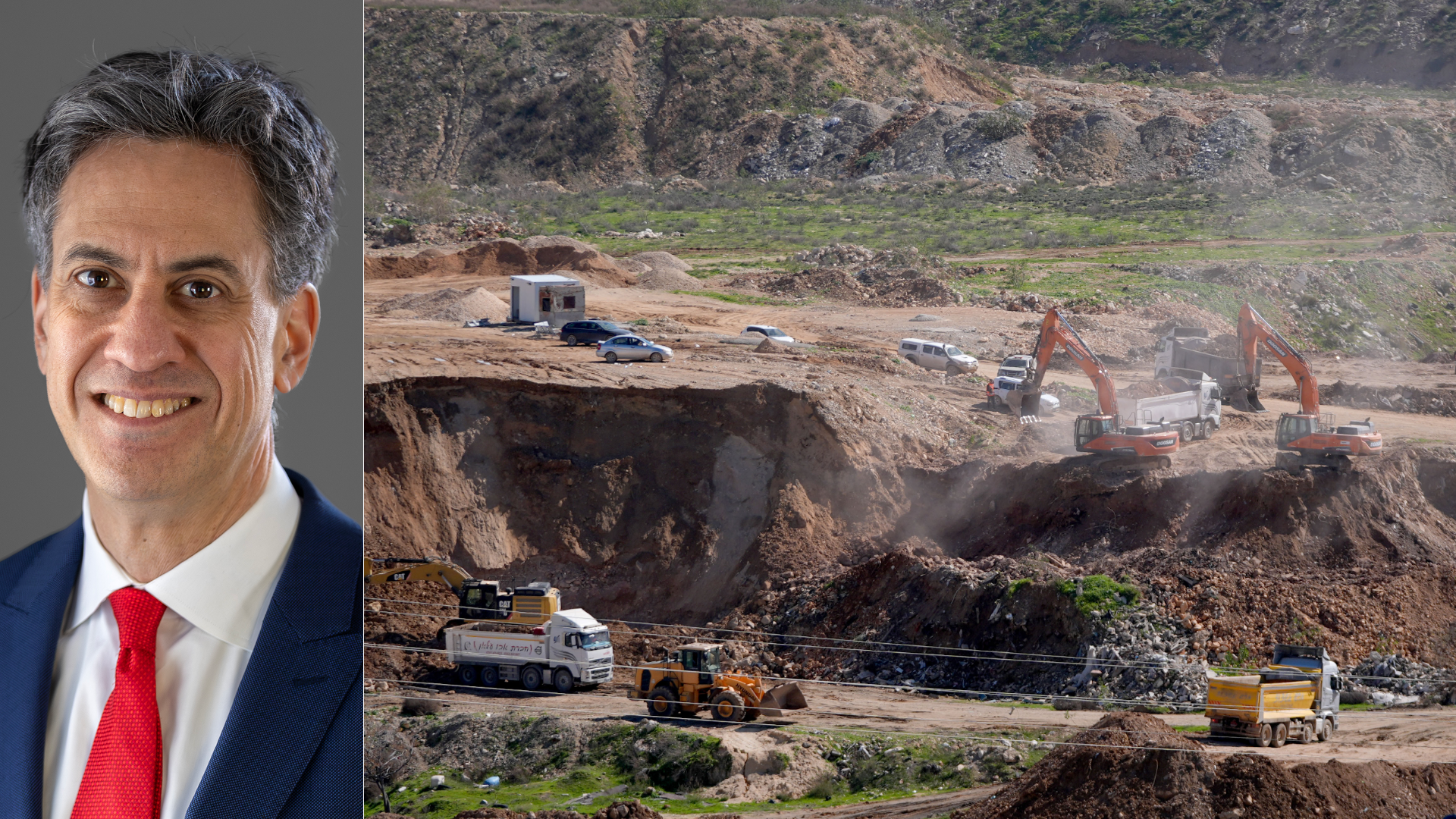
Foreign Secretary Ed Miliband announced the restrictions on September 8, including a ban on imports of goods produced in Israeli settlements and measures targeting companies and individuals involved in settlement construction, infrastructure financing and real estate. Advertising or promoting land and property in illegal settlements in Britain will also be prohibited.
The UK, Canada, Denmark, Finland, France, Iceland, Ireland, Norway, Poland, Portugal, Spain and Sweden said they intended to introduce national measures, support European restrictions or were actively considering measures targeting trade in goods from settlements.
The joint statement said the UK, France and Canada would bring forward national measures to ban trade in settlement goods, while welcoming action already taken by Ireland, Spain, the Netherlands, Norway and Belgium.
Amnesty welcomed the announcement but said the measures did not go far enough.
Erika Guevara Rosas, Amnesty International’s Senior Director for Research, Advocacy, Policy and Campaigns, described the announcement by the 12 states as a “welcome, if long overdue” development, but said the measures announced so far “fall far short” of meeting the International Court of Justice’s July 2024 instructions to states “not to render aid or assistance” in maintaining Israel’s unlawful occupation of Palestinian territory.
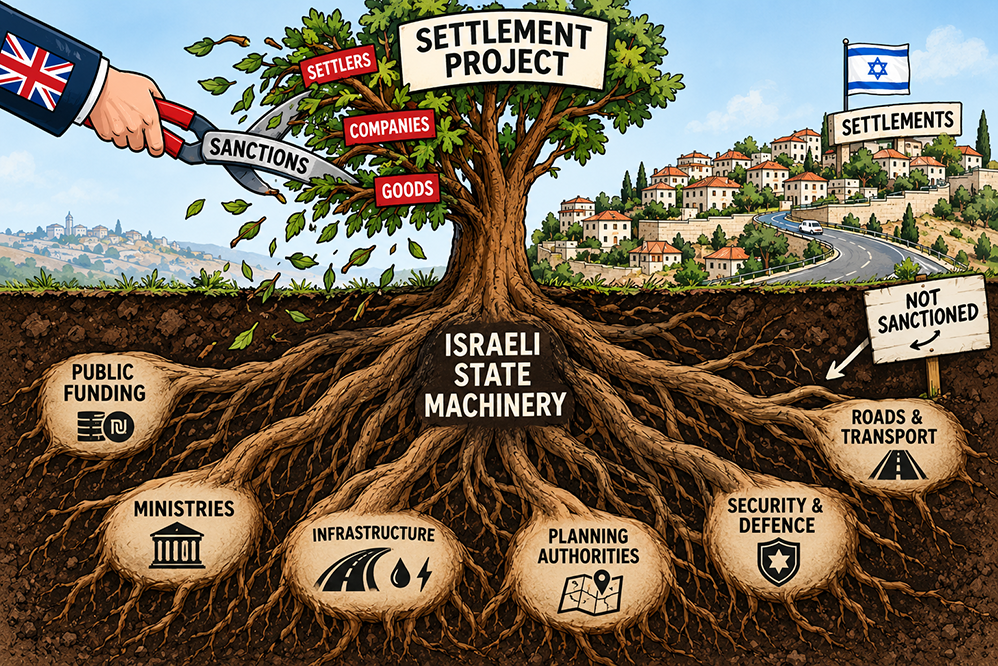
She called for measures targeting Israeli government ministries involved in establishing, maintaining and providing material support to settlements and settlement infrastructure.
Amnesty also called for targeted sanctions, including travel bans and asset freezes, against Israeli Prime Minister Benjamin Netanyahu and ministers Bezalel Smotrich, Itamar Ben-Gvir, Israel Katz and Orit Strock.
The concerns over the scope of the UK measures follow an Al Jazeera investigation published on August 28, which found that at least 17 companies and entities linked by the United Nations to settlement-related activities hold 125 UK public-sector contracts worth a combined £2.129 billion.
The contracts cover road maintenance, transport, emergency services and driving licensing, according to procurement data compiled by public procurement analysts Tussell.
Five companies ultimately controlled by US technology and communications group Motorola Solutions account for £1.726 billion of the contracts, according to the investigation.
The largest is a £1.562 billion Home Office extension awarded to Airwave Solutions, a Motorola subsidiary, for the secure communications network used by police, fire and ambulance services across England, Scotland and Wales.
Motorola Solutions UK separately holds contracts worth £123.9 million, including a £36.5 million Ministry of Defence contract for Airwave radios, accessories and airtime.
The investigation found that the companies, or parent groups controlling them, appear in a United Nations Human Rights Office database of businesses involved in specified settlement-related activities.
The UN identifies Motorola in connection with the supply of security equipment and services to enterprises operating in settlements, as well as the provision of services and utilities supporting the maintenance and existence of settlements.
Other corporate groups identified by the investigation include Heidelberg Materials, French engineering company Egis, Spanish train manufacturer CAF and Chinese conglomerate Fosun.
Heidelberg Materials’ Israeli subsidiary owns a quarry in the occupied West Bank. Egis and CAF are involved in Jerusalem’s light-rail network, while Fosun owns a company connected to Israeli cosmetics manufacturer Ahava, which operates in the Mitzpe Shalem settlement.
The existence of the contracts does not by itself establish that they breach the UK’s new restrictions.
Al Jazeera reported that Stephen Humphreys, professor of international law at the London School of Economics, said evidence was growing that the UK could be in breach of its international obligations by continuing to contract with entities identified by the UN as providing assistance to settlement activity.
The International Court of Justice ruled in July 2024 that Israel’s continued presence in the occupied Palestinian territory is unlawful and said states must not render aid or assistance in maintaining the situation created by Israel’s unlawful presence.
Amnesty has cited the ruling in calling for measures targeting what it described as the infrastructure that funds, sustains and supports Israel’s occupation.
“To truly tackle the violations stemming from illegal settlements states must go further,” Guevara Rosas said, calling for action against entities, including Israeli government ministries, involved in establishing and maintaining settlements and settlement infrastructure.
She also called for states to stop providing political, financial and military support that contributes to what Amnesty describes as serious and systematic violations of international law.
Amnesty urged EU states to seek a comprehensive EU-wide ban on trade with settlements and called for suspension of the EU-Israel Association Agreement.
“There is no longer any room for excuses, delays or half measures,” Guevara Rosas said. “Failure to act decisively to tackle Israel’s mass violations against Palestinians sends a dangerous signal that states are unwilling to uphold their own legal obligations.”
The joint statement by the 12 governments said Israeli actions in the West Bank were undermining the possibility of a two-state solution, citing what it described as unprecedented levels of settler violence and settlement expansion, including the publication of tenders for the E1 settlement project.
The governments said they opposed actions “tantamount to the annexation of Palestinian land and forcible displacement of the Palestinian population”.
Miliband said the UK measures were directed at settlement activity and not Israel’s population, while the Government said intelligence cooperation with Israel would continue. The measures were accompanied by an Israeli decision to close the British consulate in East Jerusalem and bar some British nationals from entering the country.
The UK Government has said the measures are intended to address settlement activity that it says undermines the prospects for a two-state solution.
The £2.1 billion in public-sector contracts identified by Al Jazeera involves companies and corporate groups whose settlement-related activities vary. Whether the new UK restrictions apply will depend on the specific companies, services and activities covered by the measures.