Nadine Osman
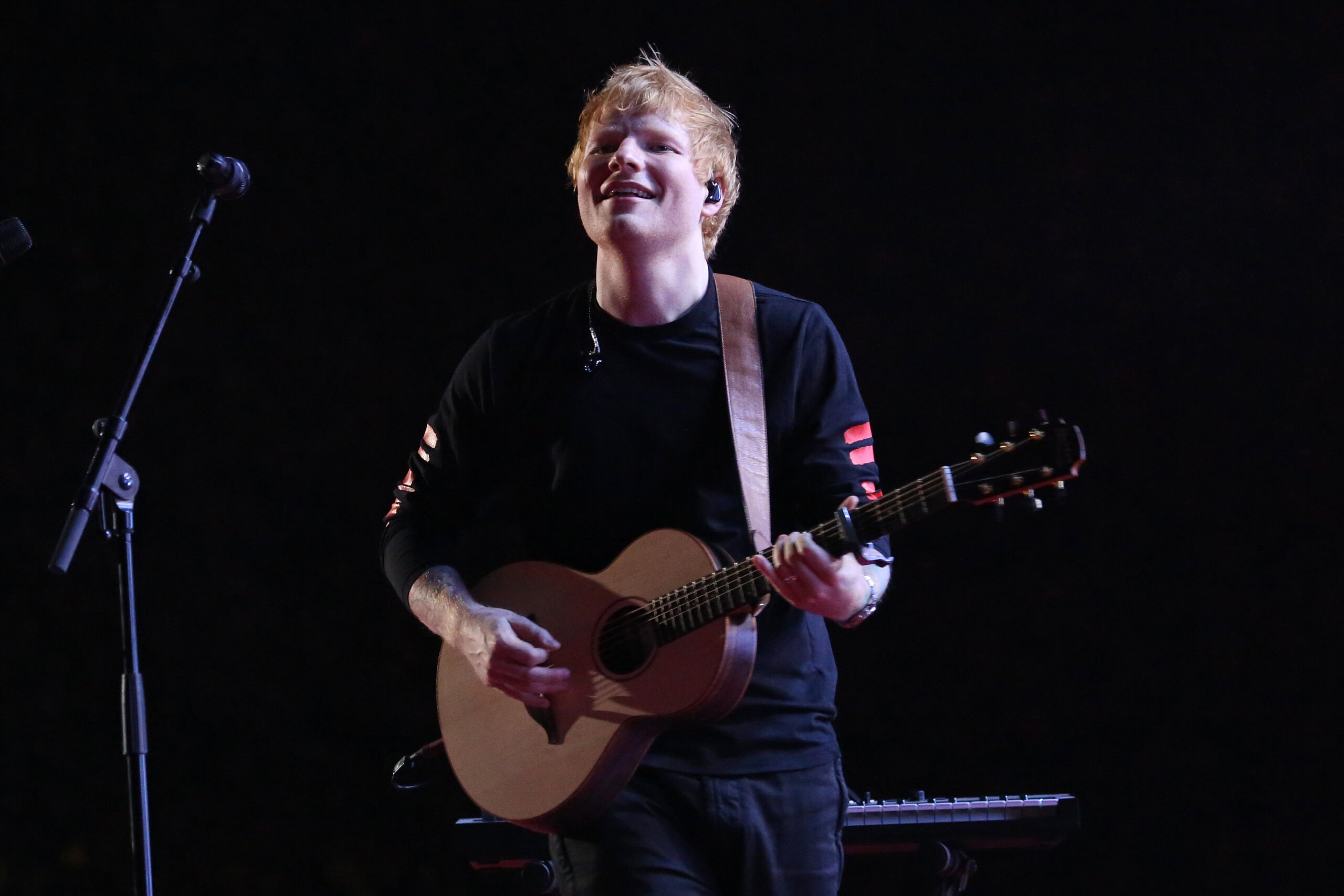
Ed Sheeran says concerts should be places of “safety and sanctuary”, not political battlegrounds. Yet after Macklemore walked onto Sheeran’s stage and told a stadium audience, “Free Palestine”, the argument over politics followed him straight off the tour.
On September 4, Macklemore performed Hind’s Hall at New Jersey’s MetLife Stadium while supporting Sheeran’s US Loop tour. Ten days later, he was gone.
Macklemore said Sheeran told him Robert Kraft — the billionaire owner of the New England Patriots and Gillette Stadium, where Sheeran was due to perform — had objected to his participation and approached other stadium owners about preventing him from performing.
Kraft, a prominent supporter of Israel, confirmed he intervened. He received the $1 million Genesis Prize from Benjamin Netanyahu in 2019 and later pledged $20 million to combat antisemitism and what he described as efforts to delegitimise Israel through the Boycott, Divestment and Sanctions movement.
Macklemore, meanwhile, has repeatedly used his platform to support Palestinians and condemn Israel’s actions.
Then comes Sheeran’s claim of neutrality.
Describing Macklemore’s removal as “the promoter’s decision; it was not mine”, Sheeran argued that he could not let down fans who had made plans or the touring crew and musicians whose livelihoods depended on the shows. He said he respected Macklemore’s “strength of purpose”, but believed there was “room for multiple approaches to the same end: peace”.
Yet he also insisted he did not want to use his “professional platform for politics”.
Except he already has.
In 2022, after Russia invaded Ukraine, Sheeran performed at the Concert for Ukraine in Birmingham, a major humanitarian fundraising event. He publicly supported Ukraine and directed royalties from his 2step video towards the Ukraine Humanitarian Appeal.
Ukraine and Gaza are not identical conflicts, and supporting Ukraine does not oblige Sheeran to endorse everything Macklemore has said about Israel. But it makes the language of being “above politics” harder to sustain — particularly when the person removed from his tour is a fellow musician he describes as a friend.
And the contradiction did not end with Macklemore.
The other supporting acts began walking.
Finneas, the singer-songwriter and brother of Billie Eilish, said artists must not be silenced when speaking up for oppressed people and said he stood with Palestine and its people.
Danish band Lukas Graham withdrew. Irish singer Aaron Rowe withdrew. Beoga, the Irish traditional band that has performed with Sheeran, also pulled out, with Rowe and Beoga invoking Ireland’s history of colonialism, occupation and forced famine. Beoga said performing in venues where people advocating for a free Palestine were being silenced was not an option.
Then Pink was pulled into the fallout, despite having nothing to do with the tour. She reposted criticism of Macklemore’s performance, objecting not simply to “Free Palestine” but to the political imagery and his decision to bring the Gaza war into a concert. She later said she was speaking as a Jewish mother who felt frightened by what she saw, while insisting that Palestinians also deserve a future and that innocent lives must be protected.
Now a petition calling for Pink to lose her role as a UNICEF ambassador has attracted more than 60,000 signatures. So much for keeping politics off the stage: one artist made a political statement, another objected to it, and now the objection has become part of the political fight too.
There is an awkward irony here. Macklemore was removed after making a political statement. Sheeran stayed while insisting he was not making one. Then other artists decided that continuing under those circumstances was itself a statement.
That is the problem with neutrality: it sounds wonderfully reasonable until someone else is the one being silenced.
And the reality behind the argument about “two sides” is hardly abstract.
On one side are Palestinians in Gaza — a population without a conventional army, navy or air force. On the other is Israel, a heavily militarised state whose military expenditure reached $48.3 billion in 2025 and which receives billions of dollars in US military assistance.
More than 73,000 Palestinians have since been reported killed in Gaza — roughly 61 Palestinian deaths for every person killed in Israel on October 7.
The numbers do not make one life worth more than another. But they do make the language of a “conflict” between two equal sides harder to sustain, particularly when the UN Independent International Commission of Inquiry has concluded that Israel committed genocide against Palestinians in Gaza, a finding Israel rejects.
Against that backdrop, the great political disruption to Sheeran’s tour appears to be a rapper saying two words: “Free Palestine.”
The issue is not whether Sheeran must endorse Macklemore’s position. There is a difference between refusing to endorse a political position and refusing to acknowledge a political reality.
Politics does not disappear because a promoter makes the decision, a billionaire owns the stadium or an artist says the decision was not his. Nor does a position become neutral simply because it is described that way.