Elham Asaad Buaras
Adidas has apologised after boycott calls over its decision to feature an Israeli military veteran who lost his leg during the 2021 Gaza conflict in a campaign promoting its single-shoe service for amputees, amid a severe prosthetics crisis facing thousands of Palestinians in Gaza.
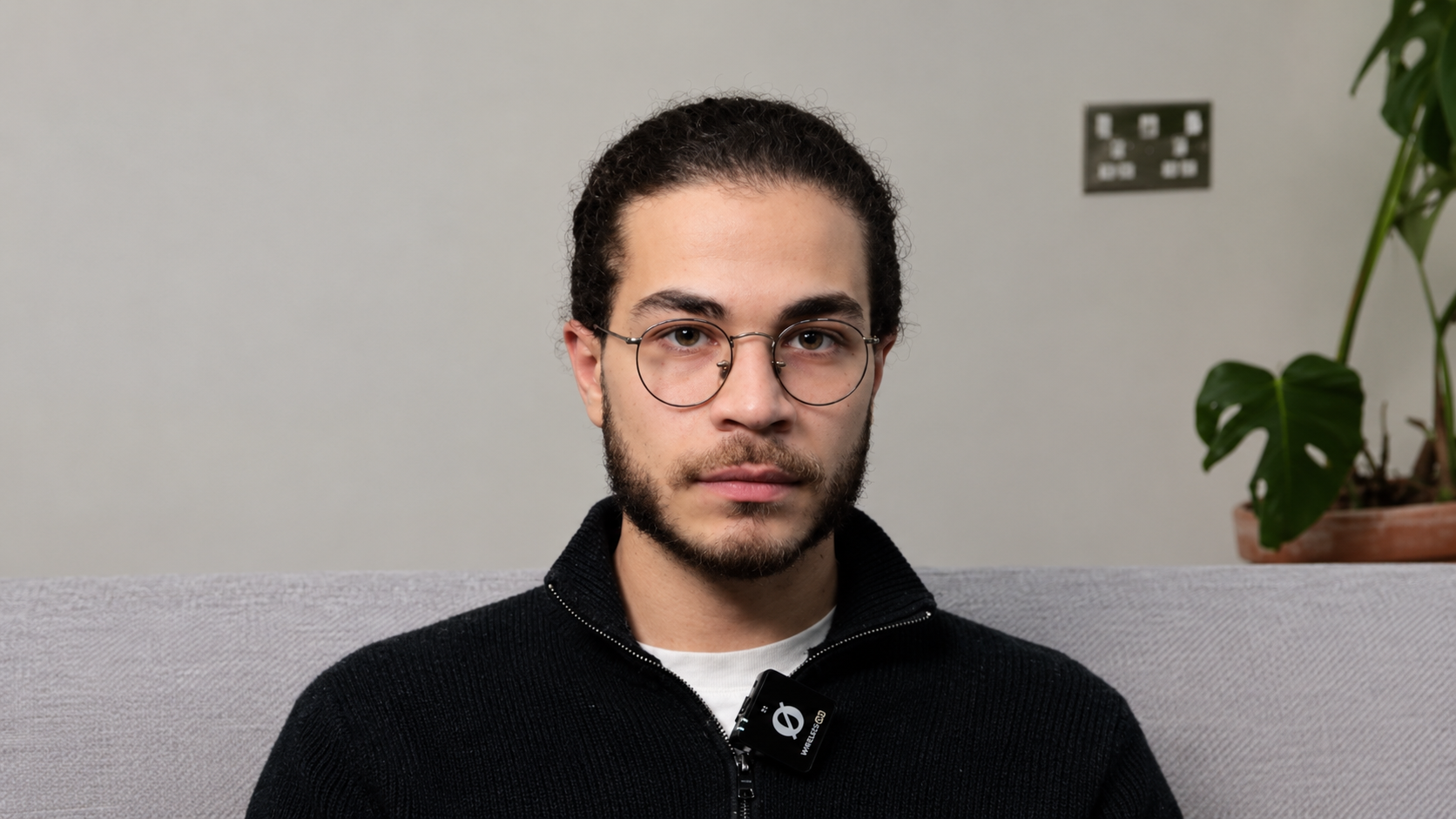
Shalev Biton, a former Nahal Brigade soldier, was among 11 disabled athletes featured in Adidas’ local Israeli promotion of its Single Shoe service, which allows people with limb differences to purchase a single shoe rather than a pair.
The service was introduced in Europe earlier this year and enables amputees and others with lower-limb differences to buy one shoe rather than being required to purchase a pair.
Biton lost his left leg after an anti-tank missile struck his military vehicle during the May 2021 Israel-Gaza conflict. Staff Sgt Omer Tabib, who was in the vehicle, was killed in the attack.
The Adidas campaign showed Biton trying on a single trainer in an Israeli store before running outdoors. The advertisement did not refer to his military service or explain how he lost his leg.
Its appearance online prompted criticism from human rights activists and calls for a boycott of Adidas, with critics contrasting the promotion of an accessibility service for an Israeli amputee with the conditions facing Palestinians who have lost limbs during Israel’s war on Gaza.
A boycott campaigns coordinator described the advertisement as an “affront to Palestinians”, while activists pointed to the scale of amputations in Gaza.
Adidas subsequently apologised, describing the promotion as a local activation rather than a global campaign.
“We recognize that an image used in a recent local activation by the local team has raised concerns and strong reactions,” the company said. “It was never our intent to cause offence, and we apologize for anyone affected.”
Adidas Arabia separately issued an apology, saying: “It was not our intention in any way to cause offence, and we apologize to everyone affected by this,” and that it was taking the reactions “with the utmost seriousness”.
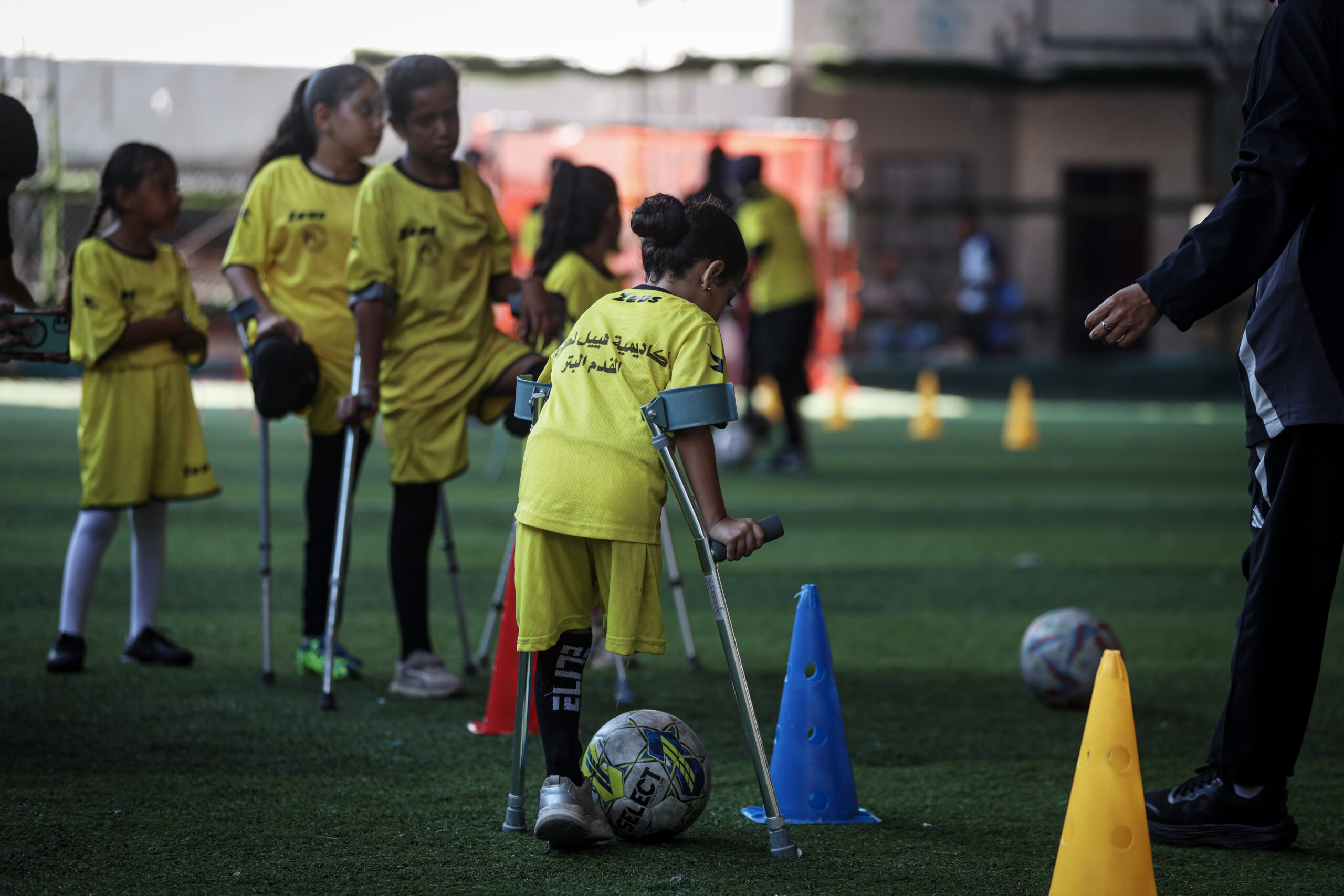
The controversy comes as Gaza faces an unprecedented amputation and rehabilitation crisis.
According to the World Health Organisation’s May 2026 update, more than 5,000 traumatic limb amputations and more than 22,000 major extremity injuries have been recorded in Gaza since October 2023. An estimated 43,000 people have sustained life-changing injuries, with up to one quarter of those affected being children.
WHO data covering September 2024 to May 2026 found that 2,277 amputees had been evaluated, but only 502 had been fitted with permanent prosthetics. Eight prosthetists were working across Gaza, while thousands remained in need of rehabilitation and assistive equipment.
Humanity & Inclusion estimated that between 5,000 and 6,000 people in Gaza had undergone amputations by early October 2025 and warned in April that access to prosthetic services remained severely constrained.
The charity has also reported that fewer than one-third of pre-conflict rehabilitation services remained partially functional and that only a handful of prosthetic and orthotic technicians were still working in Gaza.
The shortage of prosthetic materials has forced rehabilitation providers to improvise. Reuters reported in April that centres were reusing old prostheses and making temporary devices from materials including plastic and wood as supplies became increasingly difficult to obtain.
The International Committee of the Red Cross has also warned of severe shortages of materials needed for physical rehabilitation, while Gaza’s rehabilitation centres face growing waiting lists.
The contrast has fuelled criticism of Adidas’ decision to use Biton in its campaign, despite the company’s Single Shoe service being designed to address a genuine accessibility problem affecting amputees and people with limb differences.
Biton said the initiative had personal significance.
“It may seem like something small, but for me, it is much more than a shoe,” he said.
The controversy also recalls Adidas’ handling of a separate dispute involving Palestinian-American model Bella Hadid in 2024.
Hadid was the face of an Adidas SL72 campaign linked to the trainer originally launched around the 1972 Munich Olympics, when 11 members of Israel’s Olympic delegation were killed by Palestinian militants.
Israeli officials and the American Jewish Committee criticised Hadid’s involvement. Adidas subsequently removed images featuring her, revised the campaign and apologised, saying it had made “an unintentional mistake”.
Hadid said at the time that she was “shocked”, “upset” and “disappointed”, adding that had she been made aware of the historical context, “I would never have participated”.
She also said Palestine was “not synonymous with terrorism” and that she would “forever stand by my people of Palestine while continuing to advocate for a world free of antisemitism”.