Nadine Osman
The UK approved £5.3 million worth of military export licences to Israel between January and March 2026, covering components for military aircraft displays, radar systems and surface-to-air missiles, according to new figures released by the Campaign Against Arms Trade (CAAT).
The licences also covered military electronic equipment, as well as munitions and ordnance detection and disposal equipment.
Almost £4.9 million of the approved licences were for incorporation, meaning the components could be exported to Israel for inclusion in larger systems before being re-exported to another country.
CAAT said the UK licensing system does not subsequently track these components, making it unclear whether they are re-exported or incorporated into equipment used by the Israeli military.
The £5.3 million figure represents licences approved rather than equipment confirmed as delivered. Government statistics record permissions granted for strategic exports and do not necessarily indicate that the licensed goods were shipped.
The figures come as the Government faces renewed calls for a full two-way arms embargo on Israel.
As of February 28, Government data showed 395 non-suspended extant licences involving Israel, including 203 covering military goods. Of those military licences, 89 related to exports intended for re-export to third countries, while 68 listed the Israeli Government as an end-user or potential end-user.
The Government valued the non-suspended licences at £303 million, excluding licences linked to the global F-35 programme. The military portion was valued at £130 million.
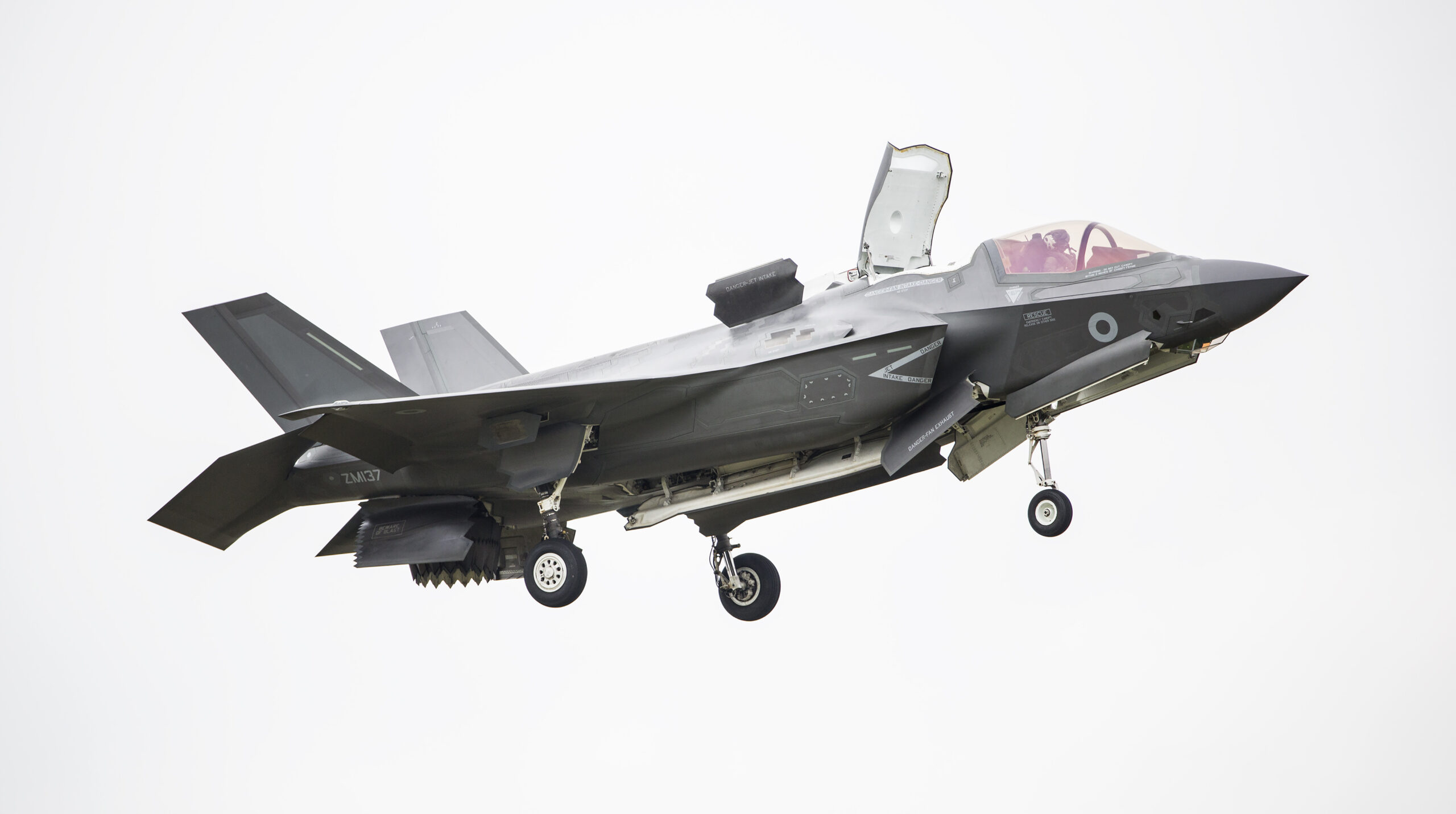
The UK suspended 29 licences in September 2024 after concluding there was a clear risk that certain exports could be used to commit or facilitate serious violations of international humanitarian law. The suspension covered components for military aircraft, helicopters, drones and ground-targeting equipment, but did not include Britain’s participation in the global F-35 programme.
CAAT estimates that F-35 components covered by British single and open licences have amounted to £634 million since 2015. The organisation said the estimate includes open licences, which do not carry a fixed financial value.
CAAT’s Freedom of Information research also found that 68 companies applied for export licences to Israel during 2025, including 18 that had not previously appeared in its available records.
That year, the UK licensed £30 million of military equipment to Israel through 20 single licences, alongside six open licences. Incorporation licences accounted for £19.5 million of the £30 million.
The 18 newly identified companies operate across the aerospace, defence, engineering and technology sectors.
CAAT cautioned that its historical records, compiled from Freedom of Information responses dating back to 2008, are not comprehensive and cannot establish definitively that the companies had never previously applied for licences to Israel. It said it was confident they had not previously applied for licences that remained extant during the conflict following October 7, 2023.
The findings come as Israel’s defence industry reports continued growth in exports. Israel’s Defence Ministry said defence exports reached a record $19.2 billion in 2025, almost 30 per cent higher than the previous year and the fifth consecutive annual record.
“The very fact that even during a third year of fighting, Israel continues to break records in defense exports is proof of the high regard for Israeli technology around the world,” Israeli Defence Minister Israel Katz said.
The UK’s licensing arrangements have become a political issue for Prime Minister Andy Burnham’s government, amid pressure from Labour figures and pro-Palestinian groups for a comprehensive arms embargo.
CAAT Media Coordinator Emily Apple called for a full two-way embargo, saying anything less would leave the UK “complicit” in atrocities.
She also criticised the involvement of the 18 newly identified companies, saying CAAT was “naming and shaming” them.
Separately, the Government said 112 licences were issued between August 1, 2025 and February 28, 2026, while 10 applications were refused or rejected. It said 90 per cent of the refused or rejected applications involved items assessed as being for military operations in Gaza.
The latest figures therefore show that UK military export licensing to Israel continues despite the partial suspension introduced in 2024, while Britain’s involvement in the global F-35 supply chain remains outside that suspension.
Editorial – Britain sanctions Israel’s settlements, so why is the state behind them untouched?