Home Affairs Correspondent
Asian and Black officers in Britain’s largest police force are significantly less likely to be promoted than their white colleagues, particularly at lower ranks, new data suggests.
The findings, released on March 25 by Hyphen, appear to reinforce concerns raised in the landmark Baroness Casey Review (2023), which concluded that the Metropolitan Police promotion system was widely perceived as unfair and discriminatory towards officers from ethnic minority backgrounds.
Figures covering 2019 to 2024 show clear disparities in promotion outcomes. Fewer than half of Asian officers (44.5%) were successful in applications for promotion from constable to sergeant, compared with 58% of white officers. Black officers had a success rate of 55% at this stage.
At the next level, from sergeant to inspector, 38% of Asian candidates were successful compared with 42% of white officers, while fewer than one in three Black sergeants were promoted. Some figures were redacted, suggesting the actual success rate for Black officers may have been as low as 26%.
Andy George, president of the National Black Police Association (NBPA), said the findings were “absolutely no surprise”.
He said minority officers often face barriers linked to inconsistent promotion processes, limited mentoring, and reliance on managerial approval.
“In some cases, if you don’t get your line manager’s approval, you’re stuck,” he said. “Given the racism some of our members face, and a lack of understanding of different cultural communication styles, officers can be unfairly judged on things like language or presentation rather than competence.”
George also pointed to informal networks within policing that can advantage officers from policing families.
“If you’re a second or third-generation officer, you often come in with connections and an understanding of how the system works,” he said. “That can translate into better opportunities and development support.”
Concerns about inequality in policing promotion have been raised repeatedly by serving and former officers.
Nusrit Mehtab, who left the Met in 2020 after 32 years of service, has previously spoken about experiencing discrimination on the basis of race, sex and religion. She documented her experiences in her 2024 memoir Off the Beat: My Life as a Brown, Muslim Woman in the Met, describing barriers to progression and institutional culture issues.
The National Association of Muslim Police (NAMP), established in 2007, has also raised concerns about Islamophobia, promotion inequality and disciplinary disparities affecting Muslim officers.
Former senior detective Shabnam Chaudhri warned in 2023 that discriminatory behaviour within the force was still being “allowed to slip through the net”.
The Casey Review, conducted in 2022–23, found evidence of widespread racism, misogyny and homophobia within the Met, alongside a perception among officers that the promotion system was unfair and opaque.
A 2025 independent report by Dr Shereen Daniels also concluded there was evidence of “systematic racism” within the force, particularly affecting Black officers.
The report found that 59% of Black officers and 58% of Asian officers disagreed that the promotion system was fair and transparent, compared with 51% of white officers. It also highlighted a “who you know” culture in which informal relationships and internal networks could influence progression.
One officer, anonymised as “K”, said in the report they were told they were “not ready” for promotion without being given guidance on how to improve, despite having comparable experience to successful peers.
The issue has been further highlighted by a BBC Panorama investigation broadcast on October 2, 2025, which revealed racist, Islamophobic and misogynistic behaviour among officers at Charing Cross police station.
Undercover footage recorded over seven months showed officers making discriminatory remarks about Muslims and other minority groups, mocking detainees, and expressing support for far-right figures.
The revelations prompted an apology from Met Commissioner Sir Mark Rowley, who described the behaviour as “appalling” and “completely unacceptable”. Several officers were suspended, with at least seven dismissed for gross misconduct.
Muslim police groups said the findings caused “significant anger and hurt”, while critics warned that little appeared to have changed despite repeated reviews of police culture.
The findings have renewed concerns about confidence in policing among minority communities, with critics warning that perceptions of bias could discourage victims from reporting hate crimes.
Andy George said there had been little evidence of meaningful reform since the Casey Review.
“We are seeing more people suffering racism and more officers being pulled into misconduct processes,” he said. “On a day-to-day basis, our members report increasing hostility.”
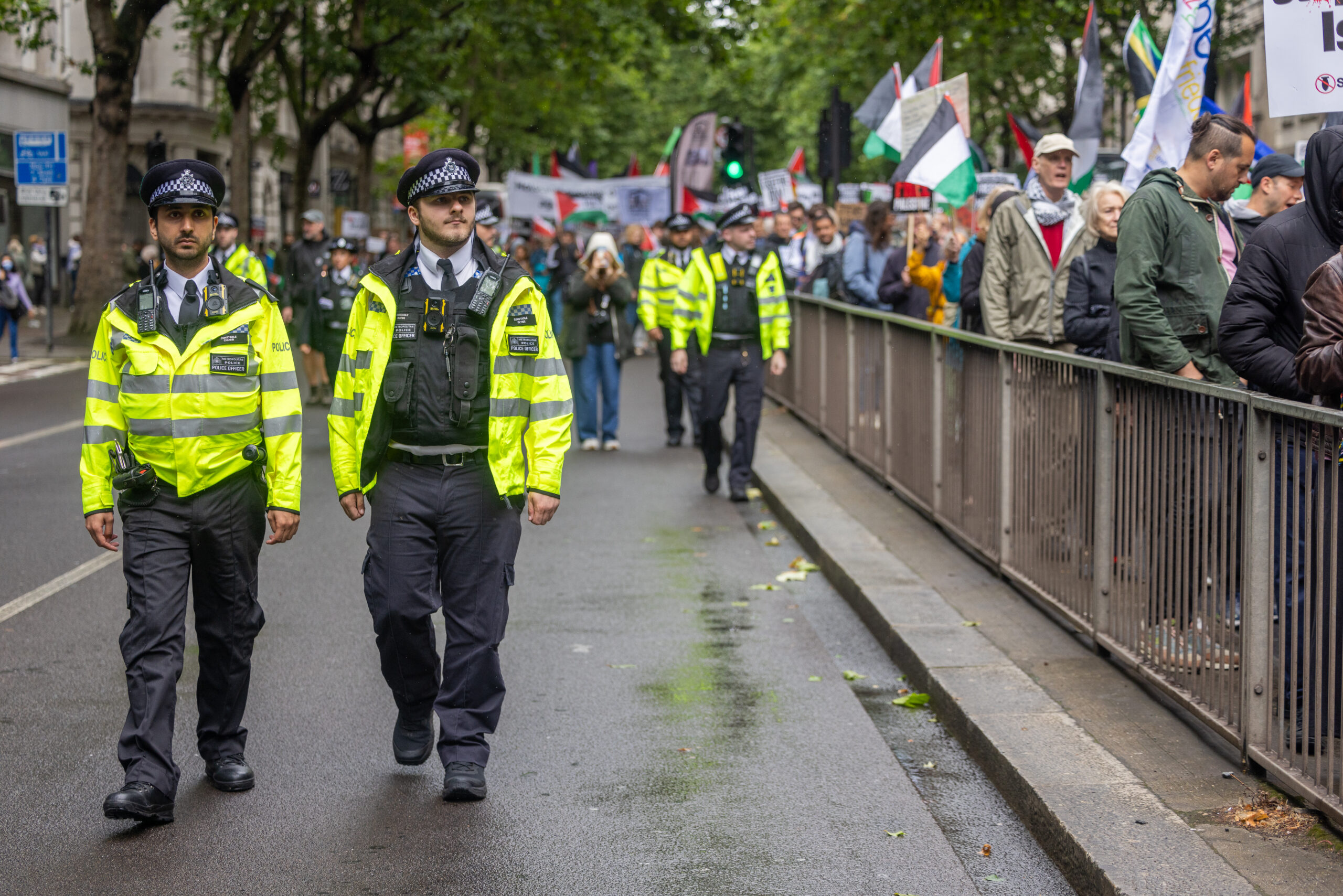
Feature photo: Officers from the Metropolitan Police Service are seen policing the National March for Palestine in central London on July 6, 2024. New data shows ethnic minority officers in the Met are significantly less likely to be promoted than white colleagues, raising concerns about systemic bias in the force. (Credit: Nathan Posner/AA)