Elham Asaad Buaras
Muslim Americans are more numerous, politically visible and institutionally established than ever, yet negative perceptions of Islam remain deeply entrenched 25 years after the September 11 attacks, a new Pew Research Center analysis has found.
Published on September 3, the analysis draws on a quarter century of Pew research into Muslim Americans’ experiences and US attitudes towards Islam and Muslims.
This spring, 43 per cent of US adults said Muslims are less patriotic than other Americans, while 42 per cent said Muslim Americans have a negative impact on the country.
Some respondents explicitly linked their views to 9/11, citing the attacks as the reason for their attitudes.
Perceptions of Islam have also become more negative since the attacks. In March 2002, six months after 9/11, 25 per cent of US adults said Islam was more likely than other religions to encourage violence.
In the 11 subsequent Pew polls, that figure never fell below 38 per cent. Over the past decade, it has remained between 45 and 52 per cent, reaching 51 per cent in early 2026.
The partisan divide has widened sharply. In 2026, 76 per cent of Republicans and Republican-leaning independents said Islam was more likely than other religions to encourage violence, compared with 29 per cent of Democrats and Democratic-leaning independents.
Immediately after 9/11, the figures were 32 per cent among Republicans and Republican leaners and 23 per cent among Democrats and Democratic leaners.
Pew said the smaller gap may have reflected then-President George W. Bush’s efforts to distinguish Islam from the attacks.
Visiting the Islamic Center of Washington, DC, on September 17, 2001, Bush said: “The face of terror is not the true faith of Islam. Islam is peace.”
FBI data show that crimes motivated by anti-Muslim or anti-Islamic bias rose from 28 in 2000 to 481 in 2001, the highest annual figure recorded.
The number has fluctuated since, reaching 307 in 2016 and falling to 95 in 2021, but has never returned to its pre-9/11 level.
The data cover crimes reported by participating law-enforcement agencies and exclude incidents involving multiple biases or crimes targeting ethnic groups such as Arabs or South Asians. FBI data collection has also changed over time, including the transition to the National Incident-Based Reporting System in 2021.
For Muslims, discrimination has remained a persistent experience.
In late 2001, 52 per cent of Muslims surveyed said their community had experienced anti-Muslim discrimination since the attacks, while 68 per cent said media portrayals of Muslims and Islam were unfair.
Yet 75 per cent also said Americans had been respectful and tolerant of Muslims, reflecting a recurring finding in Pew research that hostility has existed alongside significant public acceptance.
By May 2026, most Muslim Americans continued to report “a lot” of discrimination against Muslims and unfair media portrayals. At the same time, 34 per cent said someone had expressed support for them during the previous year because they were Muslim.
Younger and US-born Muslims have reported different experiences from older generations and immigrants.
A 2017 Pew survey found younger Muslims were less likely than older Muslims to say Americans were generally friendly towards Muslims.
US-born Muslims were also less likely than Muslim immigrants to view Americans as friendly towards Muslim Americans and more likely to report discrimination, including being treated with suspicion, singled out by airport security or law enforcement, called offensive names, or physically threatened or attacked.
Muslims who were visibly identifiable as Muslim, including women wearing headscarves, were particularly likely to report discrimination.
Pew suggested younger and US-born Muslims may be more impatient for social change and more confident about influencing it. One US-born Muslim, identified as Yasmin, told Pew in 2017: “I think the older generation of immigrants … are definitely more quiet on these issues … versus me, I’ve been here, I was born here, I’m here to change it and to make it better.”
The persistence of suspicion has coincided with a major expansion of Muslim life in the US.
Pew estimates that about 5.5 million Muslims of all ages now live in the country, compared with 2.4 million in 2007, when it first estimated the Muslim population. The number of US mosques has also more than doubled, from roughly 1,200 in 2000 to nearly 2,800 in 2020, according to Faith Communities Today data. The growth came despite controversies after 9/11 over plans to build mosques and Islamic community centres in communities across the country.
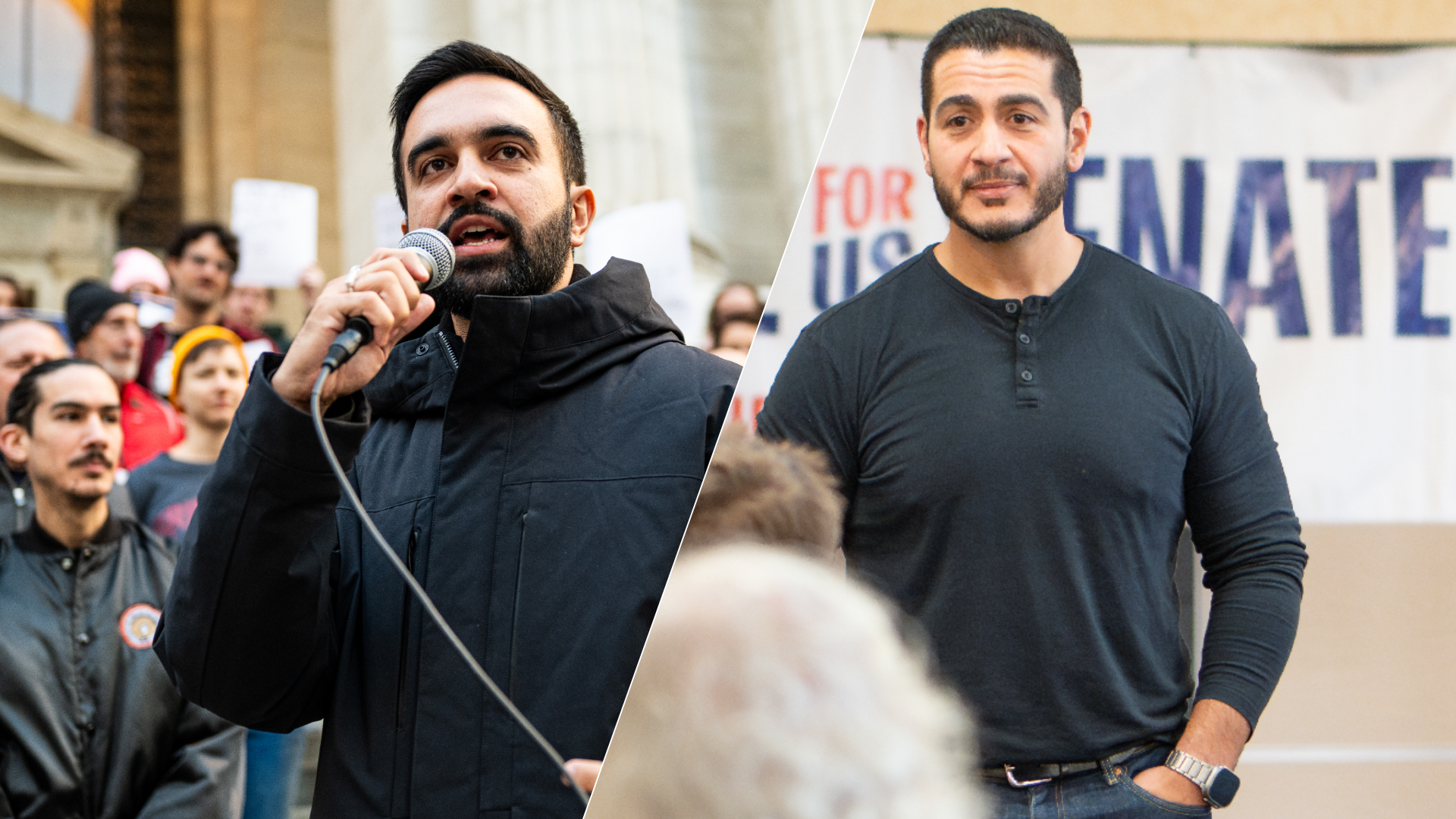
Muslims have also gained unprecedented political representation. There were no Muslim members of Congress in 2001. There are now four, with a fifth set to join, according to Pew. In 2022, Mehmet Oz became the first Muslim to win a major US party’s Senate nomination after winning the Republican primary in Pennsylvania, although he lost the general election.
In 2026, Abdul El-Sayed won the Democratic primary to become his party’s Senate nominee in Michigan.
In New York, where the World Trade Center towers fell on September 11, 2001, Zohran Mamdani was inaugurated this year as the city’s first Muslim Mayor.
But greater political visibility has not ended anti-Muslim rhetoric.
In March, Republican Representative Chip Roy of Texas, co-founder of the Sharia-Free America Caucus, posted “No more Muslims…” on X. In August, Republican Representative Nancy Mace of South Carolina wrote: “Every single Muslim holding public office in America is a Trojan horse, and a threat to both national security and our republic.”
Pew’s findings highlight the contrast between a Muslim American community that has more than doubled in size, expanded its institutions and gained political representation, and continuing suspicion of Islam.
Attitudes associating Islam with violence remain substantially more negative than they were just six months after the 9/11 attacks. The analysis draws on Pew surveys of US adults and Muslim Americans conducted over 25 years, including detailed studies in 2007, 2011 and 2017, alongside its 2026 American Trends Panel. It also uses FBI hate-crime statistics from 1999 to 2025 and data on the number of US mosques.
The 2026 estimate of 5.5 million Muslims combines Pew’s 2023-24 Religious Landscape Study with US Census Bureau demographic data and previous surveys of the Muslim population.