Elham Asaad Buaras
Just 3.8 per cent of an $850 million US federal security fund intended to protect vulnerable non-profit organisations from terrorist attacks went to Muslim organisations, according to figures under renewed scrutiny following the May 18 shooting at the Islamic Center of San Diego that killed three people.
An analysis by the Muslim Public Affairs Council (MPAC) found that Islamic organisations received $32.2 million through the US Department of Homeland Security’s Nonprofit Security Grant Program between 2017 and May 2026, spread across 241 grants.
The disparity is starkest when compared with Jewish and Christian organisations. Jewish groups received $492.2 million — 57.9 per cent of the total — through 3,700 grants, while Christian organisations received $222.5 million, or 26.2 per cent, across 1,672 awards.
Secular organisations, including hospitals and colleges, received $94.1 million, or 11.1 per cent.
The remaining funding was distributed among smaller religious groups. Hindu organisations received $5.54 million, Sikh organisations $2.38 million and Buddhist organisations $1.17 million, while interfaith projects received $501,755. A single Rastafarian applicant received $53,000.
The disparity has persisted across three US presidencies.
During Donald Trump’s first term, Muslim organisations received 2 per cent of security funding, compared with 73 per cent awarded to Jewish organisations.
Under Joe Biden, the Muslim share rose to 4.2 per cent, while Jewish organisations received 54.5 per cent.
Since Trump returned to the White House, Muslim organisations have received 3.6 per cent of funding, compared with 53.7 per cent for Jewish organisations.
The figures have gained renewed attention following a political dispute over the programme last year.
In July 2025, the conservative Middle East Forum published a report accusing the Department of Homeland Security of awarding taxpayer-funded grants to 49 organisations it described as “terror-linked and extremist”.
The organisation said in August that US authorities had withdrawn $8 million (£5.9 million) in grants from groups it had identified. Leaked government documents reportedly later confirmed that 49 projects had been cancelled over alleged security concerns.
The decision triggered a political backlash in Washington, with 33 Democratic members of Congress signing a letter accusing the Department of Homeland Security of withholding information and unlawfully discriminating against Muslim places of worship.
The dispute has since taken on greater significance following the San Diego attack.
In April 2026, MPAC’s Center for Security, Technology, and Policy held an emergency briefing with representatives from more than a dozen mosques, warning that rising online hostility towards Muslims was creating an increasingly dangerous environment and raising concerns about the possibility of a mass-casualty shooting.
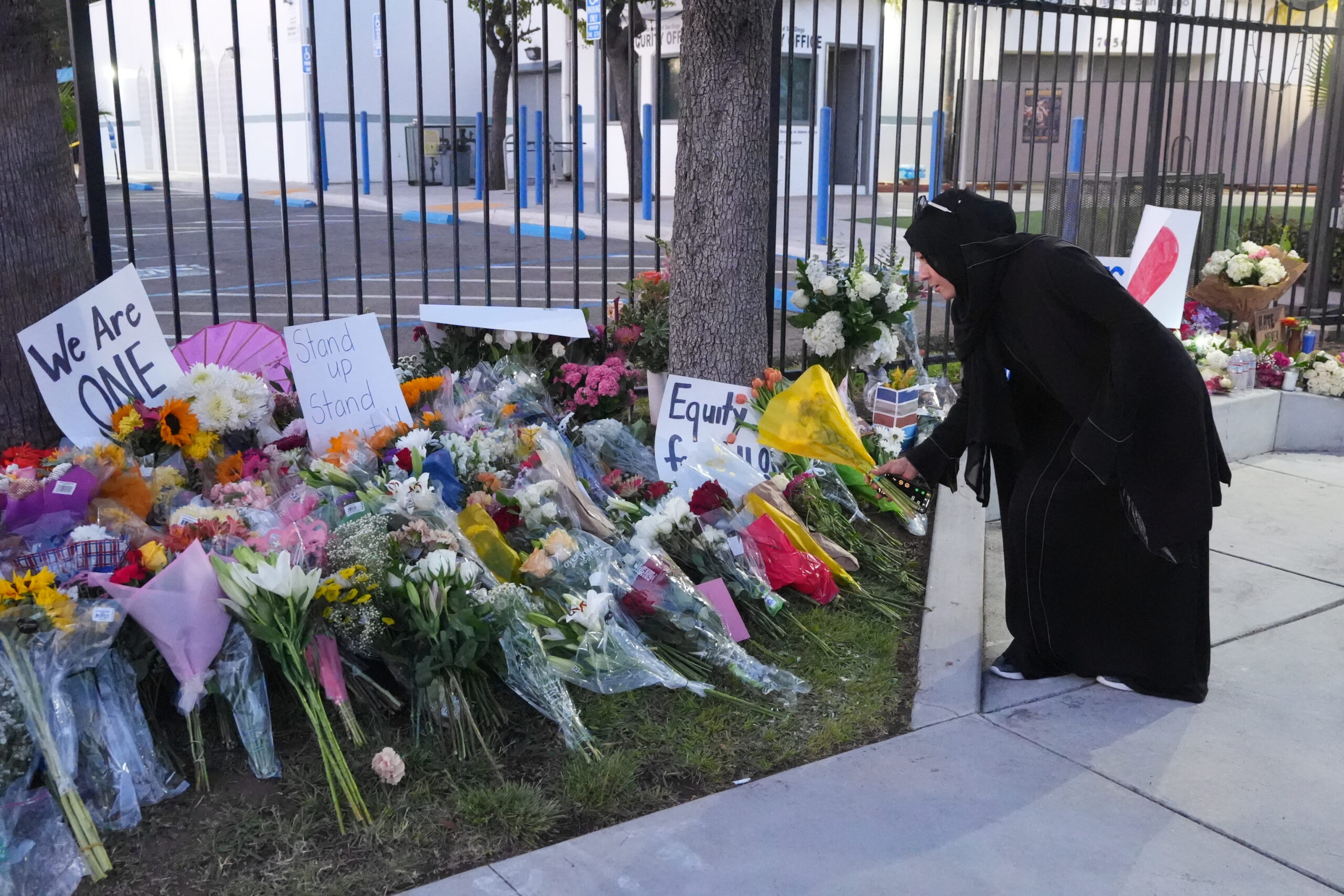
Four weeks later, two teenage gunmen opened fire at the Islamic Center of San Diego, killing three adults. Authorities are investigating the attack as a hate crime.
The centre had been named in the Middle East Forum report.
MPAC has also criticised changes to the federal grant programme for the 2026 financial year, arguing that new requirements have made it significantly harder for Muslim organisations to apply for security funding.
Under the new rules, grant recipients must co-operate directly with immigration authorities and remove internal Diversity, Equity and Inclusion programmes.
A separate provision relating to political boycotts was removed in April, but MPAC says the remaining requirements create significant legal risks and that it can no longer safely advise mosques to apply.
The organisation is calling on Congress to overhaul the system, including through mandatory annual audits, a 90-day application period and a five-day grace period for minor administrative errors.
It is also seeking legal safeguards against politically motivated funding decisions and wants federal officials to contact faith leaders directly at least three months before grant deadlines.
MPAC is meanwhile advising mosques to conduct regular emergency drills and strengthen relationships with local police forces.
It has pointed to Jewish organisations as an example of effective advocacy for security funding, while arguing that all religious communities should have equal access to protection against terrorism and other violent threats.