Nadine Osman
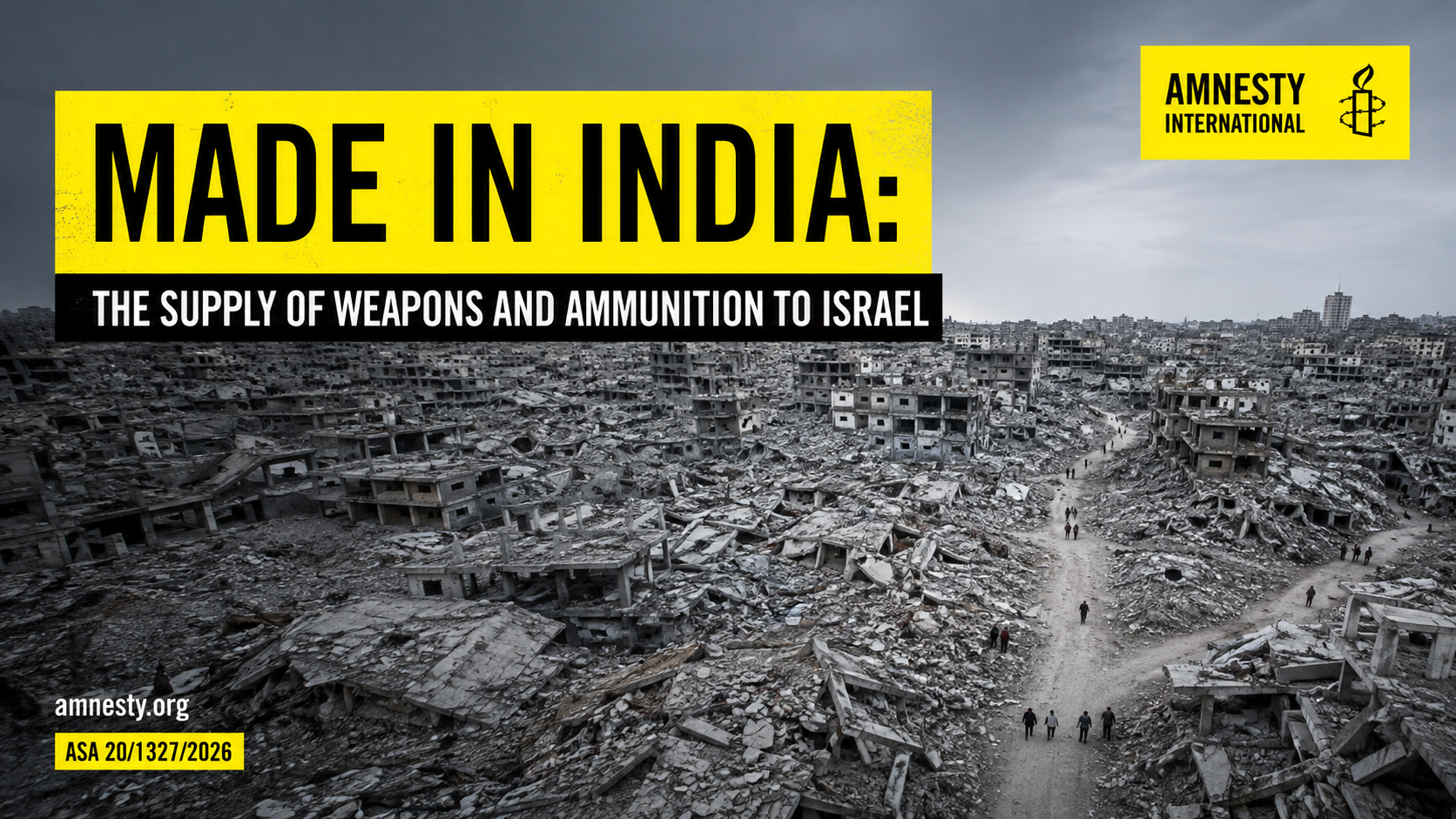
India exported at least 2,596 shipments of weapons, ammunition and military components to Israel after the October 7 Hamas attacks, despite the risk they could be used in Gaza, according to Amnesty International.
The human rights organisation says shipment records show Indian companies supplied 390,516 small arms parts, 564,970 explosive ordnance components and 298 military vehicle components to Israeli defence firms between October 7, 2023, and November 30, 2025.
Amnesty’s report, Made in India: The Supply of Weapons and Ammunition to Israel, says the exports included machine-gun components, 155mm high-explosive artillery shells, SkyStriker explosive warheads and armoured vehicle parts destined for companies supplying the Israeli military.
Amnesty warns that continued Indian arms exports could risk complicity in international crimes, citing the ICJ’s finding of a plausible risk of genocide in Gaza.
Amnesty Secretary General Agnès Callamard said, “Our research reveals India’s continuing support to the Israeli military and defence sector despite the genocide in Gaza.”
She added that the Indian government should “immediately stop authorising exports of weapons, ammunition and parts to Israel” and ensure companies operating under its jurisdiction do not contribute to violations of international law.
The report names several Indian manufacturers, including state-owned Munitions India Limited, private defence firms and joint ventures with Israeli companies. The shipments went to major Israeli contractors Elbit Systems, Rafael and Israel Aerospace Industries.
Amnesty criticises India’s arms export regime for weak human rights safeguards and transparency. India has also not signed or ratified the UN Arms Trade Treaty.
The organisation said it excluded shipments likely intended for civilian use, as well as equipment associated with missile defence systems designed to protect civilians from indiscriminate attacks. Amnesty said it wrote to the Indian government and the nine companies named in the report during June and July but had received no response by the time the report was published.