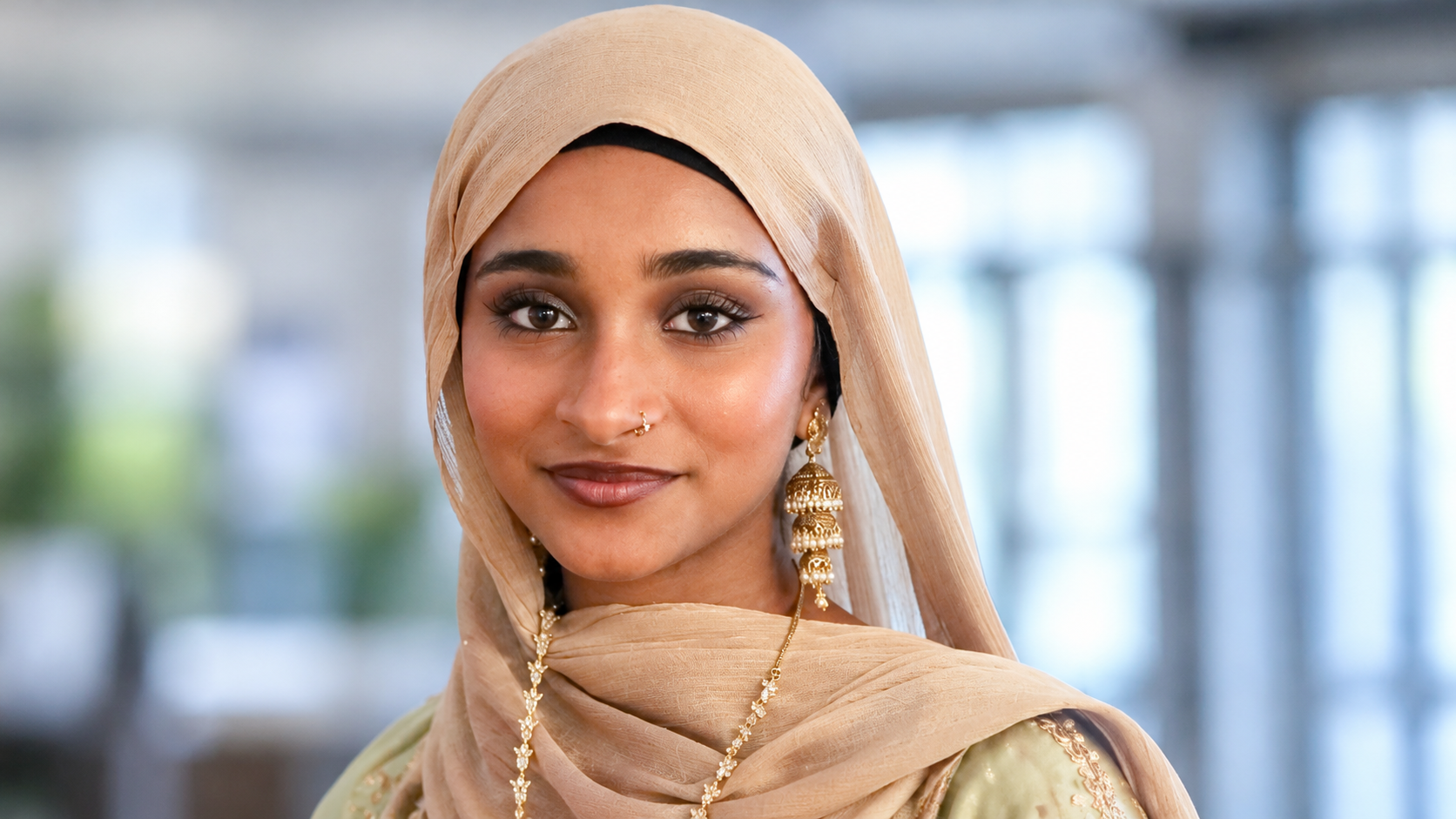
Zainab Raza Hassan is a first-year student at SOAS University of London who recounts being surrounded, filmed and verbally abused by pro-Israeli demonstrators while trying to find her way to a lecture in central London on October 7. In this first-person account, she describes the ordeal, the intervention of fellow students and her concerns about the intimidation of Muslim women in public.
Zainab Raza Hassan
“F***ing terrorist!” “Hamas supporter!” “Racist!” “Show your face! Show your face!” Dozens of pro-Israeli demonstrators hurled abuse at me as I stood cornered on a London pavement, some filming me and others shouting at me to take off my hijab.
Moments earlier, I had been looking at maps on my phone, trying to find the entrance to SOAS for a lecture. As a first-year student, I was still finding my way around Russell Square. With my keffiyeh wrapped around my neck to keep warm, I stopped at a street corner, took out my AirPods and looked up. Suddenly, I was facing around 40 people taking part in a pro-Israel demonstration.
I had not spoken to anyone or taken part in a counter-demonstration.
Feeling uncomfortable as several demonstrators filmed me, I pulled my keffiyeh over my face and turned away, hoping they would leave me alone. Instead, the shouting intensified. They mocked me and called me a coward as the crowd grew to approximately 70 people, with some moving closer.
With the road behind me and the demonstrators in front, I found myself trapped at the edge of the pavement. Then two men wielding a large flagpole attempted to swing it towards me.
Another student noticed I was alone and came over to guide me towards the university. Across the road, three other people shouted at the demonstrators, urging them to protest peacefully rather than harass women.
As I was led away, I noticed two police vans and several officers nearby. I did not see any of them intervene during the confrontation. I found this appalling: while dozens of people shouted abuse and moved towards me, it was another student who stepped forward to help.
The experience left me questioning what protection Muslim women can expect when they are targeted in public, particularly when police officers appear to be close by.
The confrontation took place amid demonstrations in central London on October 7, the third anniversary of the attacks in Israel in 2023. The Independent reported that counter-protesters carrying Israeli flags gathered near Russell Square, where demonstrators shouted, “Terrorist supporters off our streets”, at pro-Palestinian protesters. The Metropolitan Police had also imposed conditions on a student march due to end in Russell Square that day.
Whatever the demonstrators intended to commemorate, I was not there to challenge them. I was trying to reach my university, yet found myself filmed, insulted and surrounded.
Nor did the abuse end with that confrontation. As my friends and I walked around the area, demonstrators continued to call us terrorists and direct racist insults at us. In one particularly disturbing incident, a friend was called a “dark-skinned monkey”.
That insult made the racial hostility explicit. What had happened to me also raised a more immediate question: why should a woman fear intimidation simply for walking through a public area?
What makes this incident particularly disturbing to me, is that it all began with a keffiyeh. The keffiyeh is more than a piece of fabric. It is a traditional item of Palestinian and wider Arab cultural dress, and a powerful symbol of Palestinian identity, solidarity and resistance. For many, wearing it is a political statement; for others, it is an expression of cultural heritage.
Yet this piece of clothing provoked such hostility that I was surrounded, insulted, and filmed before I even spoke. The keffiyeh carries a powerful message, but what does it say about our society when wearing one is enough to make someone a target? If a Muslim woman can be labelled a terrorist based on her appearance alone, how can this be dismissed as merely a political disagreement?
Whatever political or cultural significance the keffiyeh carries, wearing one should never make someone a target for abuse. If a Muslim woman can be labelled a terrorist based on her appearance alone, how can such treatment be dismissed as merely a political disagreement?
I remain grateful to the students who came to my aid. But I should never have had to fear being physically attacked on my way to class, and the responsibility for protecting me should never have fallen on fellow students.
Islamophobic hate crimes top 5,000 as Muslims remain most targeted religious group
Editorial – Burnham must empower his adviser to tackle surging Islamophobia and Islamophobic attacks
England fans filmed singing anti-Muslim chant in Prague
Tory shadow minister says niqabs and burqas harm society
Cornwall Islamic community centre targeted by vandals
‘Muslims cannot be British’: Reform faces backlash over anti-Muslim footage and niqab ban
One mosque targeted every five days as Islamophobic attacks intensifies across UK
Ukrainian admits attacking five London Muslim sites in alleged Russian-linked graffiti
Daily Mail pays damages to actor over false extremism claims