Nadine Osman
UK ministers were warned that Israel’s conduct in Gaza could breach international humanitarian law while government officials reviewed hundreds of incidents involving civilian deaths, a Channel 4 Dispatches investigation has revealed.
Britain’s Gaza Secrets Exposed, broadcast on September 24, examined previously undisclosed government documents, including legal assessments, evidence logs and reports of alleged attacks on civilians, humanitarian sites and aid workers. The documents informed decisions on whether the UK could continue licensing arms exports to Israel.
The investigation drew on hundreds of pages of internal government documents and graphic video evidence showing civilians being killed, raising questions about whether the evidence of potential violations was subjected to sufficiently rigorous scrutiny.
In most cases, officials cited “insufficient information” to establish a breach of international humanitarian law (IHL). The Conservative government continued arms exports until Labour took office in 2024.
The assessments were conducted by a specialist IHL compliance cell within the Foreign, Commonwealth and Development Office (FCDO) following the Hamas-led attacks on Israel on October 7, 2023.
Among the documents were two assessments received by then Foreign Secretary David Cameron in January 2024 warning that Israeli restrictions on humanitarian relief could breach international law. Cameron had repeatedly been asked by the Foreign Affairs Committee whether he had received legal advice indicating Israel was in breach, saying he could not recall every document.
An email recorded Cameron saying he had “carefully considered all the information” in one assessment. Despite the warnings, he concluded that Israel remained committed to complying with international law, and arms exports continued.
Dispatches also reported that responsibility for the assessments was moved from the Foreign Office’s Middle East section to Cameron’s political office, while the reporting cycle was lengthened.
The methodology had already attracted parliamentary scrutiny. In April 2024, the Foreign Affairs Committee questioned the weight given to Israel’s stated commitment to international humanitarian law in the Government’s assessment process. Committee chair Alicia Kearns also noted that Canada and Italy had suspended arms exports to Israel while Britain’s position remained unchanged.
Dispatches examined Israeli strikes on a compound housing British doctors in Al-Mawasi, a World Central Kitchen convoy that killed seven aid workers and a UN school in Jabalia refugee camp, where at least 24 Palestinians were killed. Officials cited insufficient information to establish possible breaches of international law.
The Al-Mawasi compound housed four British doctors working with Medical Aid for Palestinians and the International Rescue Committee. Its location had been coordinated with the Israeli military, and it was inside a designated humanitarian zone. Despite inconsistent Israeli explanations, the IHL cell said there was insufficient information to determine whether the strike breached international law.
Sarah Champion, chair of the International Development Select Committee, told Dispatches she had raised the incident with Cameron, who said he would raise it with Israel.
“These were international humanitarian workers, British people,” she said, questioning why Britain had not taken stronger action.
The investigation also examined the April 1, 2024 Israeli strike on a World Central Kitchen convoy, which killed seven aid workers, including former British Royal Marine James Henderson. Two days later, while Cameron was publicly demanding answers, his office approved a decision not to suspend existing arms export licences. The IHL cell subsequently recorded the attack as a possible breach of international law. Israel described the strike as a grave mistake and dismissed the senior commander who ordered it.
Cameron told Dispatches that although he had concluded Israel was not committed to international humanitarian law regarding humanitarian relief in December 2023 and January 2024, this did not prompt a recommendation to suspend existing licences. He said suspension would have a “significant impact on UK interests”.
Other cases included the Al Fakhoura school strike in Jabalia, which reportedly killed at least 24 Palestinians, and the killing of five-year-old Hind Rajab, who was found dead after being trapped in a car with family members and appealing for rescue.
Lawyer Dearbhla Minogue, who acted in a High Court challenge to UK arms exports, said the assessment method effectively required the alleged perpetrator to provide the evidence needed to establish a breach.
Professor William Schabas, who reviewed the assessments, also questioned the approach.
“My impression from looking at all this material is that the British government has adopted what looks like a methodology, but one designed to produce a result that no violations are taking place,” he said.
Israel has previously accused Schabas of bias against it, an allegation he rejects.
Former and current Foreign Office insiders told the programme that officials faced tensions with ministers over Gaza. They said staff had been instructed not to use terms including “ethnic cleansing” or “genocide” in reports and described an atmosphere of intimidation.
Dispatches reported that hundreds of civil servants had raised concerns that Britain risked complicity in alleged war crimes.
Former diplomat Mark Smith, who worked on arms-sale assessments during the Saudi-led war in Yemen, said he was told to delete an email after seeking clarification of government policy. He resigned in August 2024 over the Government’s refusal to halt arms sales to Israel.
“And the nature of the assessment is such that you can kind of make it say whatever you want,” Smith told Dispatches. “And that is why the system is broken.”
After Labour took office in July 2024, then Foreign Secretary David Lammy suspended some arms export licences but allowed UK-made F-35 components to continue through the international supply chain.
On September 2, 2024, the Government suspended approximately 30 export licences from around 350 licences to Israel, covering equipment assessed as potentially being used in military operations in Gaza. The affected equipment included components for F-16 fighter aircraft, drones, naval systems and targeting equipment. The suspension was not a blanket arms embargo.
The Government exempted most components supplied through the international F-35 programme, arguing that suspending the wider supply chain would affect the programme’s contribution to NATO and the security of allied countries.
Dispatches reported that Labour had been advised there was a “clear risk” UK-supplied items might facilitate serious violations of international humanitarian law.
Katie Fallon of Campaign Against Arms Trade criticised the decision. “Any suspension would be meaningless if it didn’t include the F-35 components,” she said. Under the UK’s Strategic Export Licensing Criteria, licences must not be granted where there is a clear risk that exported goods might be used to commit or facilitate a serious violation of international humanitarian law. This assessment concerns the risk of misuse and does not require a court first to establish that a specific war crime has occurred.
The programme also obtained a June 2024 government assessment of allegations of genocide in Gaza. It described the physical components of genocide as “uncontentious” but concluded that genocidal intent on Israel’s part had not been established.
British surgeons told the programme they had subsequently presented ministers with evidence of the destruction they witnessed in Gaza and the injuries suffered by children.
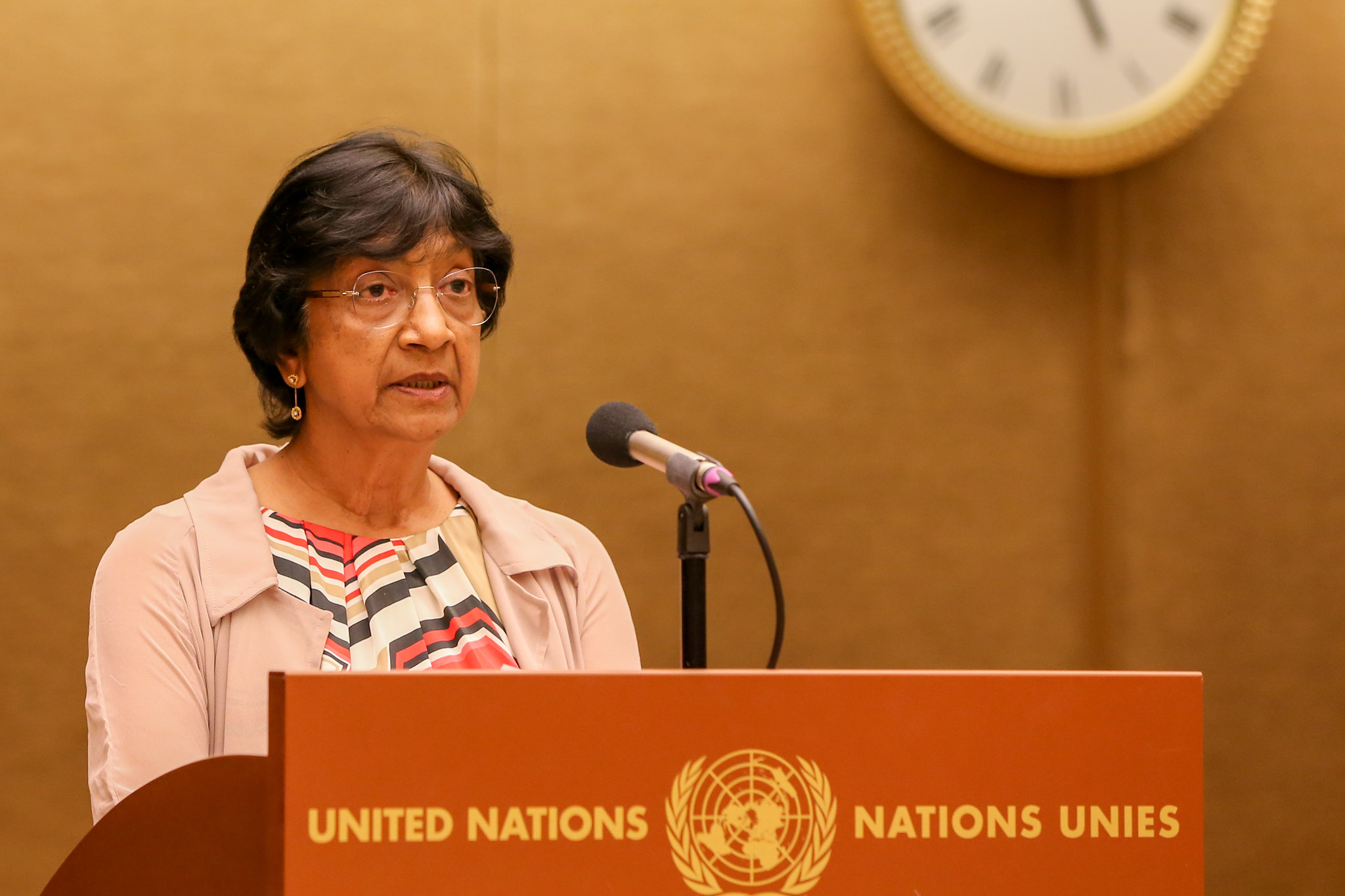
Navi Pillay, chair of the UN Commission of Inquiry, also appeared in the programme. In September 2025, the commission concluded that Israel had committed genocide against Palestinians in Gaza, identifying four of the five acts defined by the Genocide Convention. It said statements by Israeli officials and patterns of military conduct indicated genocidal intent. Israel rejects the allegation, as well as claims that it targeted women and children.
Both Conservative and Labour governments have said determinations of genocide should be made by competent courts following full, fair and robust judicial processes.
The FCDO said its procedures for assessing international humanitarian law risks and making arms export decisions were “among the most robust and rigorous in the world”.
It said courts had found export licensing decisions lawful and confirmed that assessments were conducted carefully and thoroughly, with no challenge to the good faith of those involved.
“Officials provide impartial, evidence-based advice and ministers take decisions on that basis,” it said.
A spokesperson for Lammy rejected suggestions that he received the July 2024 advice on arms licences when deciding to suspend some licences. The spokesperson said the advice was dated nearly six weeks earlier and that several events had occurred in the interim, including Lammy’s visit to the region. They also cited his record on Palestinian civilians, international law and Palestinian statehood.