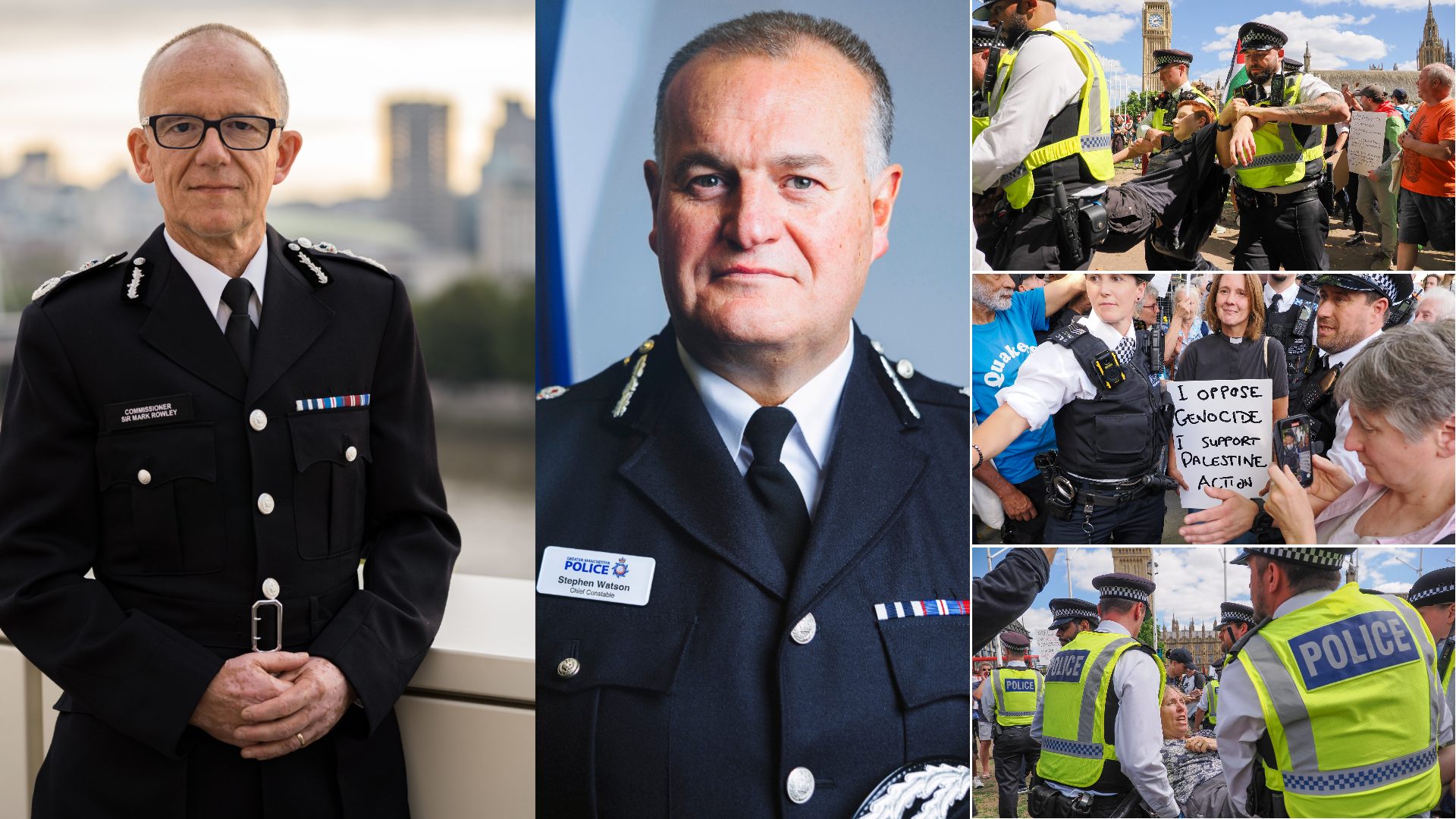
Since mass protests erupted across the UK following Israel’s assault on Gaza after the Hamas attacks of October 2023, successive governments, first Conservative, now Labour, have pursued a relentless campaign to curb them. From political pressure on police forces to ever-expanding interpretations of public order laws, the message is clear: stifle, contain, or neutralise a protest movement that has proved both vast and resilient. Yet, despite months of marches drawing over half a million people, these efforts have largely failed.
The overwhelming majority of demonstrators have remained peaceful, with only a handful making antisemitic remarks and a minuscule number facing arrest. That makes the current crackdown not only disproportionate, but profoundly troubling.
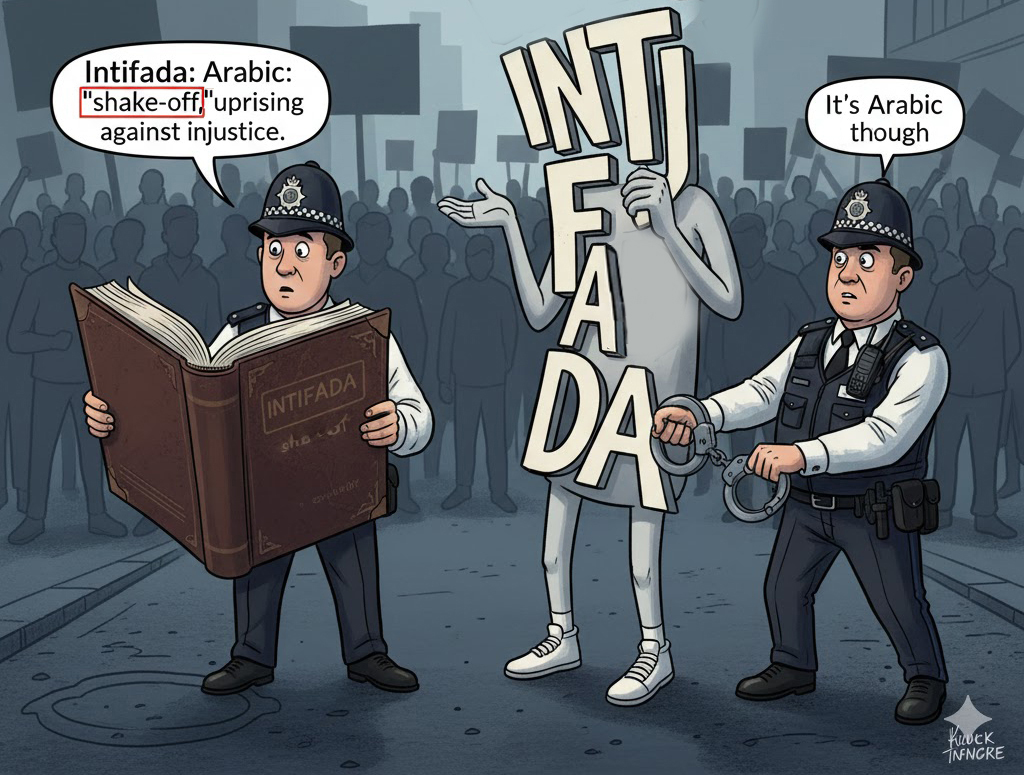
The recent announcements by the Metropolitan Police and Greater Manchester Police, that chanting “globalise the intifada” could now trigger arrests—marks a dangerous escalation. Framed as a response to tragic antisemitic attacks at home and abroad, this policy hinges on a highly selective, almost wilful, reading of language and context. “Intifada” in Arabic means “shaking off” or uprising against injustice. The first Palestinian intifada was predominantly a movement of civil resistance—strikes, boycotts, protests, met by brutal state repression. To declare the word itself a call to violence, while erasing its political and historical meaning, is both inaccurate and discriminatory.
The distortion continues with attempts to criminalise “From the river to the sea, Palestine shall be free.” Now routinely branded antisemitic, the slogan has a long, complex history. Israeli politicians, including Prime Minister Benjamin Netanyahu, routinely invoke near-identical language asserting exclusive sovereignty “from the River Jordan to the Mediterranean Sea.” If such territorial maximalism is acceptable when articulated by Israeli leaders, why is its mirror expression by Palestinians or their supporters automatically deemed racist? The inconsistency exposes the deeply political, rather than principled, nature of these charges.
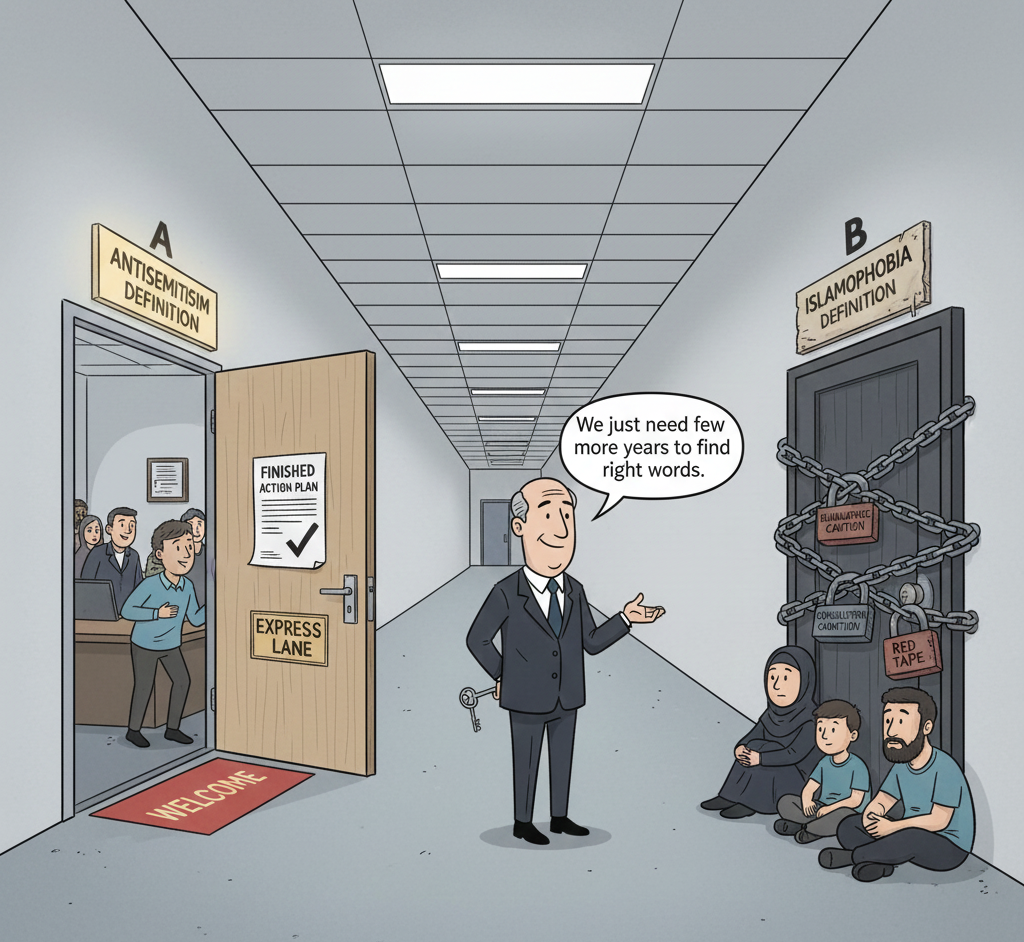
This is not a neutral effort to protect communities; it is a concerted clampdown on free speech—specifically, speech critical of Israel. Pro-Israel advocacy groups and sympathetic politicians have exerted sustained pressure on police to reinterpret protest slogans as criminal threats. Think tanks and commentators with a track record of hostility towards Muslim communities amplify that pressure, while genuine concerns about Islamophobia and anti-Palestinian racism are ignored or trivialised. The irony is striking at rallies where police warn that words “have meaning and consequence,” the same authorities resist adopting any definition of Islamophobia for fear it might “restrict public debate.”
The result is a selective approach that undermines the democratic values the authorities claim to defend. Civil liberties organisations warn that such arrests risk breaching Article 10 of the European Convention on Human Rights and chilling political expression. Today it is Palestinian solidarity activists; tomorrow it could be trade unionists’, climate protesters, or any group whose message makes those in power uncomfortable.
That discomfort is the point. Polls show over 80% of the UK public oppose Israel’s actions in Gaza and want an end to British complicity. Rather than reckon with this shift in public opinion, both government and opposition appear intent on managing it through repression. By conflating protest with extremism, and criticism of Israel with antisemitism, they seek to delegitimise a movement that challenges entrenched pro-Israel policies.
This strategy is unjust and self-defeating. Criminalising words will not erase public anger at mass civilian deaths, nor will it restore trust in political institutions. It corrodes free speech, alienates minority communities, and sets a precedent where any dissenting voice can be silenced if the “context” is deemed inconvenient.
A democratic society does not police uncomfortable truths into submission. It protects free expression, confronts genuine hatred wherever it exists, and allows robust debate—even, especially, when those in power would rather not hear it.
(Image: AI Gemini/The Muslim News)