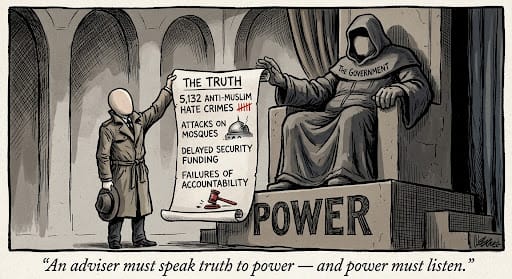
The Government is expected to appoint its long-awaited Anti-Muslim Hostility adviser following Prime Minister Andy Burnham’s meeting with Muslim community leaders on October 27. The announcement comes as anti-Muslim hate crime continues to rise: police recorded 5,132 offences in England and Wales in the year to March 2026, up 15 per cent on the previous year. Muslims were targeted in nearly half of all religious hate crimes where the victim’s faith was known.
The true scale may be greater. Under-reporting and inconsistent recording can leave incidents uncounted or their anti-Muslim motivation unrecognised. A further 1,309 religious hate crimes were recorded without the victim’s faith being identified, making it harder to establish the full extent of the problem.
Improving reporting and investigations must be central to the adviser’s remit. Police need to recognise possible religious hostility, record it consistently and investigate it thoroughly, without prejudging motive. The adviser should identify shortcomings and press for improvements while respecting the independence of individual investigations.
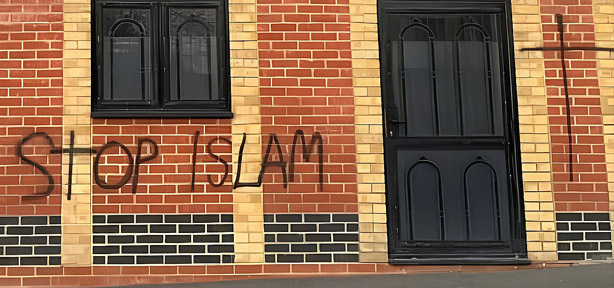
The need is illustrated by an incident at Cornwall’s only mosque, where a car was driven into the entrance gate and a liquid believed to be oil was poured across the grounds and up the walls. Police described the incident as “racially aggravated criminal damage”. Investigators must establish whether the evidence also supports a classification of religiously aggravated criminal damage. That decision must follow the evidence, but the possibility of religious hostility must not be overlooked. Attacks on Muslim institutions deserve the same investigative rigour as those on any other place of worship.
Nor does the incident stand alone. The British Muslim Trust’s report, published on October 8, recorded 78 incidents affecting 64 premises during its reporting period. Nearly one in five affected premises reportedly experienced repeated incidents. Its chief executive, Akeela Ahmed, warned: “Today, a mosque is vulnerable purely because it’s a mosque.”
Mosques are where people pray, children learn and communities gather. Repeated attacks threaten not only buildings but worshippers’ confidence that they can practise their faith safely. The adviser must help ensure these experiences inform the Government’s response, rather than remain statistics in reports that prompt little change.
The Government has chosen to pursue a definition of “Anti-Muslim Hostility” rather than adopt the widely used term Islamophobia, a decision criticised by Muslim organisations and campaigners.
The distinction matters because definitions influence how institutions identify and respond to discrimination. Ministers must explain how the proposed definition will tackle anti-Muslim hostility while protecting legitimate criticism of religious beliefs and political movements. Neither freedom of expression nor the fight against hatred should be used to excuse the other’s abuse.
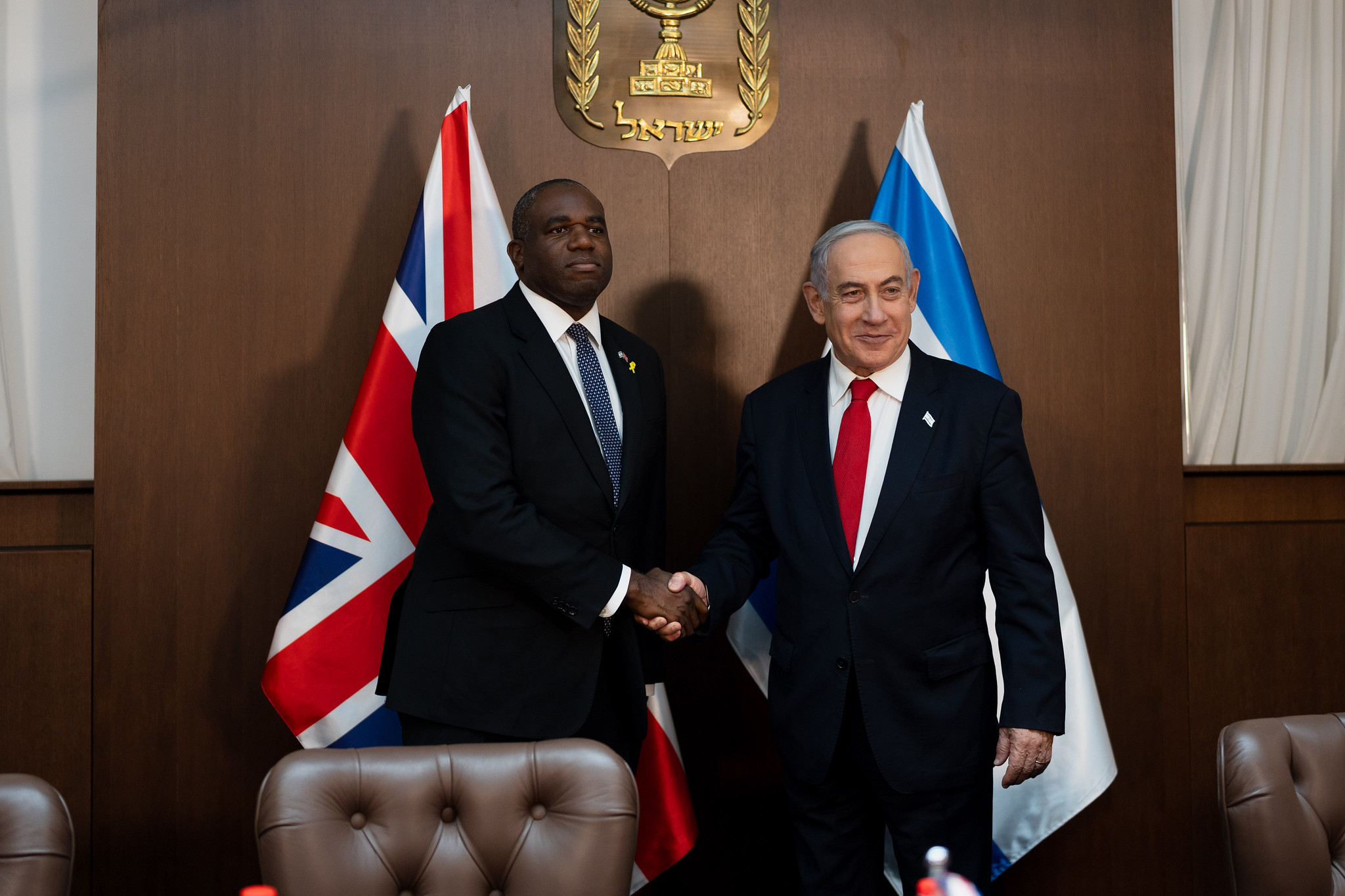
At the Downing Street meeting, Burnham pledged to make clear that Muslims belong in Britain and warned that the country could not afford “another decade of division like the one we’ve lived through”. The Muslim Council of Britain welcomed the engagement while stressing the importance of meaningful dialogue with the breadth of Muslim voices.
The incoming adviser needs a clear remit, access to decision-makers and the authority to challenge policies that are not working. The role must be grounded in meaningful engagement with Muslim communities and those experiencing hostility, not confined to communicating a position already settled by ministers. The Government should make clear how recommendations will be considered and acted upon.
There is a cautionary precedent. In 2019, the Conservative Government appointed Imam Qari Asim to help develop a definition of Islamophobia. He was dismissed in 2022 following a dispute over his support for a campaign to prevent cinemas screening The Lady of Heaven. The Government argued that his position was incompatible with his advisory role; Asim disputed its characterisation. He later said he had repeatedly sought progress on the definition but encountered a lack of political will.
The circumstances were contested, but the lesson is clear: an adviser cannot be effective if challenging the Government risks their position. Labour must not create a role to demonstrate commitment, only to sideline its holder when the advice becomes uncomfortable.
The adviser cannot investigate crimes, distribute security funding or compel departments to act. Those responsibilities remain with ministers. But the role must carry enough influence to identify failures, press for remedies and make clear where progress is being blocked. Without that, the appointment risks becoming a symbol of concern rather than a means of changing policy.
Anti-Muslim hostility is not confined to places of worship. It can follow people into public spaces, universities and their everyday lives.
Zainab Raza Hassan, a first-year student at SOAS University of London, described being surrounded, filmed and verbally abused by pro-Israeli demonstrators as she tried to reach a lecture in central London on October 7.
According to Hassan, demonstrators called her a “terrorist” and a “Hamas supporter”, demanded that she remove her hijab and left her feeling trapped. She alleged that two men carrying a large flagpole tried to swing it towards her. Another student intervened and guided her towards the university. Hassan said police officers stood by without intervening.
These allegations warrant a proper investigation, including into the alleged threats and the police response. No woman should face intimidation because she is visibly Muslim.
The right to protest over Israel and Palestine does not confer a right to threaten or harass others. A woman wearing a hijab is not a legitimate target for political anger, and accusations of terrorism are no substitute for evidence. The adviser should consider how institutions respond to such incidents and whether existing protections work in practice. Equal freedoms must mean something on the street, outside universities and on the way to places of worship.
Individual incidents must be judged on their evidence, but the wider climate in which prejudice takes root cannot be ignored.
Nick Timothy, the Conservative Shadow Justice Secretary, was reported to have described the niqab and burqa as a “ball and chain” at a Spectator fringe event during the Conservative Party conference on October 6. He had also characterised mass Muslim prayer in Trafalgar Square during Ramadan as an “act of domination”.
Politicians are entitled to debate religious practices, and criticism of religion is not automatically Islamophobia. But there is a difference between scrutinising a practice and portraying Muslims exercising their religious freedoms as a threat to public life.
Footage of England supporters singing an anti-Muslim chant in a Prague bar has added to concerns about the normalisation of such abuse. No politician is responsible for every prejudiced act committed by an individual. Yet leaders should recognise the danger when rhetoric reinforces stereotypes and encourages suspicion towards Muslims.
Burnham warned against another decade of division. Preventing that outcome requires more than appeals to national unity. It means challenging prejudice, protecting equal rights and ensuring that hostility is not dismissed when it affects Muslim communities. Muslims should not be treated as second class citizens.
The Government has allocated up to £40 million for 2026–27 to protect mosques, Muslim faith schools and community institutions. But the British Muslim Trust has reported delays of up to 18 months in accessing support, alongside applications being rejected without adequate explanation.
For an institution facing a credible threat, a long wait can leave a serious gap in protection. Ministers must explain these reported delays and make the process more responsive. In some cases the government has refused to fund mosques needed protection. The Government should publish the number of applications received, approved and rejected, waiting times, reasons for refusals and the amount of funding actually distributed. It should also explain how urgent cases are prioritised.
The adviser should be able to raise concerns about whether the scheme is reaching vulnerable institutions and press for changes where it is not. But ministers must take responsibility for fixing the process and ensuring that funding delivers protection on the ground.
At the 2025 Labour conference, Home Secretary Shabana Mahmood declared: “A proud Muslim like me can be a proud Brit and a Brummie too.” The principle is important: Muslim and British identities are not mutually exclusive. But belonging cannot be secured by words alone. It must be reflected in the protection people receive and the seriousness with which hostility against them is treated.
Burnham and his ministers now face practical questions. Will anti-Muslim hate crimes be recorded and investigated consistently? Will vulnerable mosques receive security support in time? Will reports of intimidation prompt effective responses? And will the incoming adviser have the freedom and influence to press for changes when the Government falls short?
These are not demands for preferential treatment. They are tests of equal protection.
The figures are clear, the concerns documented and the commitments made. The Government’s task is to turn them into action. Its adviser must be empowered to help drive that change, but ministers cannot delegate their responsibility for delivering it.
Until Muslim communities see a tangible improvement in the safety of their mosques, institutions and families, the Government will have announced its intentions. It will not yet have fulfilled them.