Mahomed Faizal, Cape Town, South Africa
Navi Pillay’s Nobel Peace Prize places a celebrated South African legal mind at the centre of a global conversation about whether International Law can constrain powerful nations. This recognition aligns her public record with Pretoria’s ongoing effort to make the Israeli genocide of Palestinians subject to established legal frameworks.
It takes real courage to demand that a country accused of serious wrongdoing be held accountable, but it takes even more courage to insist that the rules apply to every nation equally, no matter how powerful or politically influential it is.
That courage has animated Pillay’s career, explaining why the award resonates in South Africa, where the government has taken Israel to the International Court of Justice (ICJ) over alleged Genocide Convention breaches.
While the Nobel Committee awarded her the prize for a lifetime of service rather than solely for her focus on Gaza, her role as chair of the United Nations Independent International Commission of Inquiry on the Occupied Palestinian Territory and Israel places her conclusions alongside Pretoria’s legal filing. Both reflect an insistence that mass genocide and war crimes requires formal investigation, evidence and judicial assessment rather than resolution through armed force.
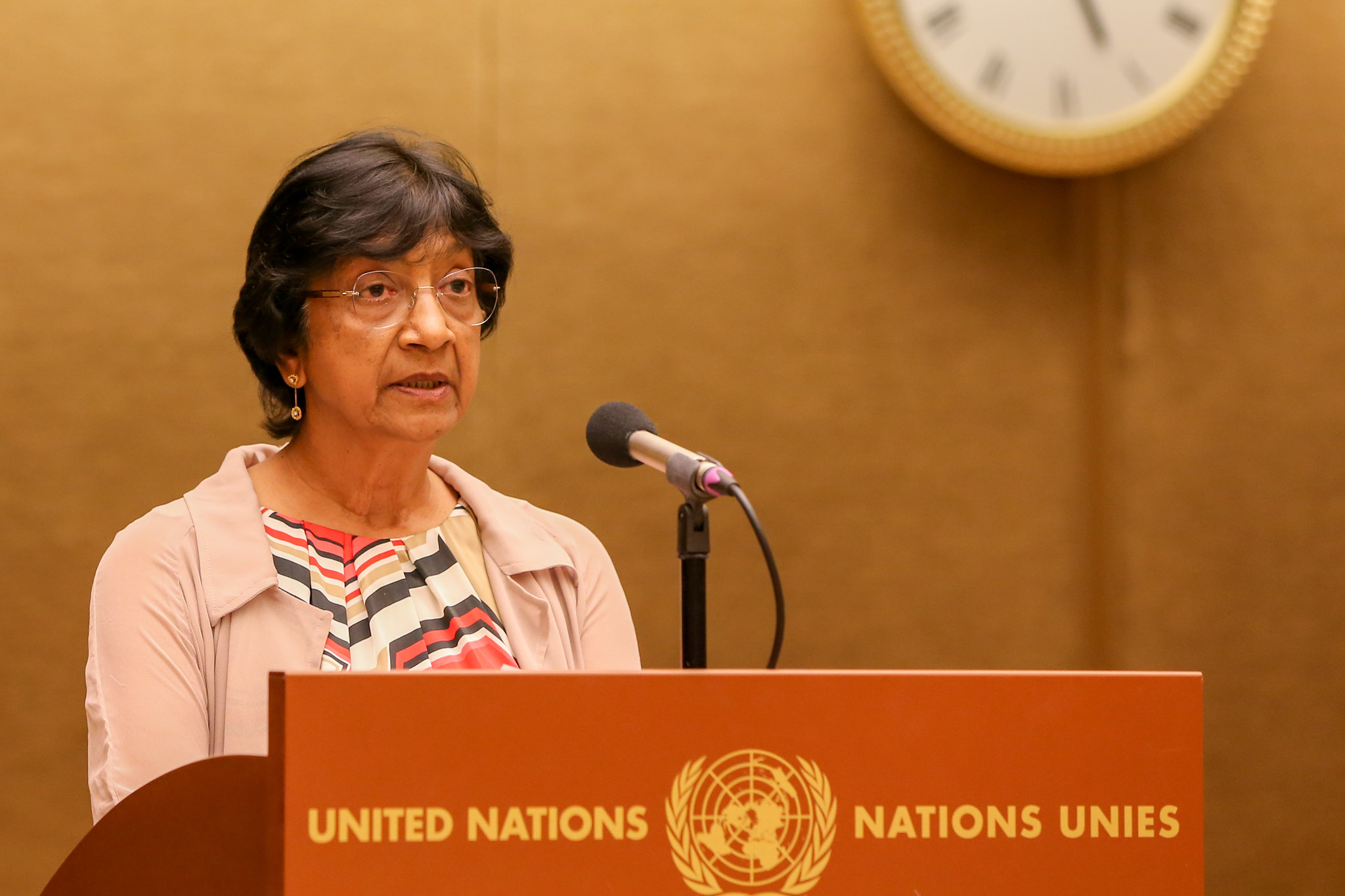
In September 2025, Pillay’s Commission determined that Israeli authorities bore responsibility for acts of genocide in Gaza. Pillay stated that there was clear intent existed to destroy the Palestinian population through acts meeting the precise criteria of the Genocide Convention. While these findings were from an independent investigative body rather than a final International Court of Justice (ICJ) ruling – and were predictably rejected by Israel – they sharpened a core dilemma for the global community regarding the legal duty to prevent genocide.
Born in Durban, South Africa, in 1941 to an Indian family, Navanethem “Navi” Pillay grew up under apartheid. In 1967, she established a legal practice to defend anti-apartheid activists targeted by the apartheid government. The Nobel Committee highlighted this period, honouring her as a pioneering advocate against a tyrannical system.
This early history reveals the principle guiding her career, establishing that basic human rights must remain independent of race, nationality, or political usefulness. She demonstrated that legal protections face their true test when the accused wield immense power and victims possess little political voice.
In 1995, Pillay became the first Black woman judge appointed to South Africa’s High Court. Four years later, she joined the International Criminal Tribunal for Rwanda, eventually serving as its President. There, she helped establish the groundbreaking principle that systematic rape and sexual violence constitute crimes against humanity and potential acts of genocide, transforming how international law investigates sexual violence in warfare.
Pillay subsequently served as an ICC judge and from 2008 to 2014, as the UN High Commissioner for Human Rights. Operating within institutions often criticised as slow or bureaucratic, she maintained that institutional limitations do not mean incompetence. Courts may lack the power to halt every crime in real time, but they record history, clarify obligations and establish accountability.
The Nobel Committee further honoured her structural contributions toward an enforceable international legal order, praising her judicial meticulousness, personal integrity and moral courage during an era of intense political pressure on the judiciary.
Created by the Human Rights Council, the UN commission examined Israeli military actions and official statements from October 2023 through July 2025. It determined that Israeli authorities committed four acts prohibited under the Genocide Convention – killing members of a protected group, causing severe physical or mental harm, deliberately inflicting destructive living conditions and imposing measures to prevent births. The report concluded these occurred with the specific intent to destroy Palestinians in Gaza as a distinct group.
Furthermore, the Commission found that top officials engaged in direct incitement to genocide, which state authorities failed to stop or punish. Predictably, Israel rejected the report entirely as false and politically biased.
Although an inquiry differs from a formal court, its findings carry immense weight by imposing pressure on states to review their legal responsibilities. Pillay declared that the international community must not remain silent, adding that a failure to act equates to complicity. While this definitive language risks being dismissed as partisan or mistaken for a final verdict, Pillay’s challenge remains keeping public debate grounded strictly in evidence and legal principles.
In December 2023, South Africa initiated proceedingsagainst Israel at the ICJ. While the Court did not rule on whether genocide had officially occurred, its 2024 Provisional Orders ordered Israel to prevent genocidal acts and to scale up humanitarian aid to Gaza.
While Pillay’s mandate remains entirely separate from Pretoria’s legal team and her commission operates independently, both share the principle that the prohibition against genocide forms a mandatory legal duty. This reflects South Africa’s foreign policy, shaped by its history under racial oppression, which views human rights as standards requiring equal application.
Although the legal merits of South Africa’s application depend strictly on evidentiary submissions, the broader geopolitical climate cannot be ignored. The recognition of a prominent South African jurist with top honours – precisely as her nation advances a major genocide case – substantially undermines efforts by influential global powers to dismiss the court’s proceedings.
President Donald Trump criticised the Nobel decision as disgraceful, claiming he had never heard of Pillay and arguing that he deserved the award himself. This reaction reflected broader political opposition to the international bodies and legal findings associated with her work. Trump and Israeli Prime Minister Benjamin Netanyahu consistently rejected the commission’s conclusions. The Nobel Committee clarified that Pillay received the prize for her lifetime contribution to global law, rather than as an endorsement of any single report.
Yet, the underlying struggle remains severe, as international courts rely on voluntary sovereign cooperation and public trust. When political leaders systematically attack legal structures, institutions risk losing authority before conclusions can be tested.
The Nobel Peace Prize honours a career dedicated to making international law more effective against violence, tracing a line from anti-apartheid struggles in South Africa to Rwandan tribunals, the ICC, human rights frameworks and inquiries into Gaza.
Together, South Africa’s court challenge and Pillay’s commission confront the world with an urgent, existential question on whether international law apply universally, or is it a dead letter? The truth will ultimately be forged through rigorous evidence, exacting legal judgment and the courage of nations to honour their treaty obligations when it costs them most. Crucially, Pillay has put Western powers on strict notice that turning a blind eye to genocide and crimes against humanity carries a steep, irreversible cost.
Ultimately, her Nobel Peace Prize award ensures that the world cannot look away, leaving the international community stripped of excuses and fully accountable for its choices in Gaza.