Ahmed J Versi
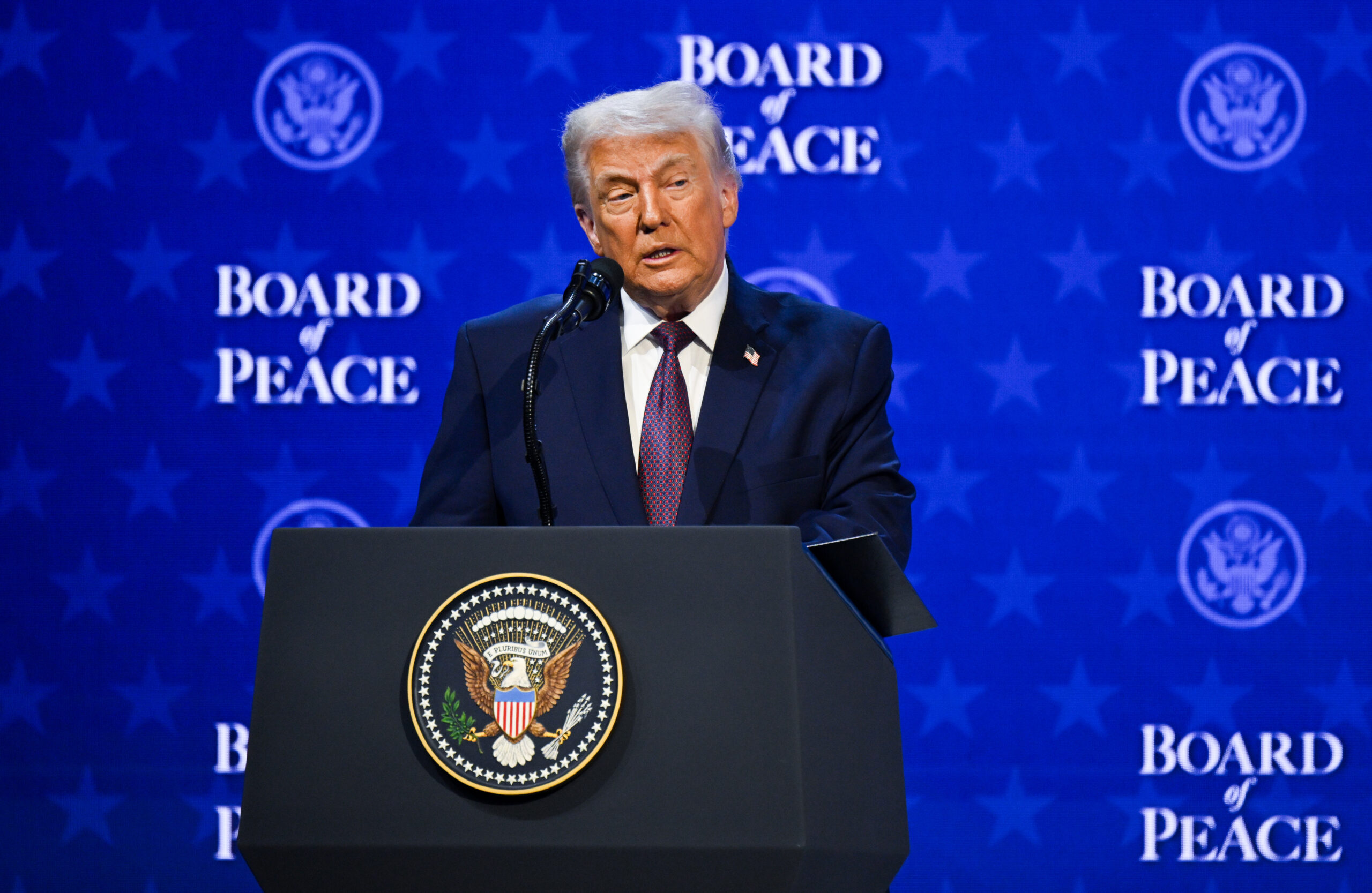
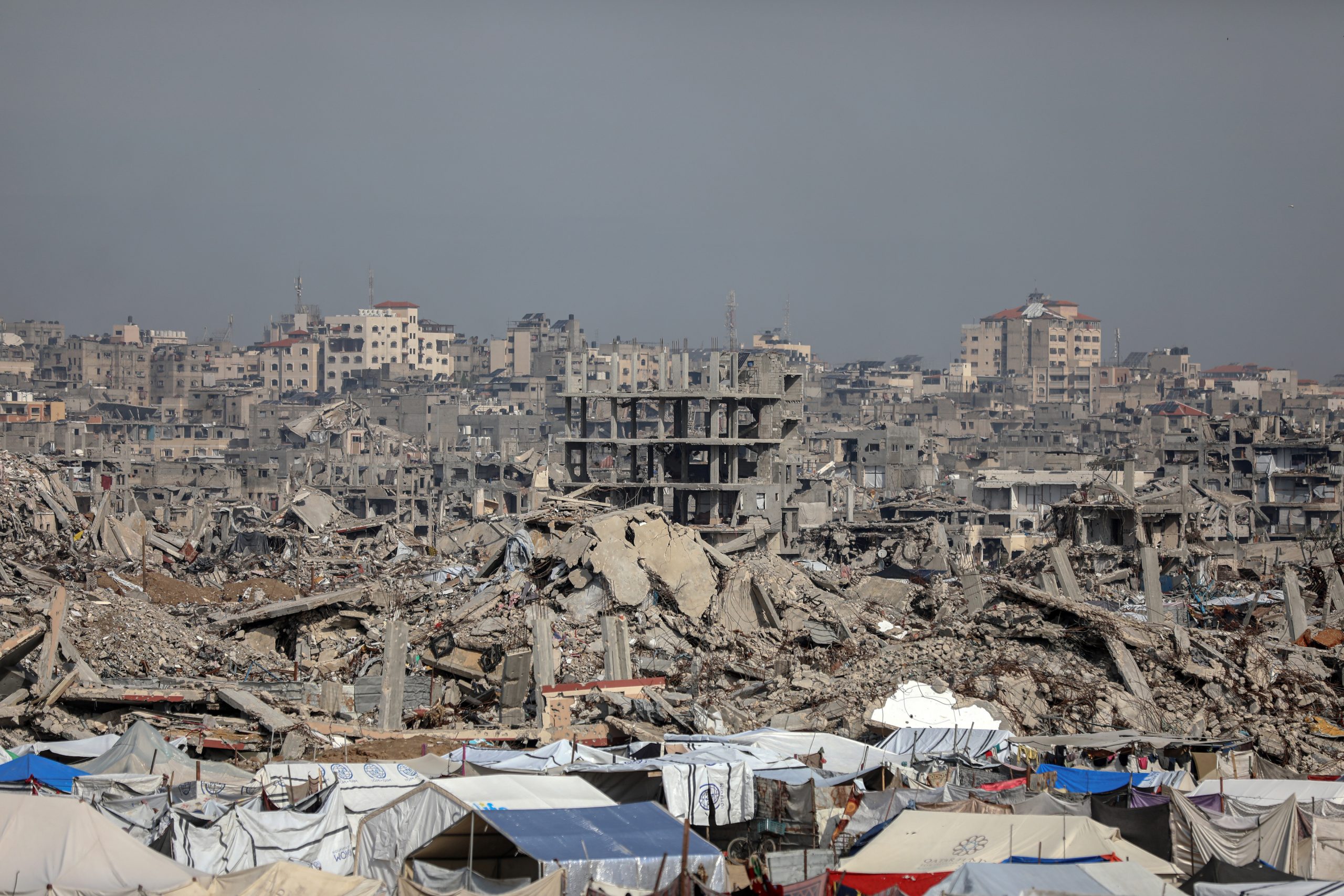
US President Donald Trump launched his controversial “Board of Peace” (BoP) initiative at the World Economic Forum in Davos earlier this month, presenting it as a bold new mechanism for global peacebuilding. The announcement came as phase two of a ceasefire took effect in Gaza, where Israel’s military operations have already killed over 71,000 Palestinians and injured more than 171,000 since October 2023.
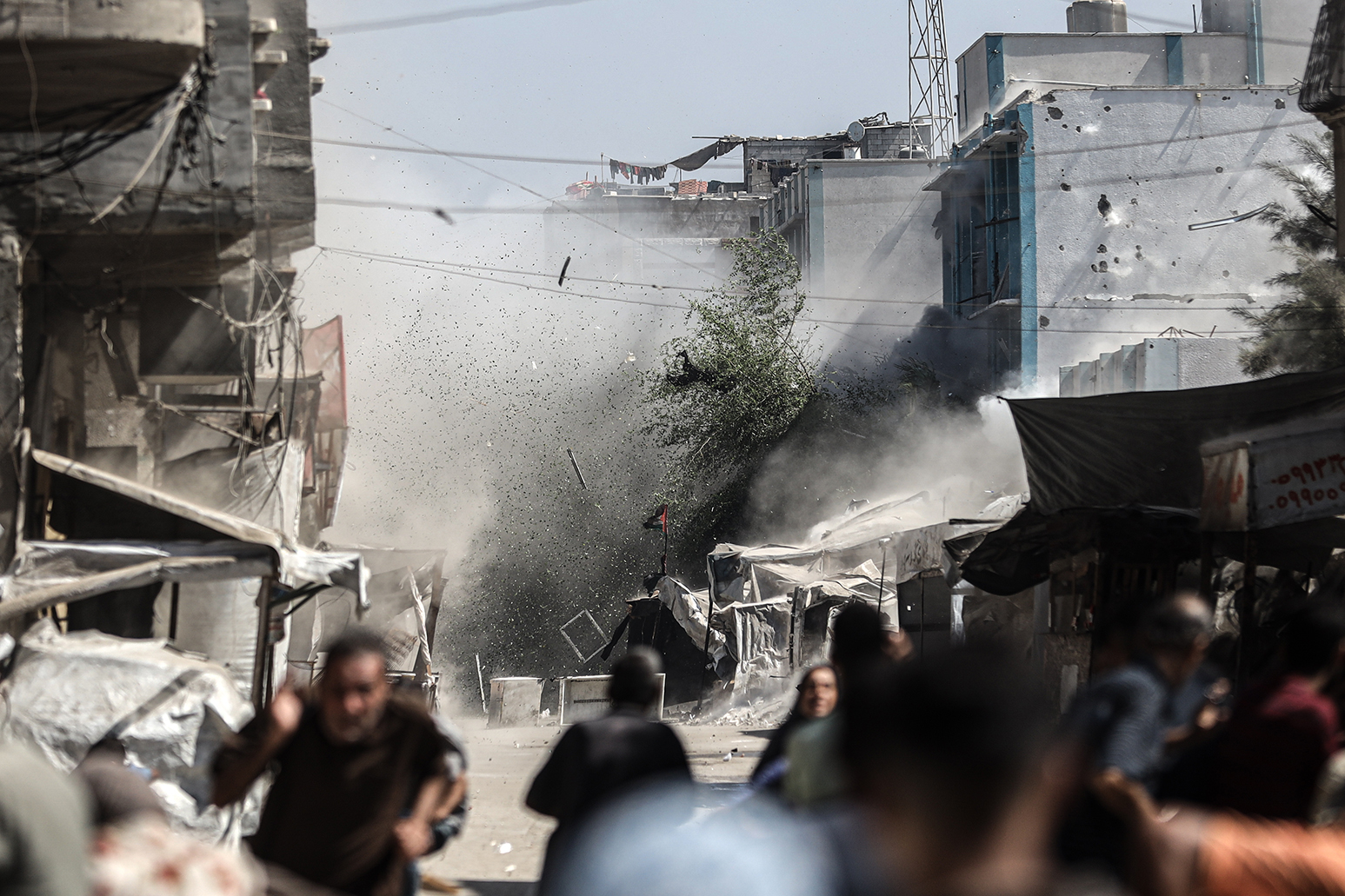
Despite the ceasefire, Israel has continued military operations, reportedly violating the agreement over 1,300 times and killing at least 483 Palestinians while wounding 1,287 (Gaza Government Media Office). As Trump unveiled the BoP in Davos, airstrikes continued across the Strip.

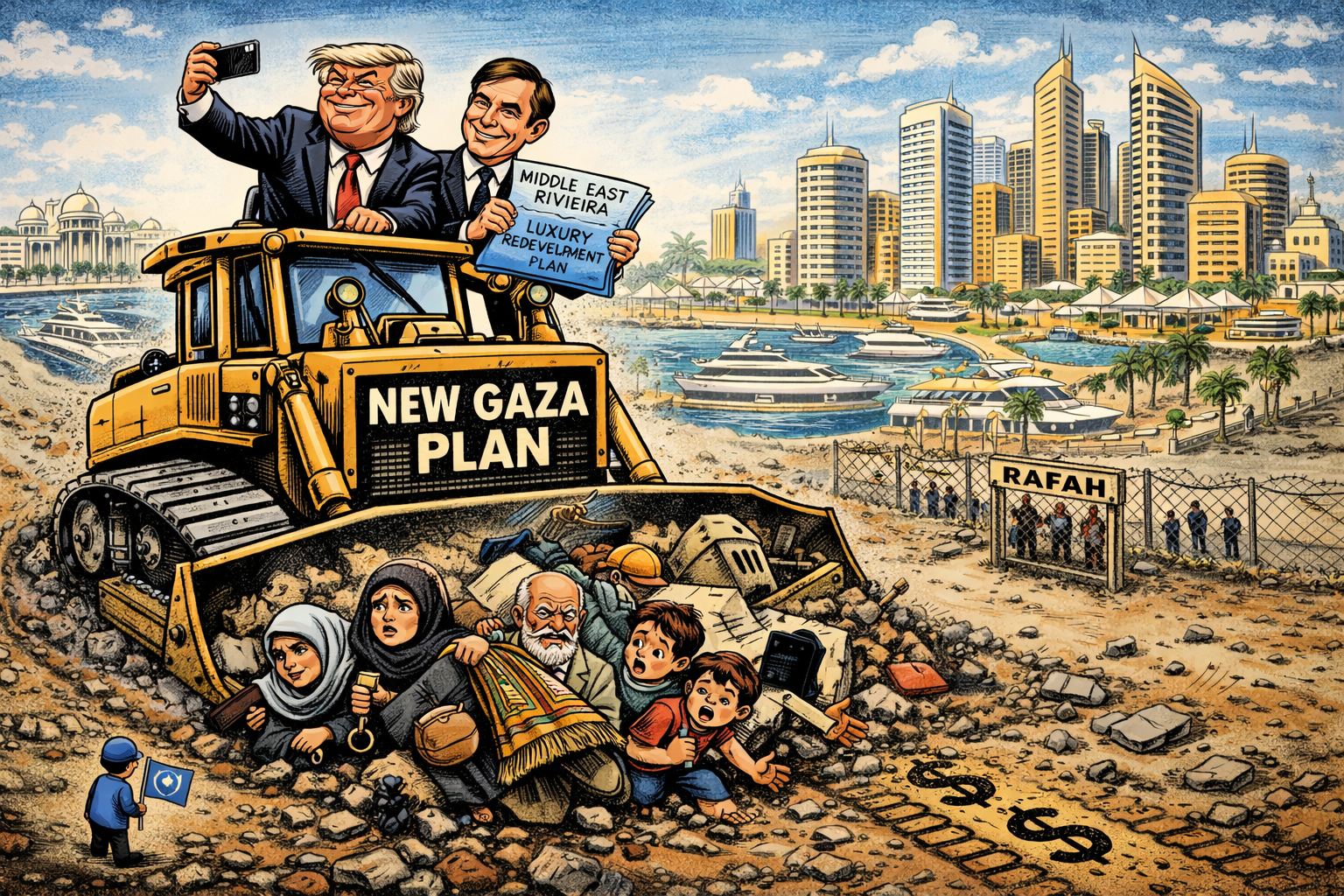
Against this backdrop, Palestinians have voiced strong opposition to the BoP and its subsidiary bodies, arguing that the initiative was designed to Israeli and US specifications and serves Washington’s long-standing vision for Gaza, widely dubbed the “Middle East Riviera.”
The BoP was initially introduced last year as part of a narrowly defined, two-year UN Security Council mandate to manage post-war Gaza under Resolution 2803. Several Security Council members supported the resolution believing it would bind Trump to a specific Gaza ceasefire and reconstruction framework.
Yet the BoP’s official charter makes no direct reference to Gaza at all. Instead, it outlines a sweeping and permanent mandate to promote peace and “good governance” worldwide, explicitly calling for a departure from existing international institutions on the grounds that they have “too often failed.”
The board is described as “pragmatic,” “results-oriented,” and “more nimble and effective” than the UN, language that closely mirrors Trump’s long-standing criticism of multilateral institutions. What began as a mechanism to implement a Gaza ceasefire has thus morphed into a vehicle for a broader Trump-led global order, untethered from the specific conflict it was meant to address.

The announcement has sparked widespread controversy, not least because of the complete absence of Palestinian representation at the top of the initiative. While the BoP includes a prominent Israeli businessman, Yakir Gabay, no Palestinian figures sit on the board or its executive arm, despite Gaza being the initiative’s original focus. Palestinians are relegated instead to a lower-tier body, the National Committee for the Administration of Gaza (NCAG), which falls under the Gaza Executive Board, itself fully subordinate to the BoP.
Composed of 15 members and led by Ali Shaath, the NCAG is tasked with day-to-day governance but has little real authority, operating under strict oversight from above. Advocacy groups and analysts argue this structure effectively excludes Palestinians from meaningful decision-making about their own future, reducing them to administrators of policies imposed from outside rather than partners in shaping peace.
The absence of Palestinian agency was further underscored when Jared Kushner unveiled a $30bn “Trump development plan” for what he termed “New Gaza.” The glossy presentation envisioned a bulldozed and rebuilt Strip, dominated by luxury developments and a skyscraper-lined coast, all under BoP supervision.
The presentation, riddled with Arabic spelling errors, indicates Palestinians were not consulted on this vision of a ‘prosperous future.’
Palestinian civil society has strongly rejected Resolution 2803 and Trump’s accompanying 20-point plan, arguing that both normalise Israel’s occupation and fail to hold it accountable for genocide in Gaza.
“This resolution was imposed on the Palestinian people without their consent, constituting a blatant violation of the inalienable right of the Palestinian people to self-determination,” said a joint statement from the Palestinian NGO Network (PNGO) and the Palestinian Human Rights Organizations Council (PHROC).
The groups warned that the BoP would wield sweeping powers over finance, immigration, civil administration, and reconstruction in Gaza without any legitimate Palestinian participation or oversight mechanism. Even token Palestinian involvement in subsidiary bodies, they stressed, does not alter the fundamentally foreign and imposed nature of the initiative.
Trump retains “exclusive authority” to create, modify, or dissolve the BoP’s subsidiary entities. He has appointed two White House advisers — Aryeh Lightstone and Josh Gruenbaum — as senior BoP advisers, effectively acting as enforcers of his agenda.
Lightstone’s past role as an adviser to former US ambassador David Friedman and his vocal support for Israel’s settlement project have raised particular alarm. He was also reportedly involved in establishing the Gaza Humanitarian Foundation, an initiative linked to the deaths of multiple Palestinian aid seekers.
A number of Middle Eastern and Muslim-majority states, including Egypt, Saudi Arabia, Jordan, the UAE, Qatar, Türkiye, Pakistan, Indonesia, and Kuwait,have agreed to participate, often framing their involvement as a means to secure a ceasefire and humanitarian access for Gaza. Israel has also joined, despite earlier reservations. Others have refused outright. Spain declined the invitation, with Prime Minister Pedro Sánchez citing the board’s lack of Palestinian representation and its position outside the UN framework.
“The future of Gaza should be decided by Palestinians,” Sánchez said, calling instead for a dialogue-based process rooted in international law and the two-state solution. France, Denmark, Norway, Sweden, and Slovenia have similarly declined, warning that the BoP risks undermining the UN-based international order.
The UK has said it is “not ready to sign up,” while Canada’s invitation was rescinded by Trump following critical remarks from Canadian officials. Several major powers, including Germany, Italy, Japan, India, China, and Russia, have yet to commit.
Human rights groups have been scathing. Amnesty International said the creation of the BoP “lays bare a brazen disregard for international law and human rights.” Critics argue that the BoP entrenches power hierarchies, privileges wealthy or politically aligned states, reportedly requiring a $1bn contribution for permanent membership, and sidelines both Palestinian self-determination and long-standing multilateral institutions.
For Palestinians, the message is clear: a body originally framed as a mechanism to rebuild Gaza has evolved into a global project that speaks about their future without including them — transforming peacebuilding into something done to Palestinians, rather than with them.
The most glaring feature of the BoP is not what it says, but who it excludes. There are no Palestinians on the board or its executive arm, despite Gaza being the original pretext for the initiative. By contrast, an Israeli businessman, Yakir Gabay, has been granted a seat , a choice that speaks volumes about whose interests are being prioritised.
This structure ensures that Palestinians remain subjects of governance rather than political actors — administrators of decisions made elsewhere, by others, about their land, their economy, and their future.
This vision exposes the colonial logic at the heart of the BoP. Palestinians were not consulted. The presentation itself, riddled with basic Arabic spelling errors, betrayed a complete absence of local input. Gaza, in this vision, is not a society to be rebuilt with its people, but a tabula rasa onto which an external economic fantasy can be imposed. This is reconstruction as erasure.
Palestinian civil society has unequivocally rejected both Trump’s plan and Resolution 2803, warning that they normalise occupation and entrench foreign control rather than ending it. “This resolution was imposed on the Palestinian people without their consent,” said a joint statement from the Palestinian NGO Network and the Palestinian Human Rights Organizations Council, calling it a violation of the Palestinian people’s right to self-determination.
Their objections have been dismissed. The BoP grants itself sweeping authority over finance, immigration, civil administration, and reconstruction, without any legitimate Palestinian oversight. Even token Palestinian participation in lower-level bodies does nothing to change the fundamentally imposed nature of the project.
Trump retains exclusive authority over the BoP and its subsidiaries. He can create, reshape, or dissolve them at will.
A former adviser to US ambassador David Friedman and an outspoken defender of Israeli settlements, he embodies the very biases the BoP claims to transcend. His reported involvement in the Gaza Humanitarian Foundation, linked to deadly aid distribution failures, only deepens concerns. This is not peacebuilding. It is command and control.
Human rights organisations have condemned the initiative. Amnesty International described it as a “brazen disregard for international law and human rights.” Critics warn it entrenches power hierarchies, privileges wealth and political alignment, reportedly requiring a $1bn contribution for permanent membership, and sidelines existing multilateral institutions. But for Palestinians, the issue is simpler and more devastating.
A body created in their name, justified by their suffering, and empowered to reshape their land excludes them from real authority altogether. Gaza becomes a case study, a proving ground, a gateway to a broader geopolitical experiment, while Palestinians are expected to accept decisions made for them as the price of “peace.”
The BoP is not a failure of inclusion. It is a deliberate architecture of exclusion. And it makes clear that, once again, Palestinians are being asked to disappear politically so that others can decide what peace should look like.
Photo: U.S. President Donald Trump delivers a speech during the Board of Peace session held as part of the 56th World Economic Forum in Davos, Switzerland on January 22. (Credit: Harun Özalp/AA)
EDITORIAL: Board of Peace: Peace without Palestinians