Harun Nasrullah
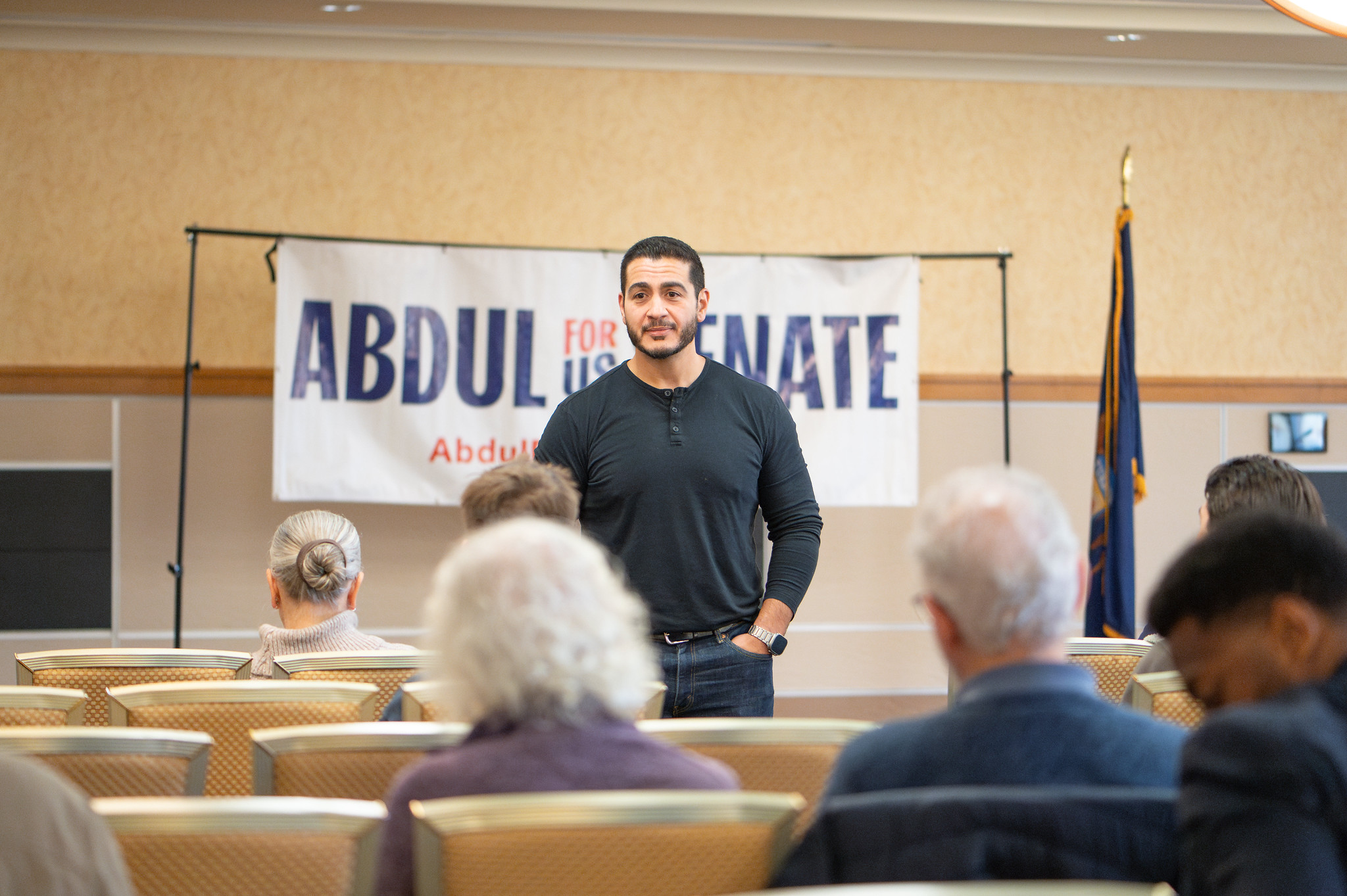
President Donald Trump and senior Republicans have intensified attacks on Democratic Senate candidate Abdul El-Sayed since his August 4 primary victory, with several explicitly targeting his Muslim faith, Arabic name or alleged connections to Islam.
El-Sayed defeated US Representative Haley Stevens in the Democratic primary, becoming the first Muslim nominated by a major US party for the US Senate in Michigan. He will face Republican nominee Mike Rogers in the November 3 general election.
Within hours of El-Sayed’s victory, Republican Senator Tommy Tuberville of Alabama called him a “TERRORIST” and “RADICAL ISLAMIST” in a social media post.
A Washington Post analysis published August 23 examined 8,800 social media posts, podcasts and newsletters from prominent right-wing figures and found that conservative discussion of El-Sayed shifted after his primary victory from his progressive politics towards his Muslim identity. References to Islam, Muslims and Sharia became substantially more common after August 4.
Trump has repeatedly attacked El-Sayed since the primary, calling him a “communist”, “full of shit” and a “man of hate”. He has also described El-Sayed as a “hater of Jews” and “hater of Israel” while criticising his positions on Israel and Gaza.
On August 9, Trump posted an image showing himself and Melania Trump alongside El-Sayed and his hijab-wearing wife, Sarah Jukaku, under the words: “Two VERY DIFFERENT Americas.”
Trump used El-Sayed’s full name, Abdulrahman Mohamed El-Sayed, rather than the name by which he is publicly known. The Council on American-Islamic Relations criticised the post.
El-Sayed responded to the attacks by saying: “We always knew they were going to go here.”
On August 11, Trump said: “We have jihadists being elected all over the place.” Trump did not name El-Sayed, but the remark came one week after his primary victory and as Republicans were attacking Muslim Democratic candidates.
The Washington Post reported that far-right activist Laura Loomer had urged Trump to use the term “jihadists” when discussing Muslim candidates before Trump subsequently used it.
Republican Representative Nancy Mace of South Carolina wrote that “every single Muslim holding public office in America” was a “Trojan horse” and “a threat to both national security and our republic.”
Republican Senator Ted Cruz of Texas has described El-Sayed and New York Mayor Zohran Mamdani as “Islamists” and accused them of supporting Sharia law.
Vice President JD Vance also attacked El-Sayed on August 22 over his remarks about Sharia law.
Speaking at a steel plant in Ohio, Vance cited comments El-Sayed made at a 2022 Council on American-Islamic Relations event and said they reflected a Democratic Party that had moved away from traditional working-class voters. Vance contrasted El-Sayed’s views with those of his grandfather, whom he described as a union welder.
The attacks have also focused on El-Sayed’s use of Islamic terminology.
An Al Jazeera investigation published August 10 found that far-right accounts had circulated El-Sayed’s use of the Arabic expression “inshallah”, meaning “God willing”, in posts attacking him. The investigation described the activity as a coordinated digital smear campaign.
The National Republican Senatorial Committee released an advertisement on August 5, the day after El-Sayed’s primary victory, describing him as “the most radical Senate candidate in America.”
The advertisement repeatedly used his full name, “Abdulrahman Mohamed El-Sayed”, and accused him of supporting the leader of the Muslim Brotherhood. It also attacked his association with political commentator Hasan Piker over Piker’s comments about the September 11 attacks.
Republican Senate candidate Mike Rogers has also attacked El-Sayed over his association with Piker, claiming that El-Sayed “believes America deserved 9/11.”
PolitiFact rated the claim “Pants on Fire!”, finding that the statement was made by Piker, not El-Sayed. Piker said in a 2019 livestream that “America deserved 9/11” and later walked back the remark.
El-Sayed said in April, before campaigning with Piker, that “of course I don’t think 9/11 was justified.” He has declined to say whether he would campaign with Piker again.
El-Sayed is also facing criticism over his views on Israel and Gaza.
The son of Egyptian immigrants, he has opposed unconditional US military support for Israel and criticised Israel’s treatment of Palestinians.
AIPAC spent more than $30 million opposing El-Sayed during the Democratic primary, according to Axios, and has indicated it plans to oppose him in the general election.
AIPAC said on August 5 that it would work to oppose what it called El-Sayed’s “radical anti-Israel agenda.”
Michigan Attorney General Dana Nessel, who is Jewish, has said she plans to miss the state Democratic Party convention on August 29 because of concerns over antisemitism and her safety.
El-Sayed has compared Republican use of his full name with Republican use of Barack Obama’s middle name, Hussein, during Obama’s presidential campaigns.
The Washington Post found that references to El-Sayed by his full name increased sharply among prominent conservative figures after the August 4 primary.
El-Sayed’s campaign has responded by highlighting his Egyptian-American family background. One campaign advertisement features his grandparents discussing his upbringing.
The Centre for the Study of Organised Hate found that anti-Muslim posts mentioning El-Sayed averaged 3,099 a day between August 4 and 10, compared with 155 a day between June 1 and August 3.
The Washington Post similarly found that conservative discussion after the primary increasingly referred to Islam, Muslims and Sharia, while references before the primary focused more heavily on El-Sayed’s progressive politics.
El-Sayed is not the only Muslim Democratic politician facing Republican criticism.
Mamdani, the first Muslim mayor of New York City, faced repeated attacks over his religion during his mayoral campaign and after taking office. Cruz has used the term “Islamist” when referring to both Mamdani and El-Sayed.
El-Sayed will face Rogers in the November 3 general election. Rogers is a former US representative and was unopposed in the Republican primary.