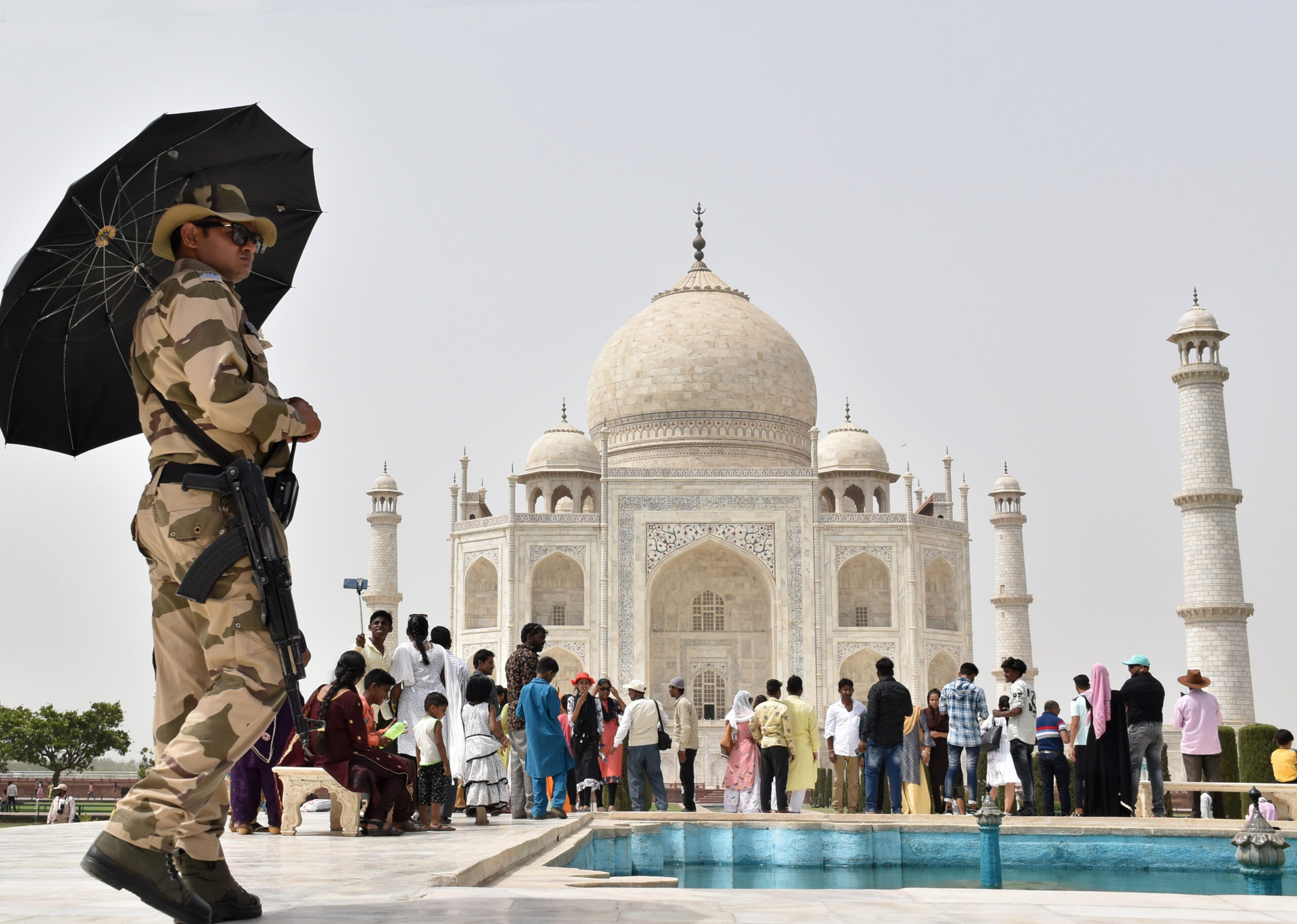
A legal bid by a Hindu nationalist group to stop a centuries old Muslim memorial ceremony at the Taj Mahal has failed, with authorities allowing observance to proceed under heightened security.
The 371st memorial, the annual Sufi-linked commemoration of the death anniversary of Mughal Emperor Shah Jahan, concluded without incident, despite attempts by the Akhil Bharatiya Hindu Mahasabha to have the event banned. The three-day ceremony was held from January 15 to 17 at the UNESCO World Heritage site where Shah Jahan and his wife Mumtaz Mahal are buried.
An official from the Archaeological Survey of India (ASI) said the observance was conducted “in accordance with established tradition”.
The Hindu Mahasabha had earlier petitioned an Agra civil court, arguing there was no historical authorisation for Muslim religious practices at the monument and reiterating its claim that the Taj Mahal was originally a Hindu structure. The group warned of protests if the Urs went ahead and sought an emergency injunction.
The court declined to intervene, allowing the ASI to oversee the ceremony. “No stay was granted,” a court official confirmed, permitting the event to proceed despite the petition remaining formally pending.
During the Urs, authorities briefly opened access to the sealed basement crypt, allowing visitors to view the original graves of Shah Jahan and Mumtaz Mahal. Rituals including the washing of the graves and the offering of sandalwood paste were carried out as in previous years.
Security was tightened across the complex, with the Central Industrial Security Force (CISF) deploying additional personnel after rival groups threatened to perform Hindu rituals at the site. A CISF officer described the arrangements as “preventive and precautionary”. No disturbances were reported.
The ceremony concluded with the offering of a 1,700-metre-long multi-coloured chadar, carried through the complex and laid at the tomb.
Historians say the decision to allow the Urs to proceed reinforces the Taj Mahal’s status as a mausoleum. “Its historical and religious character is well established,” one Agra-based historian said.
Feature photo: Hindu nationalist bid to block Taj Mahal Muslim ceremony fails; observance proceeds under heightened security (Credit:Stringer/AA)ISLAMOPHOBIA INDIA: Beaten in public, tied to a pole – and then taken into custody: Muslim man assaulted by Hindu vigilantes in Bihar
Hate speech against Muslims and Christians surges in India, report finds
India: Muslim boys booked after Hindu group disrupts birthday party accusing attendants “love jihad”
Muslim lynched by Hindutva mob in Jharkhand over alleged cattle theft