Nadine Osman
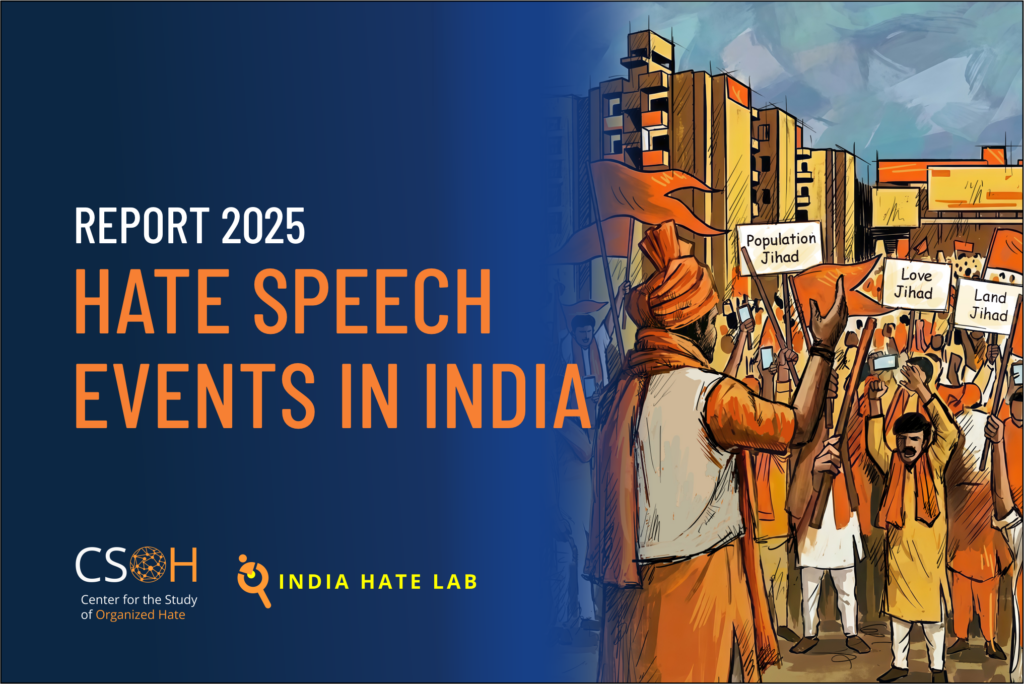
Hate speech targeting religious minorities in India rose sharply in 2025. Muslims experienced the highest number of incidents, according to the report Hate Speech Events in India 2025, published on January 13 by India Hate Lab, a research initiative of the Washington DC–based Center for the Study of Organised Hate (CSOH).
The report documented 1,318 in-person hate speech events across the country last year, a 13 per cent increase compared with 2024 and nearly double the number recorded in 2023. Its findings highlight the growing visibility and normalisation of hostile rhetoric against religious minorities in India’s public sphere.
India Hate Lab defines hate speech events as public gatherings, including political rallies, religious processions, protest marches, and nationalist meetings, where speakers openly target religious communities.
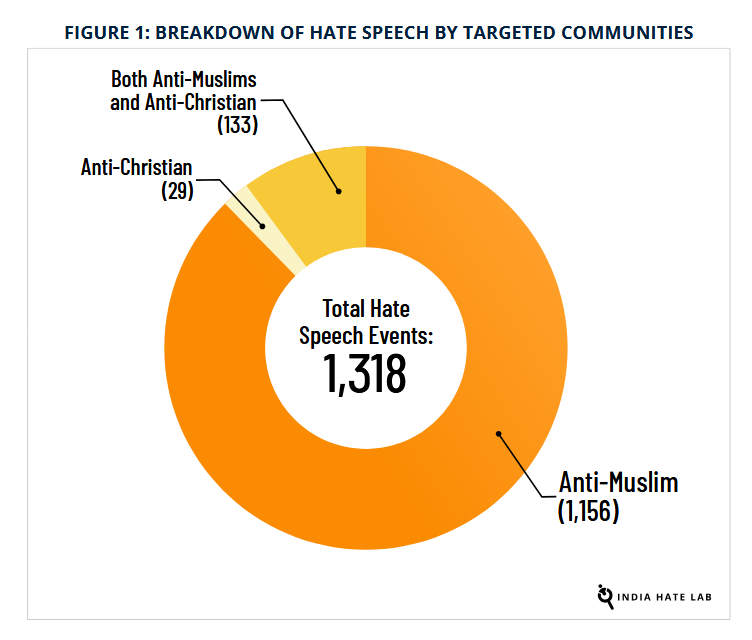
Muslims were the most frequently targeted group, with incidents rising by nearly 12 per cent year-on-year. Hate speech against Christians increased by around 41 per cent, marking the steepest annual rise recorded for the community. Together, speeches targeting Muslims and Christians accounted for most incidents documented in 2025.
Researchers said minorities were routinely portrayed as outsiders, anti-national actors or demographic threats, language that has become increasingly commonplace at public events.
BJP-RULED STATES DOMINATE FIGURES
The highest number of hate speech events were reported in Uttar Pradesh, Maharashtra, Madhya Pradesh, Uttarakhand and Delhi, which together accounted for almost two-thirds of all incidents nationwide.
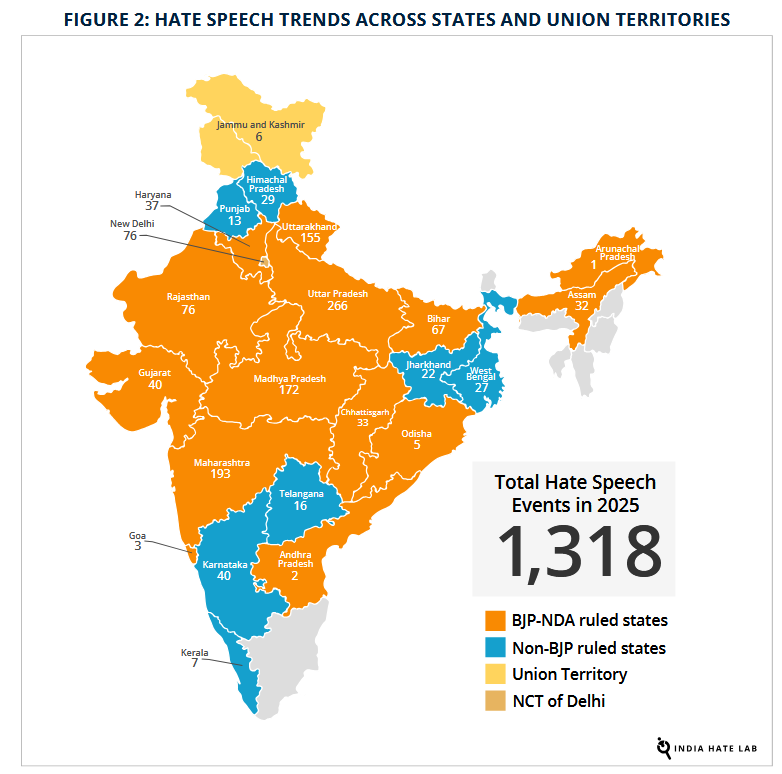
Nearly 88 per cent of the events took place in states governed by the ruling Bharatiya Janata Party (BJP), either directly or through coalition governments, a notable increase compared with the previous year.
India Hate Lab said the pattern suggests inflammatory rhetoric has persisted beyond election periods and is now sustained throughout the year.
Eviane Leidig, director of research at the centre, said, “The data show that while domestic and international events continued to trigger episodic spikes in hate speech, the more striking trend was the persistence of an elevated baseline throughout the year.
“Unlike previous years, where hate speech tapered off outside election cycles, 2025 saw sustained mobilisation even during non-election periods, pointing to a strategic shift rather than reactive mobilisation alone.”
CONSPIRACY THEORIES AND CALLS FOR VIOLENCE
Nearly half of all recorded speeches referenced conspiracy theories such as love jihad, population jihad or halal jihad, terms promoted by Hindu nationalist groups to accuse Muslims of covertly undermining India’s Hindu majority.
Researchers stressed that these claims lack factual basis but remain widely circulated in political rhetoric and online discourse.
The report also highlighted a rise in the severity of language used. Almost one in four speeches contained direct calls for violence, while others promoted social or economic boycotts or called for the demolition of mosques and churches.
Prominent religious sites, including the Gyanvapi Mosque and the Shahi Idgah Mosque, were repeatedly referenced during hate speech events.
Hindu nationalist organisations such as the Vishwa Hindu Parishad and Bajrang Dal were identified as among the most frequent organisers of such gatherings. Researchers also noted the growing involvement of religious figures, including Hindu monks and priests, whom the report said helped legitimise anti-minority narratives among audiences.
SOCIAL MEDIA AMPLIFICATION
Social media platforms played a central role in amplifying hate speech, with videos from 1,278 of the 1,318 events uploaded or live-streamed online.
Facebook accounted for the largest share of uploads, followed by YouTube, Instagram and X. Researchers said inconsistent enforcement of platform policies has allowed such content to circulate widely.
India Hate Lab warned that the sustained spread of hate speech has increased the vulnerability of Muslims and Christians to harassment, discrimination and violence.
The report noted that the rise in hostile rhetoric has coincided with policy decisions and legal measures that disproportionately affect religious minorities, including stricter anti-conversion laws and increased scrutiny of Muslim communities.
It concluded that the continued normalisation of hate speech risks further entrenching social divisions and weakening protections for minority groups across India.
Photo: Hate Speech Events in India 2025, published on January 13 by India Hate Lab
ISLAMOPHOBIA INDIA: Beaten in public, tied to a pole – and then taken into custody: Muslim man assaulted by Hindu vigilantes in Bihar
India: Muslim boys booked after Hindu group disrupts birthday party accusing attendants “love jihad”
Muslim lynched by Hindutva mob in Jharkhand over alleged cattle theft
Taj Mahal Muslim memorial goes ahead after court rejects Hindu group’s challenge