Nadine Osman
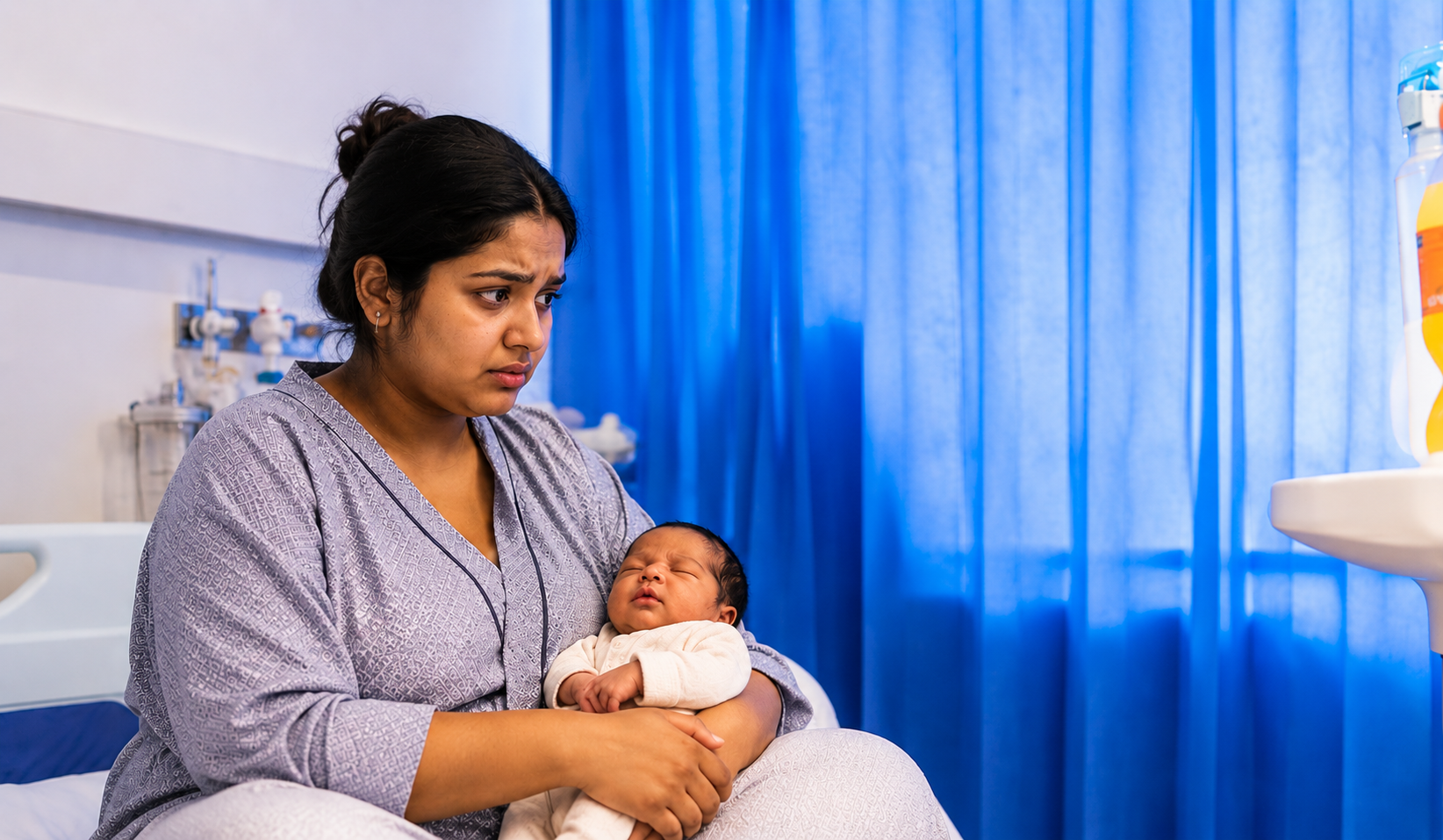
Muslim women have hidden their religious identity, removed clothing and avoided requesting faith-related support in order to receive maternity care, a landmark government-ordered investigation has found.
The final report of the Independent National Maternity and Neonatal Investigation, published on June 30, found that racism and discrimination were “embedded throughout the maternity and neonatal system”, with “profound implications” for the quality-of-care women and babies receive.
The investigation found that ethnic minority families experienced discrimination, stereotyping and poorer treatment across NHS maternity services, with some women reporting that they felt judged because of their appearance, culture or religion.
Baroness Valerie Amos, who chaired the investigation, said there was “absolutely no justification” for the continuing cases of unsafe care and avoidable harm uncovered in England’s maternity services.
The inquiry heard accounts from Muslim families who said they had been questioned about their religious identity during appointments and labour. Some women reported being challenged about their clothing, including one who said a member of staff asked: “Why are you wearing this?”
Others said healthcare workers made assumptions about their ability to understand English based on their appearance, while some described hearing derogatory comments made in their presence.
The investigation found that some families felt their experiences were so negative that they began hiding aspects of their identity to avoid further difficulties.
Some Muslim women removed religious clothing or avoided making requests that could reveal their faith, while others said they were reluctant to ask for privacy during examinations, support with breastfeeding or access to female clinicians because they feared their needs would be dismissed.
Some families used doulas as a “buffer” between themselves and healthcare staff to help secure more culturally appropriate care.
The inquiry found that these concerns were not limited to one religious community. Jewish families also described avoiding religious requests because they feared being identified. One family panel told investigators: “They’re not disclosing… they’re hiding their identity if it’s possible to do that.”
The investigation also heard examples of explicit prejudice, including a report from a Jewish family that a member of staff had said: “Jewish people are sneaky.”
Baroness Shaista Gohir, chief executive of Muslim Women’s Network UK, warned that stereotypes about Asian and Black women could have serious consequences for their treatment during pregnancy and birth.
She told investigators that some women were seen as exaggerating symptoms, meaning doctors and midwives could underestimate how far labour had progressed.
“What ends up happening with that stereotype is that midwives and doctors underestimate how far labour has progressed,” she said. “There’s a consequence of stereotyping.”
The findings revealed stark differences in how women from different ethnic backgrounds experienced maternity care.
Only 31 per cent of Asian respondents said staff listened to their concerns during labour and birth, compared with 39 per cent of White respondents.
Just 35 per cent of Asian respondents and 37 per cent of Black respondents said they felt safe and supported during their care, compared with 44 per cent of White respondents.
The report warned that ethnic minority women continue to experience “persistently poorer maternity and neonatal outcomes”.
Between 2022 and 2024, the maternal mortality rate for Black women was almost three times higher than for White women. Babies from Black ethnic backgrounds were also more than twice as likely to be stillborn, while neonatal death rates were higher among Black and Asian babies.
The investigation estimated that ethnic inequalities in maternal and neonatal outcomes may cost the NHS and wider society around £350 million every year, although it said this was likely to underestimate the true impact.
The inquiry also highlighted discrimination within the maternity workforce itself. More than one in five ethnic minority staff reported experiencing discrimination from patients or members of the public in the previous year, compared with five per cent of White staff.
Investigators said some NHS workplaces had cultures where racism had become “normalised”, leaving both staff and families feeling unable to challenge poor treatment.
The report also warned that inequality can be built into healthcare systems themselves, including through clinical tools, guidance and training that do not adequately reflect diverse communities.
It highlighted concerns that methods used to assess newborn jaundice may be less suitable for babies with darker skin tones because they do not sufficiently account for differences in pigmentation.
It also cited evidence that current approaches to identifying pre-eclampsia may fail to detect a higher proportion of Black women at risk of the condition.
“These examples show that inequalities can be embedded within clinical tools, guidance and practice, not solely through interpersonal interactions,” the report said.
The investigation called for racism and discrimination to be treated as a “critical safety issue requiring urgent intervention”.
It recommended the creation of a statutory Maternity and Neonatal Commissioner, stronger national standards for maternity services, an independent review of anti-racism training and improved collection of ethnicity data to identify inequalities.
The report said previous maternity reviews, including the Morecambe Bay Investigation, the Ockenden Review into Shrewsbury and Telford, and the East Kent investigation, had repeatedly exposed serious problems.
However, investigators warned that improvements had been difficult to sustain. The challenge, they said, was no longer recognising the failures but ensuring recommendations led to lasting change.
“Equality in care is not only unjust and unsafe, but also associated with significant financial costs,” the report concluded.