Abu Yusra Chowdhury
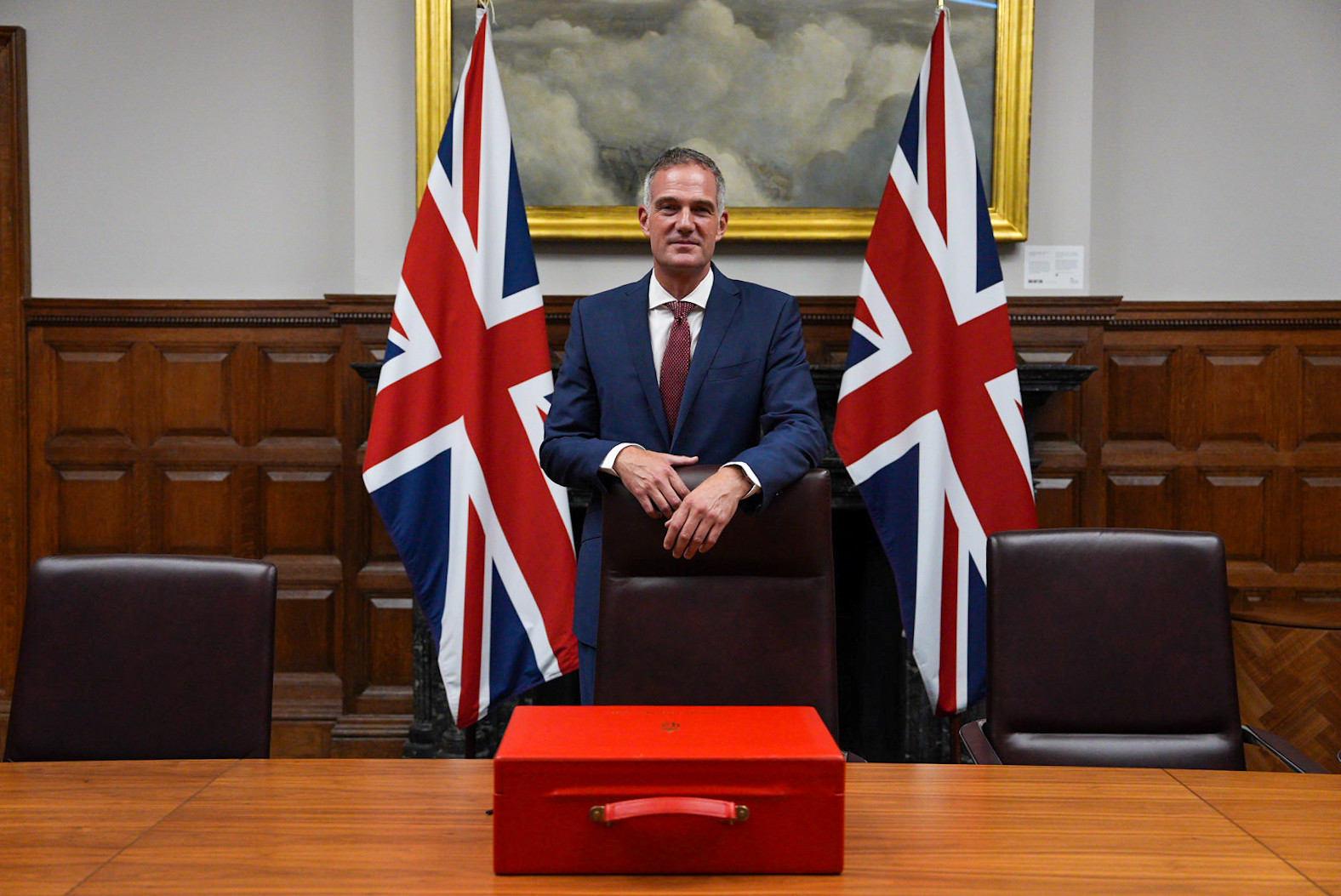
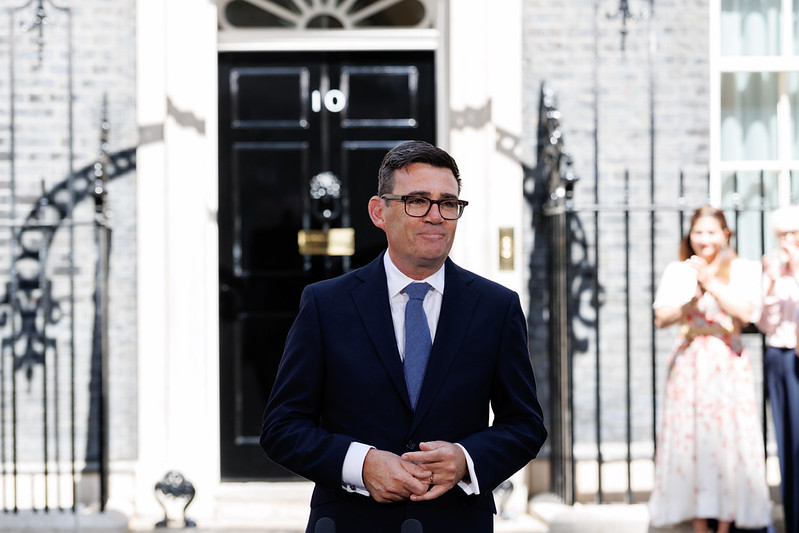
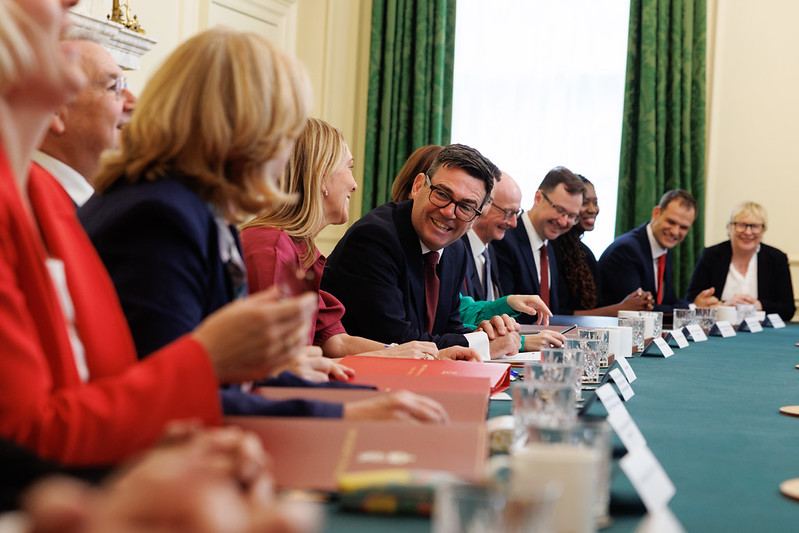
Andy Burnham became Prime Minister on July 20 with a government that keeps Britain’s first Muslim woman Home Secretary in post, brings a second senior Muslim politician into office, and follows his own public apology for Labour’s handling of the war in Gaza.
Burnham succeeded Sir Keir Starmer without a general election, Labour’s large Commons majority allowing a change of leader without a return to the polls. Shabana Mahmood remains Home Secretary, while Anas Sarwar, the former Scottish Labour leader, has taken a peerage to become a trade minister – making it two known British Muslims in government. Uma Kumaran, a Foreign Office minister with an outspoken record on Palestinian rights, and Sir Stephen Timms, the new equalities minister, also hold posts of significance to Muslim voters.
Days before winning the Labour leadership, Burnham apologised for his party’s early response to the war in Gaza. In a video posted on July 9 he said: “Labour’s initial response to the treatment of Gaza caused huge hurt. We got it wrong and I am sorry for that.” He added that the UK “was too slow to call for a ceasefire” and accused Benjamin Netanyahu’s government of “clearly attempting to make a two-state solution impossible.” His appointment of Ed Miliband as Foreign Secretary, alongside Kumaran, who recently told a parliamentary committee that Palestinians face a “system of legal apartheid,” has been read by some as reinforcing a tougher line.
The Muslim Council of Britain (MCB), which has been frozen out of formal government engagement for more than a decade, said it hoped for genuine partnership. Its Secretary General, Dr Wajid Akhter, welcomed “a genuine change of direction, not merely a change of face at the top,” but said such recognition “means little unless matched by” a foreign policy grounded in international law and “a domestic reckoning with Islamophobia as the structural problem it is.” He called for engagement through representative bodies rather than “gatekeepers handpicked by those in government.”
Afzal Khan, the Manchester Gorton MP and a Burnham supporter, told The Muslim News the new prime minister had “a long history of working with the Muslim community” and understood “the importance of the Muslim community being engaged with government.” Labour, he said, had “come a long way” on Palestine, though “more needs to be done.” He described Islamophobia as “the number one issue of the Muslim community, because it affects us in every aspect of life,” welcomed the government’s measures against it as “a first step,” and backed the idea of an Islamophobia tsar to keep the problem under review.
Others were more guarded. The advocacy group MEND, responding to Starmer’s resignation on June 22, described Labour’s earlier position on Gaza as “a moral disaster.” It named Burnham as a figure who had “earned a reputation for listening to communities,” but said it would judge him “not by their words on the steps of Downing Street or during any leadership race, but by their actions.”
Hopes of a change of direction are tempered by continuity in key posts. Mahmood, who has herself faced Islamophobic questioning of her loyalty, remains responsible for the tougher asylum legislation Burnham backed before taking office. Stand Up To Racism warned that adopting “the language and policies of the far right” did not defeat racism but strengthened it.
On domestic policy, campaigners are watching how the government handles the definition of anti-Muslim hatred. The previous government convened a working group but declined to use the word “Islamophobia,” and refused to adopt the definition drafted by the All-Party Parliamentary Group on British Muslims, which Labour had endorsed in opposition.
The government also inherits the Combating Hate Against Muslims Fund, worth up to £1 million a year, which was awarded to the newly formed British Muslim Trust in place of Tell MAMA. Community figures have questioned whether the new body can win the grassroots trust that would allow it to match the standing of the Jewish community’s Community Security Trust.
Nick Lowles, of the anti-racism group Hope Not Hate, writing on Substack, called on Burnham to end the government’s freeze on dealing with the MCB and to “reset its relationship with Muslim communities.” Ministers routinely engage other faiths through bodies those communities put forward for themselves, among them the Church of England and the Board of Deputies of British Jews. Some have observed that the government’s refusal to deal with their largest umbrella body on the same terms amounts to a double standard.
Prof Javed Khan, Managing Director of the think tank Equi and a former chief executive of Barnardo’s, argued in an article for Labour Home that the central danger was the normalisation of anti-Muslim sentiment, saying that when “political language consistently problematises one group” it “creates an environment where exclusion feels permissible.”
The new government takes office against a backdrop of record levels of anti-Muslim hate. The summer of 2024 saw anti-Muslim riots and a wave of attacks on mosques, and monitoring groups have since reported the highest number of Islamophobic incidents on record.
Starmer announced his resignation on June 22, following heavy Labour losses in the May local elections and sustained pressure from his own MPs. Burnham, the former mayor of Greater Manchester, won the subsequent leadership contest and took office governing on the mandate the party won in 2024.
Afzal Khan said the wider stakes went beyond any single policy. The Muslim community, he argued, needed to recognise “the community cohesion threat that comes from the far right,” and it was Labour, not “the small parties or independents,” that offered the vehicle to confront it.
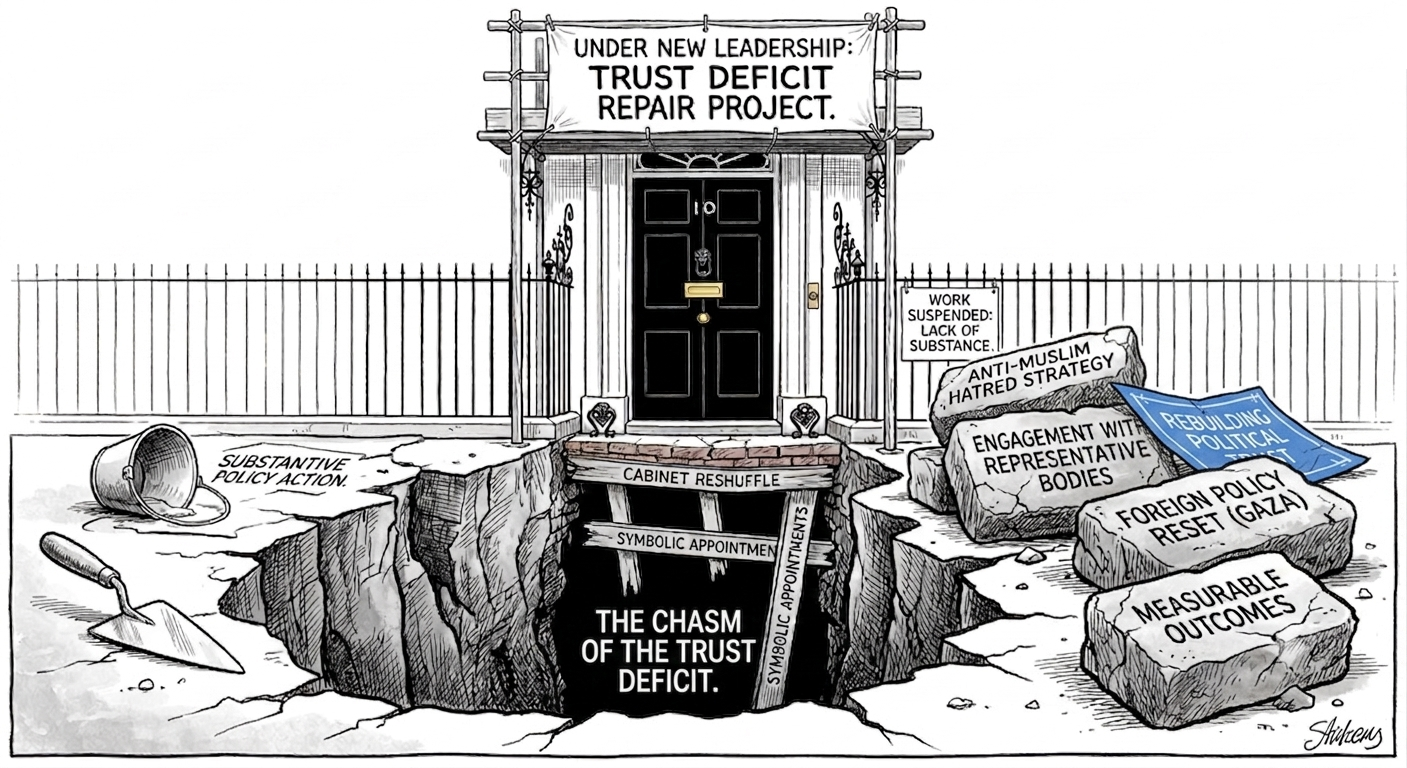
Editorial —Closing Labour’s trust deficit with Britain’s Muslims: Andy Burnham’s test of leadership