Harun Nasrullah
A Muslim judge in India has been placed under police protection after receiving death and rape threats for sentencing 14 self-styled “cow vigilantes” to life imprisonment for the lynching of a cattle trader.
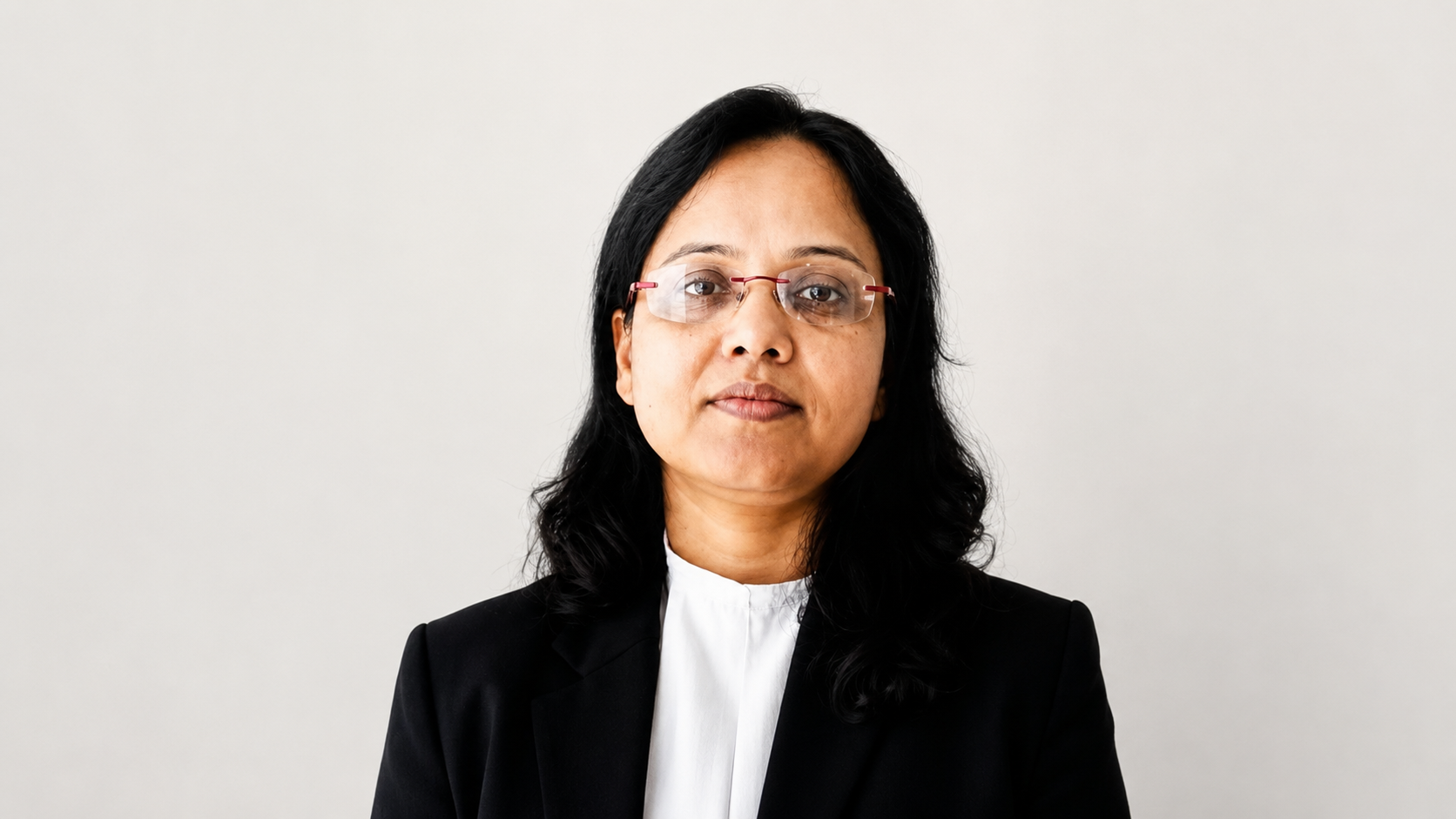
Judge Tabassum Khan, an additional district and sessions judge in the central state of Madhya Pradesh, became the target of an online hate campaign after convicting the men of murder, attempted murder, rioting and wrongful restraint.
Rather than challenge the legal reasoning behind her judgment, many of her critics focused on her religion, with Hindu nationalist groups and right-wing social media figures accusing her of favouring Muslims over Hindus.
The case stems from an attack in 2022, when 50-year-old cattle trader Nazir Ahmad was transporting livestock through Madhya Pradesh at night. His vehicle was intercepted by a group of self-styled gau rakshaks, or “cow protectors”, armed with sticks and iron rods.
After accusing Ahmad of cattle smuggling, the mob dragged him and his two companions from the vehicle and beat them. Ahmad later died from his injuries, while the two survivors testified in court about the assault.
In her judgment on June 12, Khan described the attack as a clear case of mob lynching before sentencing all 14 defendants to life imprisonment.
The verdict immediately provoked protests from supporters of the convicted men. Relatives gathered outside the courtroom and reportedly attempted to block the police convoy transporting the prisoners to jail, insisting they had merely been “saving cows”.
The backlash quickly spread online, where videos showed Hindu nationalist influencers directing communal abuse at Khan while issuing death and rape threats. In one widely circulated video, a speaker warned there would be “bloodshed” across India unless the men were released within 10 days.
Many of the videos remained online at the time of writing, attracting thousands of views, likes and shares, with those making the threats appearing openly on camera.
An anchor on the right-wing Hindi channel Sudarshan News echoed support for the convicted men, saying their families “might have never imagined that their family members, who had put everything on the line to save cows, would be imprisoned for it”. He urged viewers to “speak up”, adding that “now was the time to fight for the sake of the protectors of cows”.
The campaign against Khan soon extended beyond social media.
On June 22, members of the Gau Raksha Parishad staged a protest in Punjab during which demonstrators assaulted and burned an effigy of the judge. Three days later, the Rashtriya Bajrang Dal organised another protest in Uttar Pradesh demanding the release of the convicted men.
The threats prompted senior members of India’s legal community to rally behind Khan.
Former Supreme Court judge Markandey Katju said the attacks were aimed not at the judgment itself but at the judge’s religious identity.
“Her Muslim identity became the principal basis upon which the legitimacy of the judgment was questioned,” he wrote on X.
“This represented a dangerous inversion of justice. Judicial decisions are meant to be evaluated through legal reasoning, not through the religious identity of the individual delivering them.”
Katju later revealed that Khan had contacted him to thank him for speaking out, saying the abuse had left her traumatised and feeling “like she had committed a crime by delivering her verdict”.
India’s leading legal bodies, including the Supreme Court Advocates-on-Record Association (SCAORA) and the Supreme Court Bar Association (SCBA), also condemned the threats and called for swift action against those responsible.
SCBA president Vikas Singh warned that intimidation of judges threatened the foundations of the justice system.
“If we allow this to happen, no judge will be able to dispense justice,” he said.
“In a democracy, a judge must be able to perform their duty without fear or favour.”
Police subsequently opened a criminal investigation.
Senior police officer Sudhakar Baraskar said a case had been registered under relevant provisions of the Indian Penal Code and that two people had been arrested. Cyber investigators were tracing those responsible for uploading and sharing the inflammatory videos while continuing to monitor social media.
However, Supreme Court advocate Sanjay Hegde argued that both the state and the judiciary should do more to protect Khan.
Writing in Live Law, Hegde drew comparisons with former Bombay high court judge Gautam Patel, who received police protection after facing threats for more than 10 months following a 2024 ruling involving a succession dispute within a Muslim community.
After three judicial organisations filed a public interest litigation, the Bombay High Court ordered the Maharashtra government to provide Patel with security and directed Mumbai’s police commissioner to supervise the investigation.
“If a retired judge of a high court deserves state protection and judicial supervision of his case, so does a serving sessions judge in a district court,” Hegde wrote.
“The principle cannot bend to rank. It cannot bend to religion. It cannot bend to the political weather around a particular verdict.”
On July 8, the Madhya Pradesh high court directed senior state officials to explain what steps had been taken to protect Khan and identify those responsible for the threats. The court also ordered that her police protection remain in place while the investigation continues.
The case has renewed scrutiny of cow vigilantism in India, where cows are regarded as sacred by many Hindus and cattle slaughter is prohibited in several states.
Over the past decade, self-styled cow protection groups have repeatedly been accused of carrying out violent attacks against Muslims and other communities suspected of transporting or trading cattle. Human rights organisations have long argued that such attacks are rarely isolated incidents but form part of a broader pattern of communal violence linked to religious nationalism.