Harun Nasrullah
The Muslim Students Association (MSA) at Wissahickon High School in Pennsylvania has defended its display of Palestinian cultural items at the school’s annual culture fair on 1 December, rejecting claims that the booth was antisemitic or politically provocative.
At a school board meeting, the MSA chapter president addressed concerns raised by parents, stating, “I want to make it very clear that the defaming statements made at the beginning of this meeting are nothing but false. Nothing antisemitic was at the stand. No illegal substances were at the stand. Nothing was taken down quickly.”
The stall featured traditional Palestinian keffiyehs, Palestinian flags, and a banner bearing an Arabic phrase commonly translated as “Jerusalem is ours.” Some parents described the phrase as a political statement that made Jewish pupils uncomfortable, claiming their children were left “shaken” by the display. One parent told Fox News Digital her child felt “intimidated,” though no verbal harassment or threatening behaviour was reported.
The MSA stressed the display was intended to showcase Palestinian culture and heritage, not hostility. Addressing claims the Arabic phrase was extremist, the chapter president said: “That statement was written in Arabic, so none of the Jewish students could actually understand that and take that as antisemitic.”
The group argued that translations circulated by critics removed the phrase from its cultural context and imputed political intent where none existed. They added that the phrase reflects cultural and religious attachments common among Palestinians and is frequently used in social and artistic settings.
The MSA also addressed concerns over the keffiyeh, which some parents claimed is now associated with anti-Israel sentiment. Chapter members highlighted that the keffiyeh is a traditional garment worn across the Levant for generations, long predating contemporary political conflicts.
“Antisemitism is hostility, prejudice or discrimination against Jewish people because they are Jewish,” the MSA president said. “The watering down of the term to just throw it around at children representing their culture is harmful, because now people will no longer believe that antisemitism is a real concern when it is.”
Parents had also criticised the use of sweets and small prizes at the stall, suggesting it was a tactic to draw pupils into political activity. The MSA responded that such giveaways are standard practice at cultural fairs and were not intended to influence political views.
The chapter president noted that Palestinian and Muslim students increasingly face suspicion when displaying cultural symbols, particularly during periods of international tension. Members said they had received online threats and were tagged in posts calling for law enforcement intervention.
Despite the controversy, the MSA reaffirmed its commitment to taking part in school activities and representing its members’ identities:
“I’m here to say that the MSA is going nowhere… We will continue being strong and loud and proud about our culture and our heritage.”
While some parents accused the school district of “endorsing extremism,” no evidence has been presented of threatening conduct or hate speech at the stall. The incident has instead highlighted broader debates over how Palestinian cultural symbols are interpreted in schools, and whether expressions of cultural identity are being treated as political provocation.
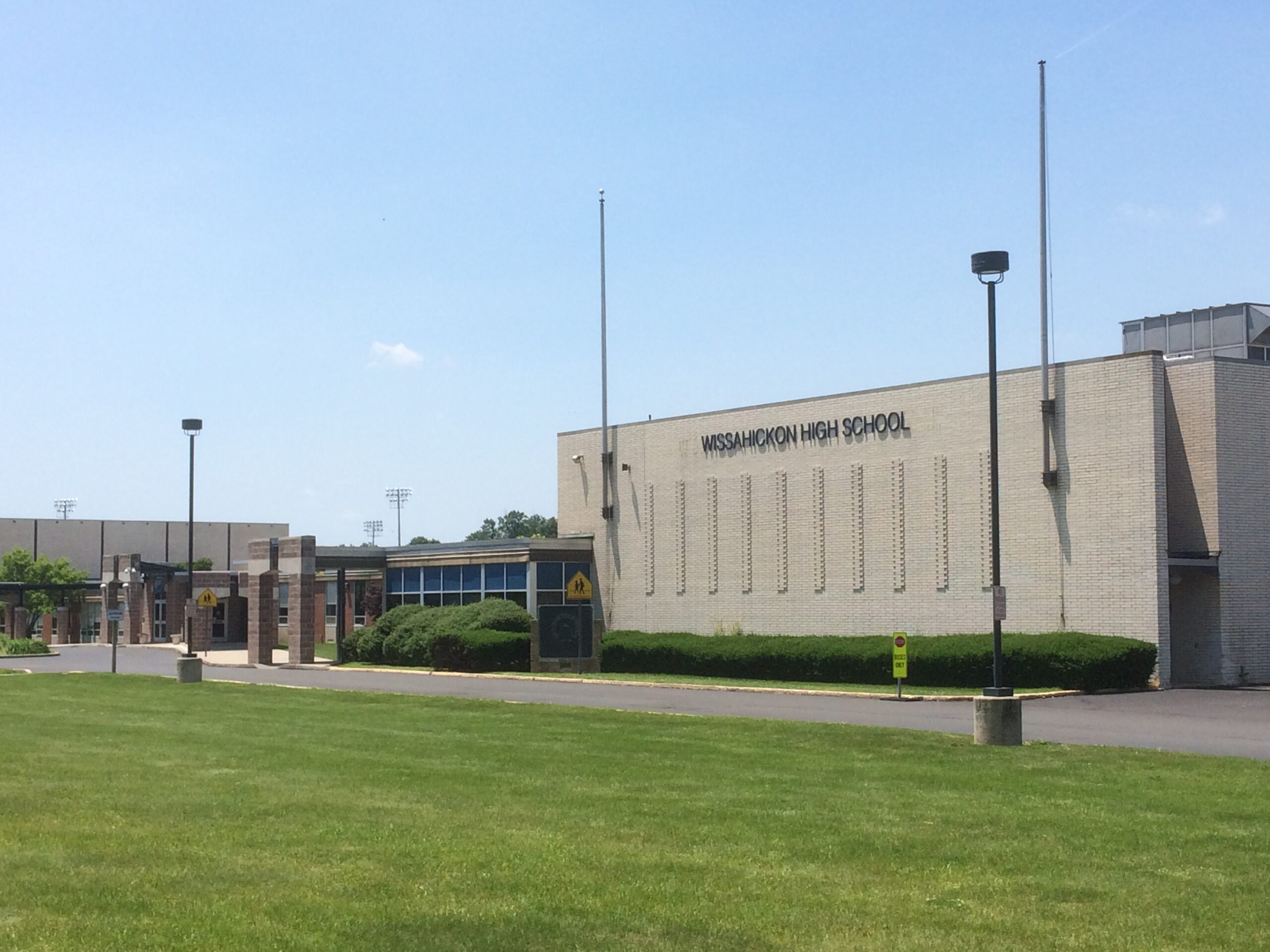
Feature photo: Wissahickon High School in Pennsylvania, where the MSA defended its Palestinian cultural display at the annual culture fair (Credit: Wikimedia/CC).