Nadine Osman
Millions of British Muslims could face losing their citizenship under existing UK laws, a new report warns, highlighting a legal framework that disproportionately affects people based on ethnicity and heritage.
Stripped: The Citizenship Divide, published by the Runnymede Trust and Reprieve, estimates that up to nine million Britons could be at risk of having their nationality revoked. The report states that people of colour are twelve times more likely to be affected than white Britons, with Muslim individuals of South Asian, Middle Eastern, or North African backgrounds among the most vulnerable.
The risk correlates closely with demographic patterns. Around 3.9 million Muslims live in England and Wales, and roughly 60% of Asian British people—who comprise the majority of British Muslims—and 62% of Black British people fall into categories considered most at risk. The largest heritage groups identified include those with links to Pakistan, India, and Bangladesh. On this basis, more than two million British Muslims may face potential citizenship deprivation.
The report traces the development of these powers, noting that while revocation had largely lain dormant for decades, it was revived in 2010 and expanded in subsequent years. The 2014 Immigration Act, for example, allows the government to strip naturalised Britons of citizenship even if it would render them stateless, provided they could acquire another nationality. The powers rest solely with the Home Secretary, require no criminal conviction, and, according to the report, have been applied almost exclusively to Muslims.
High-profile cases underscore the consequences. Shamima Begum, a British-born woman of Bangladeshi Muslim heritage who travelled to Syria, had her citizenship revoked.
The government cited her Bangladeshi descent as justification, though Bangladeshi authorities publicly stated she was not a citizen and would not be admitted. Other cases have left individuals unlawfully stateless, with citizenship only restored after protracted legal battles. In some instances, appeals have been impossible because affected individuals are detained abroad and cannot access legal representation.
The report draws parallels between the current system and past discriminatory practices, including those exposed by the Windrush scandal, and warns that the present political climate—with calls from some nationalist voices to expand citizenship revocation—exacerbates risks for already vulnerable communities.
Authors call for urgent reforms, including an immediate moratorium on citizenship deprivation, repeal of the relevant powers under the British Nationality Act, and restoration of citizenship to all affected individuals, under what the report describes as a “discriminatory and arbitrary system.”
The findings underline that for millions of British Muslims, citizenship is not an absolute guarantee, but a conditional status, potentially revoked at the discretion of the Home Secretary.
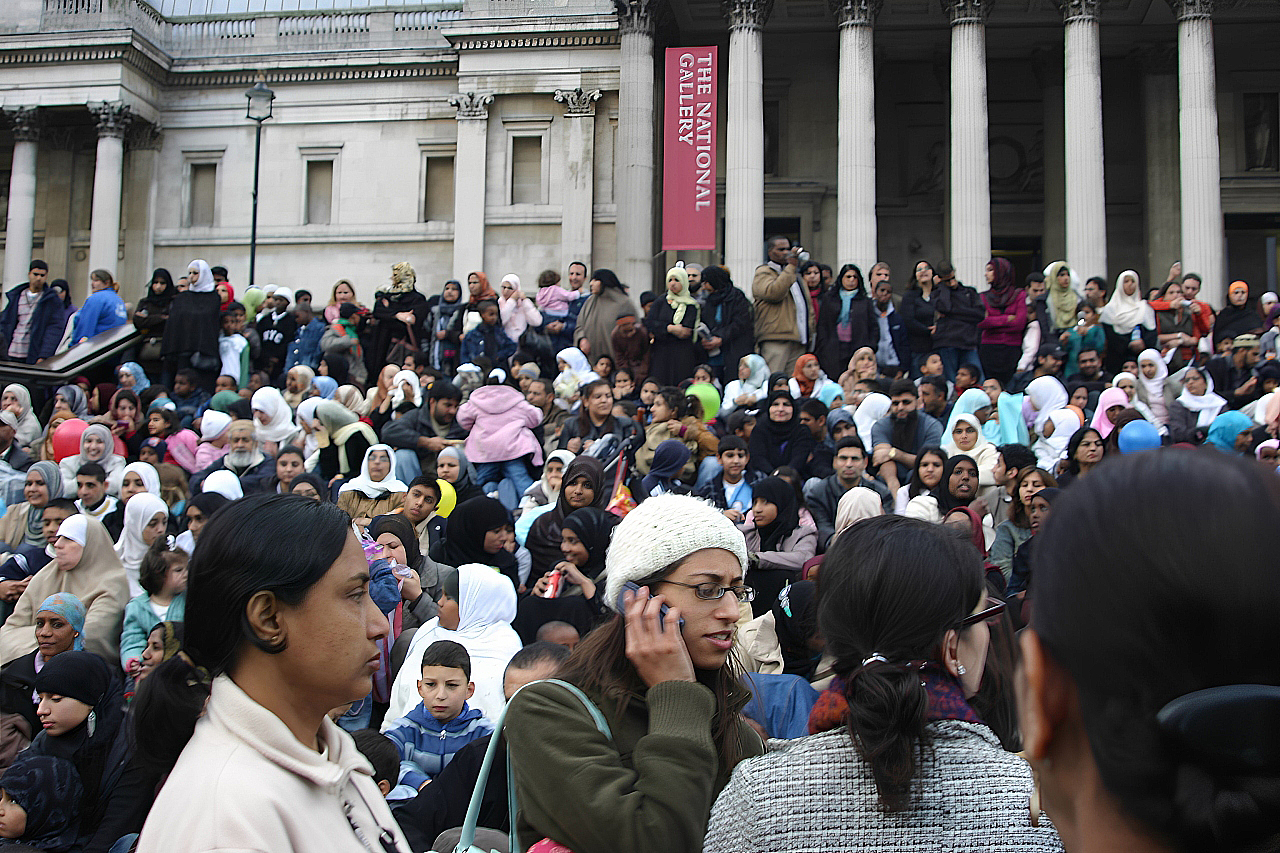
Feature photo: Eid in the Square 2008 (Credit: Ahmed J Versi/ The Muslim News)