Elham Asaad Buaras
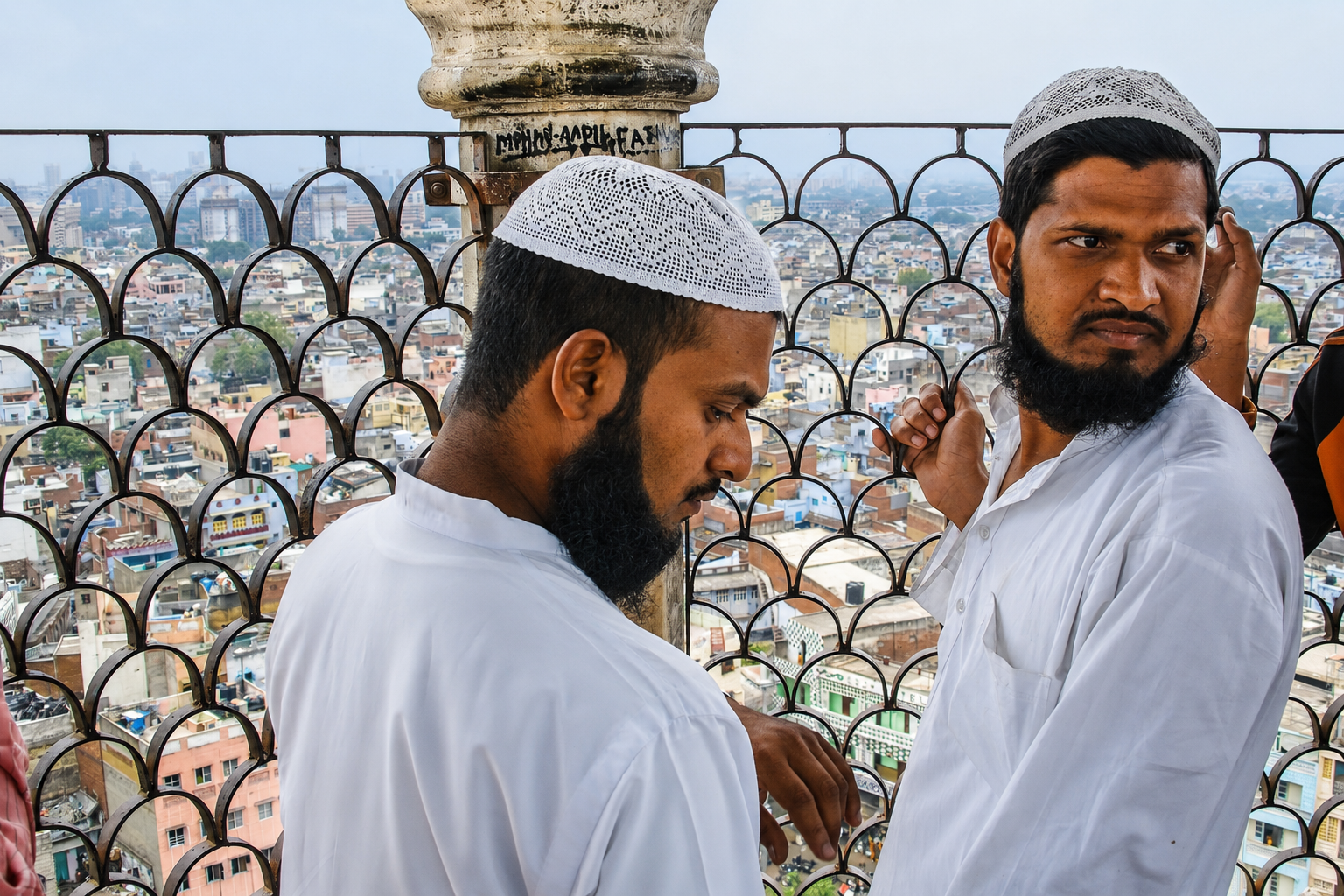
A leaked confidential police document in India has sparked controversy after revealing that officers in Gujarat have been instructed to consider Islamic practices, including growing a beard, using Arabic words and observing I’tikaf during Ramadan, as possible indicators of radicalisation.
The secret Standard Operating Procedure (SOP), issued by Gujarat’s State Intelligence Bureau on June 19, directs district police forces and police commissionerates to establish Anti-Radicalisation Cells (ARCs) to identify and monitor people considered vulnerable to extremist influences.
The first known ARC has been established in Jamnagar district under Superintendent of Police Dr Ravi Mohan Saini.
The Gujarati-language document, marked “Secret”, surfaced on social media earlier this month and outlines how authorities intend to identify individuals they believe may be at risk of radicalisation.
Under the guidance, police are instructed to monitor social media platforms, encrypted messaging apps, online forums and local intelligence networks, while tracking organisations and individuals suspected of promoting what it describes as “radical ideas”.
the SOP lists several behaviours as potential warning signs, including “suddenly keeping a beard, wearing a niqab, frequent use of Arabic words, reducing contact with friends and family, expressing intense protest against events happening to the Muslim community globally, praising terrorists, or showing a change in behaviour after travelling abroad, including Afghanistan or the Middle East”.
Other indicators include using encrypted platforms such as Signal and Element, virtual private networks (VPNs), joining Telegram groups labelled extremist, using cryptocurrency without an apparent source of income, and communicating with people in Afghanistan through encrypted applications.
The guidance also directs police to monitor individuals who leave education or employment for religious reasons, become socially isolated or frequently associate with people described as “radical preachers”. However, it does not explain how officers should distinguish between protected religious practices and genuine criminal activity.
Critics have accused the guidance of disproportionately targeting ordinary expressions of Muslim identity while failing to address extremism linked to other communities.
Civil rights activist Shabnam Hashmi said the Gujarat government was using national security measures to stigmatise Muslims.
“Under the guise of national security, the Gujarat government is institutionalising communal profiling and weaponising state machinery to criminalise ordinary expressions of religious and cultural identity,” she said.
Hashmi added that practices such as keeping a beard, wearing a niqab, using Arabic greetings or performing I’tikaf during Ramadan were being wrongly transformed into indicators of radicalisation.
She warned that the broad criteria could potentially be used to justify prosecutions under India’s Unlawful Activities (Prevention) Act (UAPA), the country’s main anti-terrorism law.
Mujahid Nafees, convener of the Minority Coordination Committee (MCC), said the organisation had submitted a representation to the Gujarat government demanding the SOP be withdrawn.
“This is only being done to target Muslims,” he said. “The most alarming part is the open-ended use of terms like ‘radical’ and ‘radical organisations’, which can easily be manipulated to persecute an already criminalised Muslim community.”
He said the group would approach the Gujarat High Court if the state government failed to respond.
The creation of Anti-Radicalisation Cells was first promised by Prime Minister Narendra Modi’s Bharatiya Janata Party (BJP) during the 2022 Gujarat Assembly election campaign. BJP President J.P. Nadda said at the time that the cells would identify threats posed by “anti-national” elements, sleeper cells, terrorist organisations and anti-India forces.
The Gujarat government has not publicly commented on the leaked document or the criticism it has prompted. Rights groups continue to call for the guidance to be withdrawn, while the Minority Coordination Committee has warned it will challenge the policy in court if no action is taken.