Nadine Osman
Pauline Hanson was suspended from the Australian Senate for a week on November 25 following a controversial protest in which she wore a burqa in the chamber to advocate for a ban on the garment.
The One Nation leader, known for her anti-immigration stance, had attempted to introduce a bill outlawing burqas in public the previous day but was blocked by fellow senators. In defiance, she returned to Parliament still wearing the veil, insisting it was a statement against being “silenced” rather than a political stunt.
The move sparked fierce backlash from across the political spectrum. Independent Senator Fatima Payman labelled the behaviour “disgraceful” and warned it risked inciting harassment against Muslim women and girls. Ali Kadri, Chief Executive of the Islamic College of Brisbane, said the stunt “escalates and radicalises people, making it appear acceptable to abuse young Muslim girls wearing hijabs.”
Greens Senator Mehreen Faruqi called it “blatant racism,” noting a recent Federal Court ruling that found Hanson had racially discriminated against her, a decision Hanson is appealing.
Foreign Minister Penny Wong led a successful censure motion, stating Hanson “has been parading prejudice as protest for decades” and that the burqa act was “intended to vilify and mock people on the basis of their religion” and “disrespectful to Muslim Australians.” The motion passed 55 votes to five.
Finance Minister Katy Gallagher accused Hanson of “punching down on migrants,” while other figures, including Cabinet Minister Tanya Plibersek, raised alarms about rising right-wing extremism. Opposition Leader Sussan Ley said Hanson’s actions had weakened her credibility and “cheapened the nation’s parliament.”
Hanson defended her conduct in subsequent interviews, claiming she was protesting a Parliament “too terrified” to debate immigration, multiculturalism, and women’s rights. She argued that many migrants arrive with no intent to integrate, relying on welfare, and stated her position was about defending national unity. She also issued a warning about the UK, claiming England had become “unrecognisable” and urging voters to “wake up” before it becomes “a hell of a place to live.”
The protest echoed a similar stunt in May 2017, when Hanson last wore a burqa in the Senate. Political analysts note her strategy often relies on theatrical gestures over legislative work. Despite One Nation polling near 20% and holding a record number of Senate seats in 2025, Hanson frequently misses parliamentary duties, including key Senate estimates, while attending events abroad such as visits to Donald Trump’s Mar-a-Lago estate.
Political strategist Kos Samaras described her approach as prioritising spectacle over substance, warning, “Sooner or later you have to project a serious alternative, not just a rolling stunt show.”
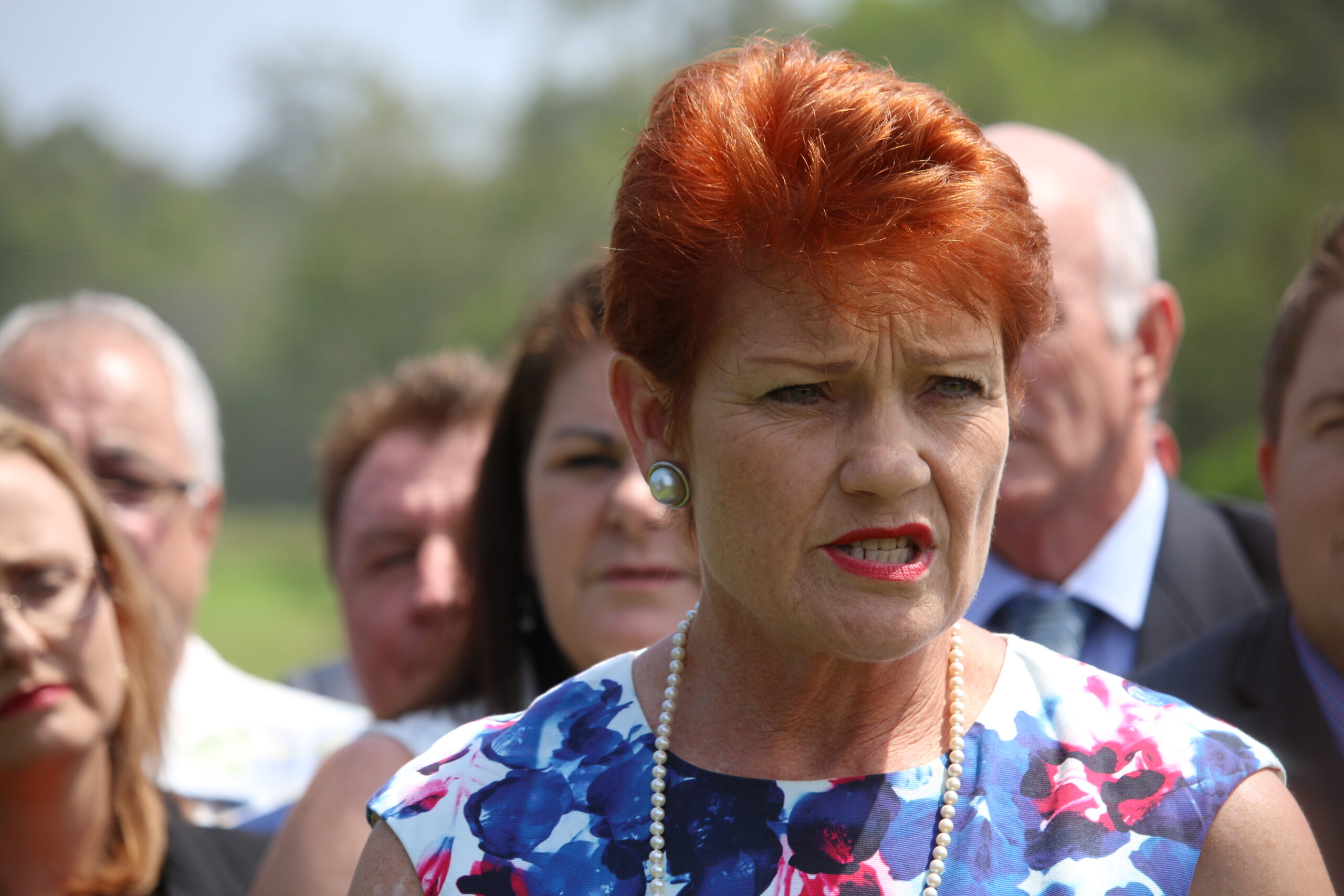
Feature photo: Pauline Hanson was suspended from the Australian Senate for a week on November 25 after wearing a burqa in the chamber to call for a ban. (Credit: Wikimedia)