England is set to become one of the first countries in the world to eliminate hepatitis C, a viral infection that causes liver damage, leading to liver inflammation, scarring and cirrhosis. In an ambitious public health programme, England has already met its target of treating 80% of all known cases, while deaths from hepatitis C have fallen by 36% over the last decade. This is just short of what is needed ahead of the WHO’s global target to eliminate viral hepatitis as a public health threat by 2030.
England’s hepatitis C elimination programme effectively began in 2015, when the NHS rolled out pioneering direct-acting antiviral treatments. These drugs are highly effective and cure more than 95% of cases. The programme aligns with the WHO’s global target.
England’s strategy has focused on finding hidden cases by expanding testing, followed by rapid treatment. This has included A&E blood testing, with the option to opt out, introduced in 2022. It has identified 1,900 previously undiagnosed cases. Other measures include testing at GP registration and free home-testing kits.
In addition, there has been a focus on targeting high-risk groups, such as people who inject drugs and may share needles, people who have had tattoos abroad, and people born in certain European countries before 1991. Following a positive test, treatment with antiviral tablets for 8 to 12 weeks can cure more than 95% of cases.
Hepatitis C is caused by a virus and is primarily spread through infected blood. This can happen through sharing needles, using unsterile tattoo needles, or through blood transfusions before 1990, when screening improved. Transmission from mother to baby is also possible.
Certain groups of people born outside the UK before 1991 are also at increased risk due to the prevalence of hepatitis C in these regions, including Eastern Europe, the Middle East, North Africa, South Asia (India, Pakistan and Bangladesh) and China.
Hepatitis C often does not cause any symptoms initially. A few weeks after infection, people may experience fatigue, nausea, abdominal discomfort, mild jaundice and loss of appetite. However, symptoms are often mild, and people may not realise they have been infected.
The virus targets the liver and can cause liver inflammation. Some people may clear the virus themselves after a few months. However, in most cases, the virus remains in the body, often remaining silent and causing no symptoms for years. If left untreated, it can eventually lead to serious, life-threatening liver damage.
NHS England says that since 2015, more than 100,000 people have been diagnosed and treated for hepatitis C, meaning the country has already met its treatment target. Another goal is a 65% reduction in hepatitis C-related mortality compared with 2015 levels. Although this target has not yet been met, with a 36% reduction achieved so far, there is a strong chance it could be reached by the 2030 target date.
It is estimated that around 50,200 adults are living with hepatitis C in England, with around 84.6% of cases diagnosed, just short of the 90% target. The Hepatitis C Trust says England is “on the cusp” of one of the most significant public health achievements in the country’s history.
Health experts have urged those who may be at risk to come forward for testing. This includes people with a history of injecting drug use, anyone who has had a tattoo, piercing or cosmetic procedure abroad, and adults born in Ukraine, Romania, Estonia, Latvia, Poland, Albania, Lithuania, Bulgaria, Czechia or Slovakia, as some may have been infected through medical or dental procedures before 1991.
Similarly, people born in other countries where the virus is endemic can also come forward for testing. This includes people born in Pakistan, India and Bangladesh, as well as North Africa, the Middle East and China.
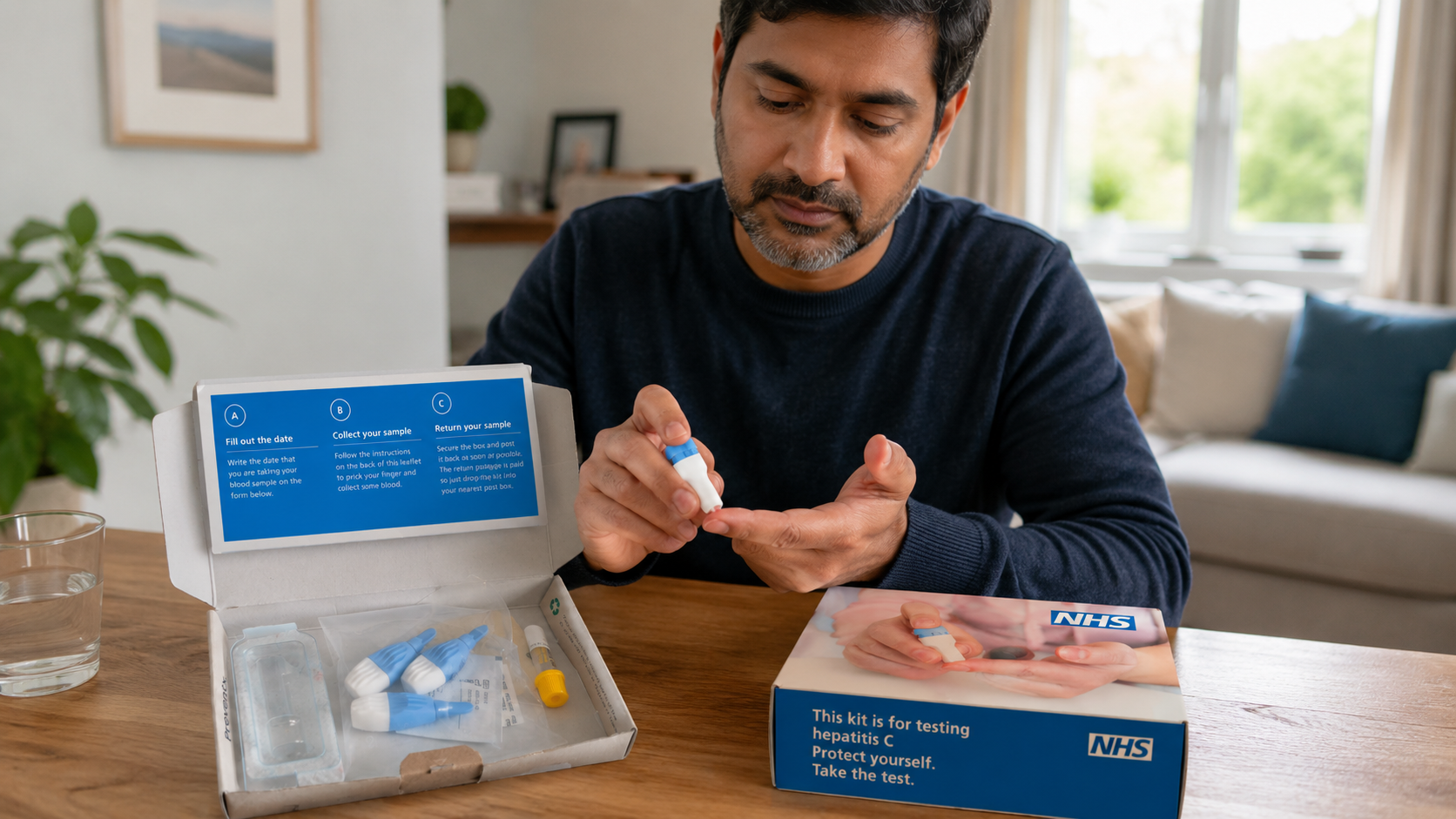
People can also order a free, confidential NHS home self-testing kit without needing to speak to a GP. The kit includes prepaid return packaging, and anyone who tests positive is connected to an antiviral treatment programme.
Rachel Kayani
Science Tutor and Writer