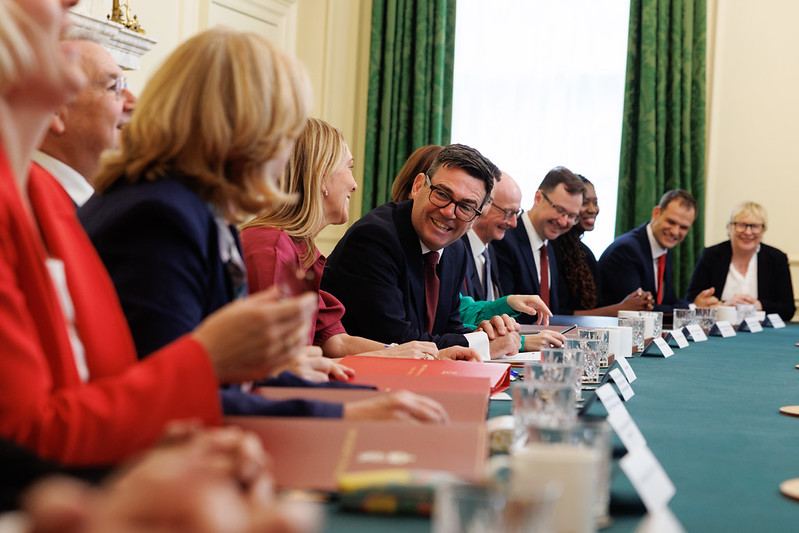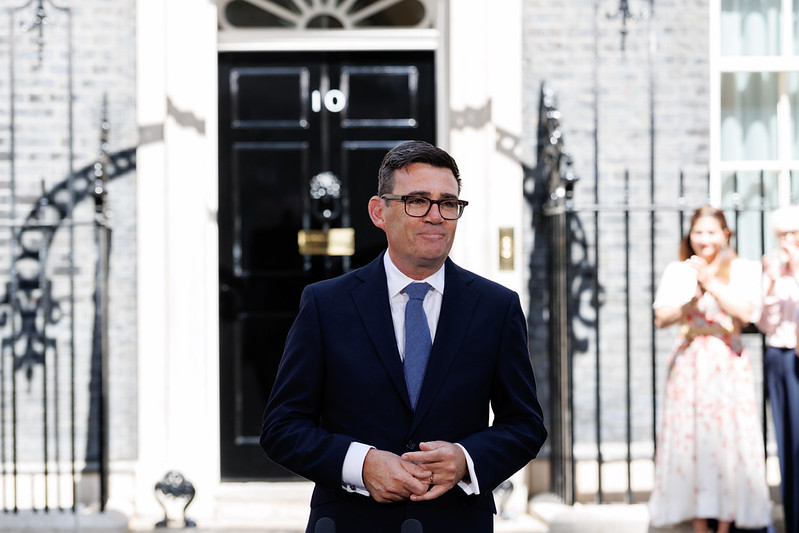
The arrival of Andy Burnham in Downing Street represents a change of political leadership. Whether it delivers a genuine change of political direction remains the defining question.
For many of Britain’s Muslims, a new Prime Minister does not automatically provide a reset. Political trust is not restored through a leadership transition, a reshuffled Cabinet or carefully calibrated statements. It is rebuilt through sustained engagement, credible policymaking and evidence that government is prepared to respond to legitimate concerns.
When Sir Keir Starmer led Labour to victory in the 2024 General Election, we argued that the result represented a parliamentary triumph rather than an overwhelming public endorsement. Labour secured a commanding majority with just 34 per cent of the vote — its lowest vote share for a winning government in two decades. It was, as we described at the time, “a triumph in seats, not hearts”.
Burnham now inherits that parliamentary dominance without having sought a direct mandate from the electorate. Constitutionally, his accession to Downing Street is beyond question. Politically, however, he assumes responsibility for repairing a coalition of voters that felt increasingly disconnected from Labour’s priorities during the previous administration.
The scale of that challenge was most evident among Muslim voters, many of whom had historically formed a core component of Labour’s electoral coalition.
The rupture was most clearly exposed over Gaza. The 2024 election demonstrated that foreign policy had moved from the margins of political debate into the centre of electoral calculation for many Muslim voters. Labour suffered significant losses in areas with substantial Muslim populations, while independent candidates campaigning heavily on Gaza secured victories in several traditionally Labour constituencies.
The significance of those results extended beyond individual seats. They reflected a wider breakdown in political confidence: concerns that Muslim communities were not being adequately represented, that their grievances were not being taken seriously, and that Labour’s commitments to social justice were not being consistently applied.
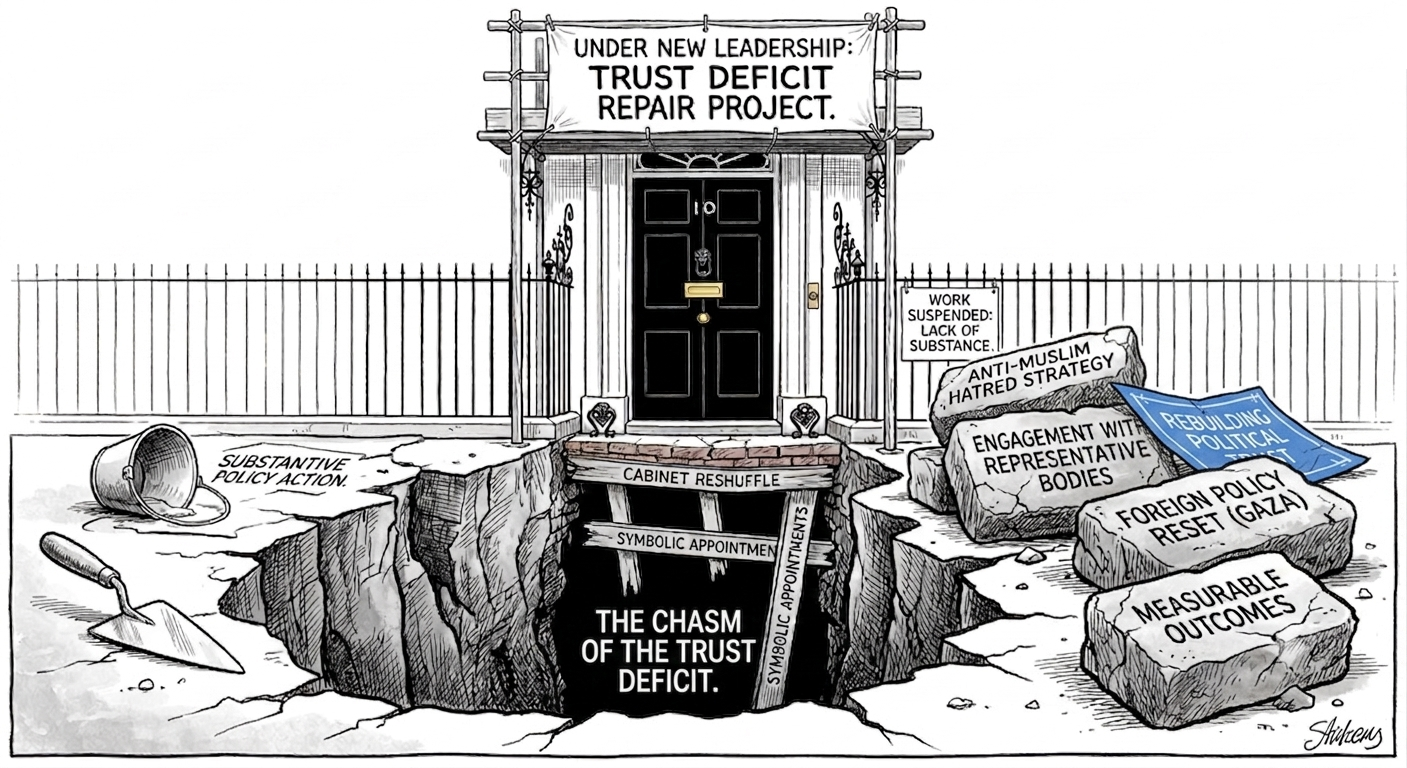
Burnham therefore begins his premiership facing a trust deficit that cannot be addressed through political messaging alone. It requires a substantive recalibration of Labour’s relationship with Muslim Britain.
The early indications from his administration are encouraging, but they remain preliminary.
Burnham deserves credit for acknowledging what his predecessor was reluctant to concede: that Labour’s response to Gaza caused profound hurt among many supporters. His admission that the party “got it wrong”, accompanied by an apology, represented an important shift in tone and political posture.
Other early decisions have also been interpreted as signs of a possible strategic repositioning. The appointment of Ed Miliband as Foreign Secretary, the retention of Shabana Mahmood as Home Secretary, the inclusion of Anas Sarwar in government and the promotion of Uma Kumaran at the Foreign Office suggest an attempt to broaden the government’s approach to issues of concern to Muslim communities.
However, political symbolism and political substance are not the same thing.
A government can signal change through appointments and rhetoric, but credibility is ultimately determined by policy outcomes. For communities whose confidence in Labour has been weakened, assurances must now be matched by measurable action.
Muslim organisations have therefore been right to adopt a cautious approach. They have witnessed previous commitments fail to translate into meaningful institutional change. The Muslim Council of Britain has welcomed the possibility of a “genuine change of direction”, while making clear that gestures alone cannot repair damaged relations. Campaign group MEND has similarly argued that Burnham’s premiership should be judged by its record rather than its rhetoric.
That is the appropriate democratic standard.
The challenge facing Burnham extends well beyond Labour’s electoral relationship with Muslim voters. The broader social and political environment in which Muslim communities live also requires urgent attention.
Britain continues to experience high levels of anti-Muslim hatred. Home Office figures show that police recorded 3,199 anti-Muslim hate crimes in England and Wales in the year ending March 2025, highlighting the continuing scale of hostility directed towards Muslim communities.
The issue is not confined to official statistics. Mosques and Islamic institutions have faced repeated incidents of abuse, intimidation and attacks, reinforcing concerns that political commitments to tackling hatred must be accompanied by practical measures that improve community security.
For Muslim communities, therefore, the test is not whether politicians can articulate concern. The test is whether government can convert recognition into policy delivery.
One of Burnham’s first political tests will be whether his government restores meaningful engagement with representative Muslim organisations. The continued absence of formal engagement with the Muslim Council of Britain remains difficult to reconcile with the principle of inclusive governance, particularly when governments maintain structured dialogue with representative bodies from other faith communities.
Effective policymaking requires engagement with communities affected by those policies. A government cannot claim to rebuild trust while maintaining a selective approach to consultation.
A further test will be whether the government moves beyond debate and delivers a comprehensive strategy to tackle anti-Muslim hatred. Recognition without implementation has become a recurring feature of political discourse. Muslim communities require more than expressions of solidarity; they require institutional reform, stronger accountability and confidence that public bodies will respond effectively when discrimination occurs.
Above all, foreign policy will remain a defining measure of whether Labour has genuinely changed course.
Burnham has an opportunity to reset the relationship between Labour and Muslim Britain. But political capital is not unlimited, and opportunities for reconciliation can quickly disappear.
He inherits not only a substantial parliamentary majority but also the unresolved political consequences of the previous administration’s decisions. The anger generated by Labour’s approach to Gaza, the absence of sustained engagement with Muslim representative bodies and concerns over Islamophobia cannot simply be removed through a change of leadership.
British Muslims should therefore approach this government with cautious optimism and legitimate scrutiny.
This is not a moment for automatic endorsement, nor is it a moment for predetermined opposition. It is a moment in which a new administration must demonstrate whether its language of change is matched by the reality of governance.
Burnham has no automatic claim to the confidence of Muslim communities. Like any Prime Minister, he must earn it through meaningful engagement, consistent principles, a serious commitment to confronting Islamophobia and a willingness to rebuild a political relationship based on respect rather than electoral necessity.
The success of this premiership will not be measured by the promises made at its beginning, but by the decisions taken when those promises encounter political pressure.
Only then will a change of leadership become a genuine change of direction.
British Muslim groups reserve judgement on Burnham’s new government