Elham Asaad Buaras
Black and Muslim residents in Germany are up to twice as likely to face discrimination in the housing market, according to a damning new report that flags systemic racism influencing everything from securing a rental to neighbourhood environmental conditions.
The study, ‘Unequal Living: Racism and Housing Conditions’, released on December 8 by the German Centre for Integration and Migration Research (DeZIM), found that 39% of Black residents and 35% of Muslim residents reported being denied property viewings based on their name or appearance.
A field experiment confirmed the deep-seated bias: applicants with German-sounding names received viewing invitations 22% of the time, compared to just 16% for those with Middle Eastern or North African names and 17% for those with African names. Researchers concluded that racialised bias is “not a marginal phenomenon” but structurally embedded in the market.
Perceptions of unequal treatment were equally stark. While only 5% of white residents feared rejection based on their identity, that concern rose to 36% among Black residents and 30% among Muslim residents. Half of Black and Muslim applicants rated their housing chances as low—double the proportion of white residents.
Inequalities intensify after securing a tenancy. Homeownership, a key wealth indicator, stands at 57% for white residents but plummets to 24% among Muslim residents and just 11% among Black residents. Over a quarter of Muslim (27%) and Black (23%) households describe housing costs as a “severe burden,” compared to 9% of white households.
Living conditions reveal further disparity. Muslim residents were over twice as likely as white residents to report poor insulation, while Black and Muslim tenants more frequently faced damp, mould, and serious disrepair.
The inequalities extend beyond the front door. Muslim and Asian residents were twice as likely to rate local infrastructure as poor, while environmental disparities showed Muslim, Asian and Eastern European residents were more likely to live in areas with higher nitrogen dioxide pollution. Only about 76-77% of Muslim and Asian respondents reported adequate park access, compared to 85% of white residents—a pattern the report identifies as clear environmental racism.
Noa K. Ha, scientific director at DeZIM, stated that housing represents “one of the most important social challenges of our time” and is “central to equal social participation.” The study demonstrates a “considerable need for action” as housing shortages worsen and inequalities deepen
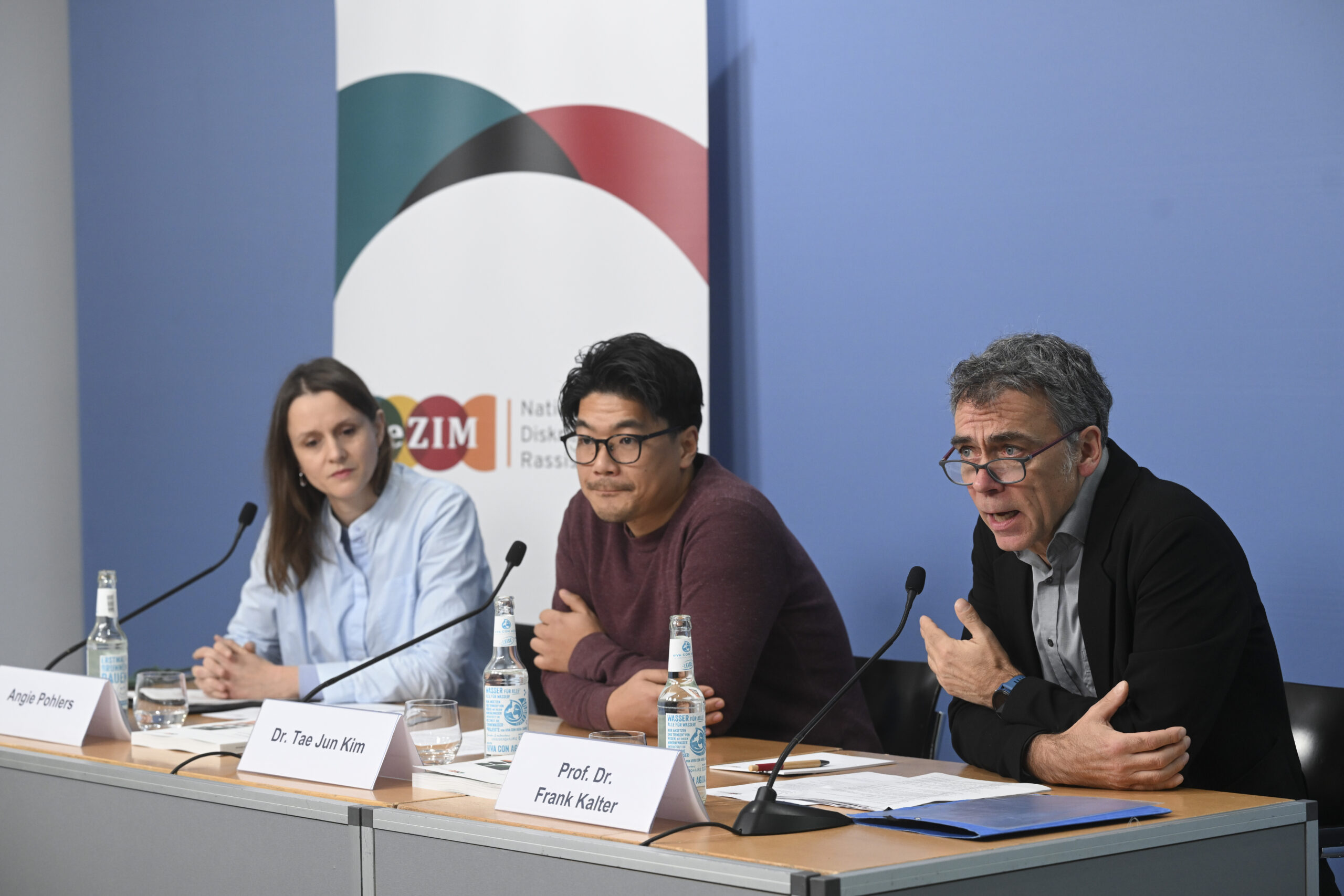
Feature photo: Dr. Tae Jun Kim (C), coordinator of the research team, and Frank Kalter (R), Director of DeZIM, present the findings of the “Unequal Living” report at a press conference in Berlin on December 8. (Credit: Halil Sağırkaya/AA)