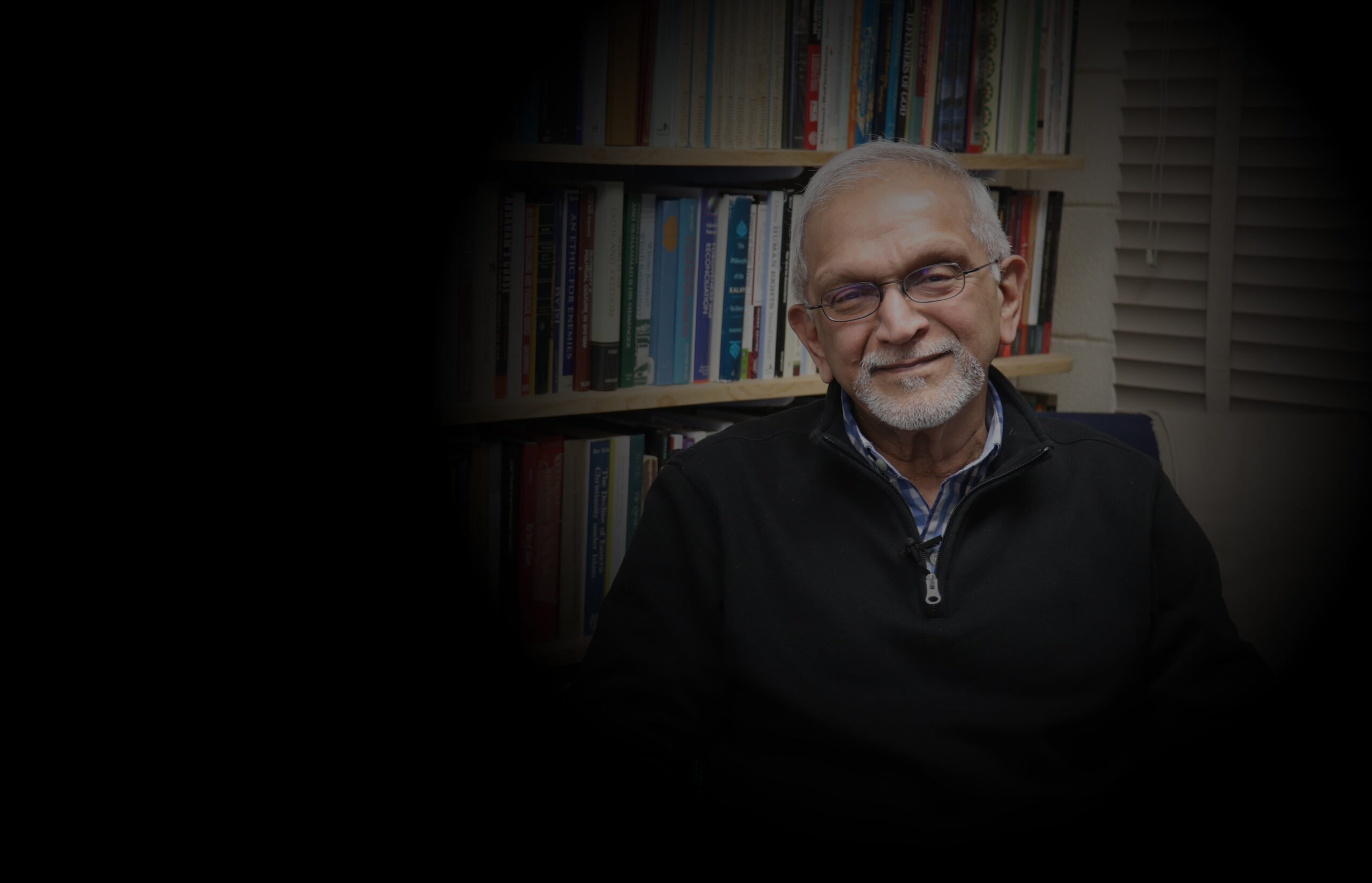
Professor Abdulaziz Abdulhussein Sachedina
(1942, Lindi, Tanganyika – 2025, Virginia, United States)
Professor Abdulaziz Abdulhussein Sachedina, one of the most influential and courageous Muslim thinkers of his generation, whose scholarship reshaped modern understandings of Islamic ethics, human dignity and pluralism, died on December 3, 2025, aged 83.
His passing marks the loss of a rare moral and intellectual presence in global Islamic discourse. For more than half a century, Professor Sachedina stood at the confluence of worlds often kept apart: classical and contemporary thought, Shiʿi and Sunni traditions, faith and critical inquiry, and Islamic moral reasoning and universal human concerns. Few scholars navigated these divides with comparable depth, generosity and integrity.
Born in 1942 in the coastal town of Lindi, then part of Tanganyika (now Tanzania), into a Khoja family of Indian heritage, Sachedina’s early life was shaped by cultural plurality and colonial inequities. Those formative experiences nurtured a lifelong engagement with questions of identity, justice and coexistence. He later recalled with characteristic candour that, in colonial East Africa, “the trend was for the rich kids to go to England, for the poor kids to go to India,” a reality that set the course of his own intellectual journey.
That journey would become both geographically expansive and intellectually formidable. Gifted with an exceptional ear for languages, he eventually mastered English, Arabic, Persian, Urdu, Hindi, Gujarati and Swahili, tools that allowed him to traverse religious and cultural traditions with unusual fluency.
After completing a Bachelor of Arts in Philosophy at Aligarh Muslim University in 1964, he was advised that any serious engagement with Islam required immersion in its classical intellectual traditions before undertaking Western academic study. Acting on that counsel, he travelled to Iran to deepen his grounding in Shiʿi thought, combining seminary studies with university coursework at Ferdowsi University of Mashhad. Arriving without Persian, he learned the language through total immersion, supported by fellow students, and went on to earn a second BA in Persian Language and Literature.
In Mashhad, he encountered an educational environment now scarcely imaginable, one in which advanced study of Islamic law and theology was conducted in sustained conversation across sectarian traditions. Immersed primarily in Shiʿi Jaʿfari thought, he also engaged deeply with Sunni legal and theological scholarship, an exposure that became the bedrock of his inclusive, cross-sectarian approach to Islamic studies.
A decisive turn came with his move to Canada, where he completed his MA and PhD at the University of Toronto in 1976, followed by postdoctoral research. There, he experienced what he later described as a scholarly awakening to the centrality of methodology, historical contextualisation and critical distance. This encounter produced a creative tension that would define his career, a sustained dialogue between deeply held faith commitments and the demands of academic rigour.
He often framed this as negotiating the “insider–outsider” dilemma, a space he inhabited with honesty and self-awareness, and one he sought to open for both students and traditional scholars. His doctoral dissertation, The Development of the Idea of the Mahdī in Imāmī Shīʿism: From Its Origins to the 7th/13th Century, later incorporated in his first publication as Islamic Messianism, quickly became a standard work in the field. That scholarly pursuit was intertwined with a personal spiritual search; he once recalled travelling to Jerusalem and Karbala “expecting to find my saviour. I am very serious about this!”
This singular intellectual formation enabled Professor Sachedina to address Islamic law, theology and ethics from within their deepest textual and moral roots, while bringing them into sustained conversation with contemporary questions of rights, governance and human flourishing.
He began teaching in 1975 and spent more than three decades at the University of Virginia, before being appointed the International Institute of Islamic Thought (IIIT) Chair in Islamic Studies at George Mason University. Across these institutions, he shaped generations of students through courses on Classical Islam, Shiʿi theology, Islamic bioethics, human rights, Islam and democracy, and comparative Qur’anic studies, areas in which he was widely recognised as a pioneer.
A demanding but deeply committed teacher, he insisted on close engagement with primary texts and mastery of classical languages, while encouraging students to develop their own critical epistemologies. At the same time, he served as a conduit in the opposite direction, introducing modern academic methodologies into traditional seminaries in Qom and Najaf, where his lectures were later published as textbooks.
His written work combined fearless inquiry with moral seriousness. In The Islamic Roots of Democratic Pluralism (2001) and Islam and the Challenge of Human Rights (2009), he articulated a robust theological case for equality, pluralism and human dignity grounded firmly within Islamic sources. His final major book, Islamic Ethics: Fundamental Aspects of Human Conduct (2022), is widely regarded as his magnum opus, a synthesis of decades of reflection on moral agency, responsibility and the sacred worth of the human person.
Earlier works such as The Just Ruler in Shi‘ite Islam (1998) and Islamic Messianism (1981) remain essential texts for understanding authority, legitimacy and eschatology in Shiʿi thought. His translation of Ayatullah Abu al-Qāsim al-Khu’ī’s Prolegomena to the Qur’an, alongside his engagement with Ayatullah Ibrāhīm Amīnī’s writings on the Imam Mahdi, opened classical Shiʿi theology to English-speaking audiences. These contributions were formally acknowledged by senior religious authorities, including Grand Ayatullah Lotfollāh Ṣāfī Golpāyegānī.
Unafraid of disagreement, Professor Sachedina regarded principled debate as vital to ethical and intellectual maturity. He consistently argued that compassion, reasoned dialogue and moral integrity were indispensable if Muslim societies were to meet modern challenges with confidence and justice.
Beyond his academic posts and prolific scholarship, he played a significant role in institution-building, interfaith engagement and applied ethics. He was a founding member of the Islamic Medical Association of North America Ethics Committee, advised on bioethical questions, and served as a consultant to bodies such as the UN Development Programme. As Chair of the Board of the Centre for the Study of Islam and Democracy from 2005 to 2010, he provided thoughtful and principled leadership. He also convened major international conferences across Africa and the Middle East, bringing together scholars and religious leaders to explore Islam’s resources for ethical governance and social harmony.
His standing in the field was recognised through numerous honours, including a John Simon Guggenheim Memorial Foundation Fellowship in 2001 and a residency at the Institute for Advanced Study in Princeton.
Colleagues recall him as a scholar of conscience as much as of intellect. Professor Ebrahim Moosa of the University of Notre Dame described him as “a giant in the field who combined rigorous scholarship with deep moral commitment.” His longstanding engagement with the Institute of Ismaili Studies further enriched conversations on authority, gender and modern Muslim thought across sectarian lines.
Those closest to him remember not only his erudition but his character. A devout Muslim with a profound attachment to the Ahl al-Bayt, he was known for his humility, warmth and spiritual grace. He took pride in maintaining what his mentor Ali Shariati termed Isalat, an authentic, unalienated rootedness in one’s tradition. For many years, he delivered Friday sermons at the Islamic Center of Charlottesville, often opening with the Qur’anic exhortation, “O you who believe! Be mindful of God in the way He deserves, and do not die except in a state of full submission to Him.” (3:102)
That ethos of mindful submission defined his life. His language was inclusive, his manner gentle, and his influence quietly global. He leaves behind not only an enduring body of scholarship, but generations of students, colleagues and community members shaped by his example of kindness, courage and disciplined compassion.
Professor Sachedina’s writings will remain foundational for the study of Islamic ethics, human rights, bioethics and political theology. Yet his deeper legacy lies in the bridges he built, across traditions, disciplines and divides, at a moment when such bridges are urgently needed.
He is survived by his wife, Faṭima (née Alidina), and his sons, Alireza and Muhammadreza.
Ahmed J. Versi, Editor, The Muslim News, with contributions from Elham A. Buaras.