Iqbaal Abdi
Somalia’s Ambassador to Ethiopia, Abdullahi Warfa, warned on April 17 that access to the Bab al-Mandeb Strait could be restricted to countries interfering in Somalia’s sovereignty.
Writing on X, he said: “Any country interfering in Somalia’s internal affairs and compromising its territorial integrity and sovereignty will face repercussions, including potential restrictions on access to the Bab al-Mandeb Strait.”
The remarks came after Israel appointed a diplomatic envoy to the self-declared state of Somaliland, internationally recognised as -part of Somalia. The move drew regional condemnation from the African Union and several Arab and Muslim-majority states. Saudi Arabia, alongside Turkey, Qatar, and Pakistan, issued a joint statement describing it as a “flagrant violation” of Somalia’s territorial integrity.
Any Country interfering in Somalia's internal affairs and compromising its territorial integrity and sovereignty will face repercussions, including potential restrictions on access to the Bab-el-Mandeb Strait. pic.twitter.com/qJKuHR6HDF
— Amb.Abdullahi Warfa (@warfak1) April 17, 2026
The appointment marked the latest development in the growing relationship between Tel Aviv and Hargeisa. In December 2025, Israel became the first country to formally recognise Somaliland after a video call between Benjamin Netanyahu and President Abdirahman Mohamed Abdullahi ‘Cirro’, during which cooperation was pledged in economic, agricultural, and social development sectors
Somali officials have suggested that gaining a foothold in the Horn of Africa forms part of Israel’s broader security and geopolitical strategy. In March, Bloomberg reported Israel was planning to build a base in Somaliland. An Israeli think tank, the Institute for National Security Studies, explained that cooperation with Somaliland could enable Israel to monitor and counter the Houthis in neighbouring Yemen.
In addition, the strategic location of Somaliland, which sits adjacent to the Red Sea, could give Israel leverage over maritime activityin the wider region. Analysts have noted Israel would become a major actor in the Horn of Africa if granted a base in Somaliland by potentially brokering seaport access on behalf of Ethiopia.
The Arab League and the African Union, including much of the Muslim world, criticised Netanyahu for undermining Somalia’s sovereignty and territorial integrity – as well as interfering in the fragile politics of the Horn of Africa. The Houthis have stated that if there were Israeli presence in Somaliland, they would become a legitimate target. Al-Shabaab, which still operate in Somalia, although weakened in recent years, have also said they would target any Israeli presence in Somaliland.
Following Warfa’s statement, Villa Somalia has not issued an official responseon restricting Israeli access to the strait. Nonetheless, irrespective of Mogadishu’s official position, Warfa clearly illustrated the evolving perception that weak states increasingly have towards more powerful actors.
A war fought between two entities of unequal might and power is referred to as an asymmetric war. Asymmetric warfare is thus defined bya militarily inferior entity exploiting vulnerabilities of their adversary to achieve victory.
In the US-Israeli war against Iran, Tehran, with limited naval and air power in comparison to their enemy, used their geography strategically. By creating uncertainty about the safety of vessels and oil tankers that pass through the Strait of Hormuz, Iran has crafted a powerful instrument against the might of the US military.
Hormuz, which has remained partially closed since early March, has caused global economic shockwaves with energy prices skyrocketing across all continents. US President Trump in an effort to conceal his miscalculations in launching the war, stated the US was self-sufficient in producing its own oil, ignoring the impact of global oil prices on his own citizens.
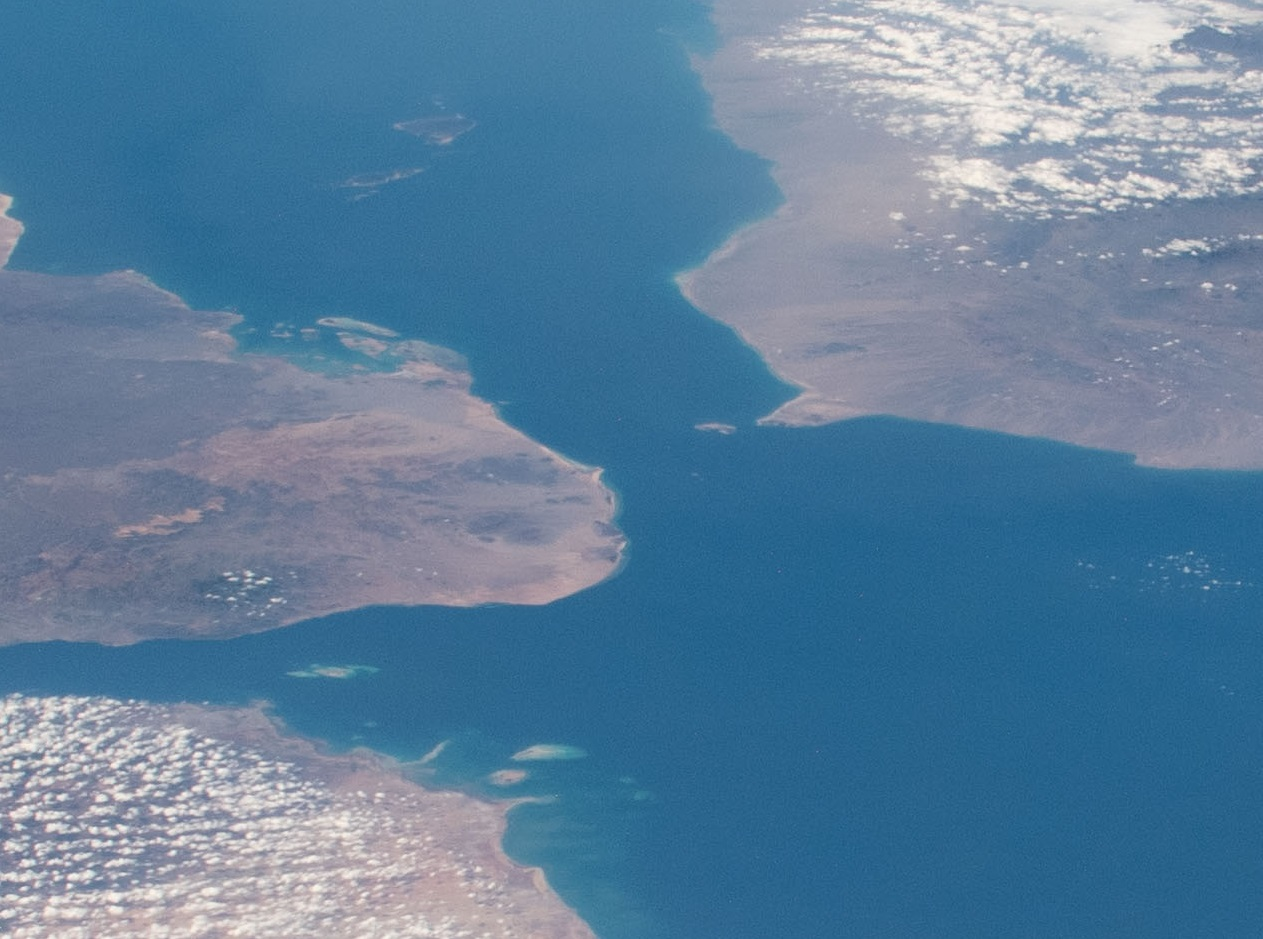
Iran’s success in disrupting the global oil market and trade mirrored the Houthis in the Red Sea. The Strait of Hormuz, which is responsible for 20% of all global oil trade, facilitates the passage of medicine, food and technology. Similarly, the Bab Al Mandab strait, which is critical to global trade. This strait, which lies between Yemen and Djibouti at its narrowest point, connects the Indian Ocean to the Red Sea. The Bab al Mandab strait facilitates 15% of all global maritime trade and 20% of container traffic.
The Houthis, who control parts of northwestern Yemen, operate as a militia without an official state army or navy at their disposal. However, in November 2023, in protest of the genocide in Gaza, they attacked vessels affiliated with Israel. The disruption in this critical chokepoint caused vessels to reroute from the Red Sea to the southern tip of Africa, passing the Cape of Good Hope. On average, shipments from Shanghai to Rotterdam increased by 10 days, adding 35% to the cost.
While the Houthis have limited military capabilities, they successfully caused a global crisis to oppose powerful states. Similarly, Iran’s use of Hormuz resulted in the USA reluctantly taking a seat at the negotiating table with Iran. Although Ambassador Warfa’s comments are not reflective of the government’s official position, his bold comment highlights the shifting attitude weak states towards those more powerful. Iran’s success could create a blueprint for weak states to defy hegemonic powers.
Iqbaal Abdi, Politics & Intl Relations Graduate