“Basing green card decisions on ideological screenings is fundamentally un-American and should have no place in a country built on the promise of free expression”
— Amanda Baran,Elham Asaad Buaras
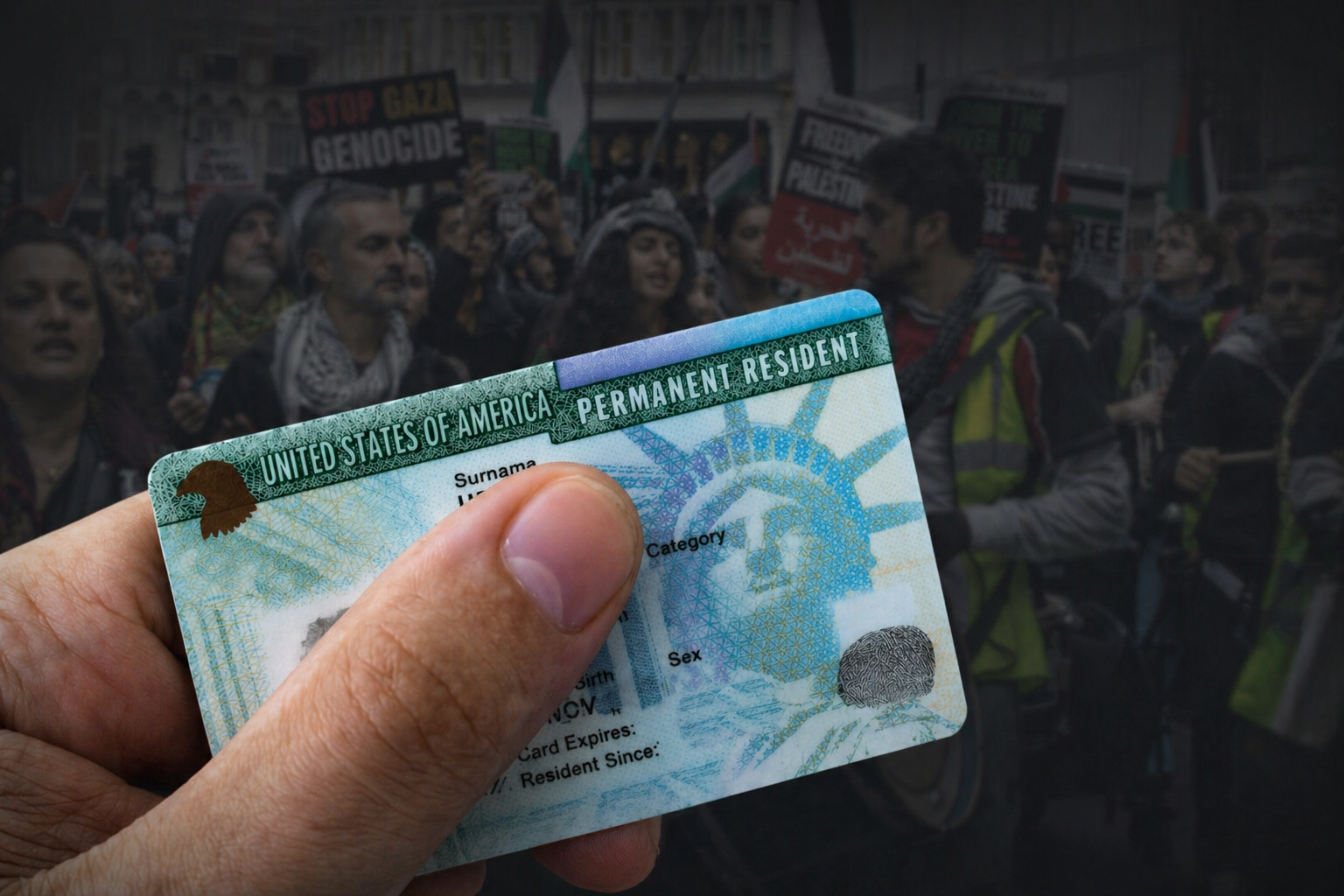
A major shift in US immigration policy could see green card applicants rejected not for criminal activity, but for expressing pro-Palestinian views.
According to a report by The New York Times published on April 26, the Trump administration has quietly introduced new training materials instructing immigration officers to scrutinise applicants’ opinions on the United States and Israel — a move critics warn could redefine the boundaries of political expression in America.
Under the new guidance, participation in pro-Palestinian protests, criticism of Israel on social media, or even acts such as desecrating the American flag may now be considered potential “disqualifying factors” when assessing green card applications.
The policy stems from a directive issued last August by US President Donald Trump ordering officials to investigate applicants for what he described as “anti-American” and “antisemitic” views — categories critics argue are being expanded to include opposition to Israeli government policies.
Among the examples included in the training materials is a social media post stating “Stop Israeli Terror in Palestine,” alongside an image of a crossed-out Israeli flag, which officers are reportedly encouraged to treat as concerning speech.
The materials were distributed last month to officers within United States Citizenship and Immigration Services (USCIS), the Department of Homeland Security agency responsible for processing green cards and other immigration applications.
A green card, formally known as a permanent resident card, allows foreign nationals to live and work permanently in the United States. Historically, eligibility decisions have centred on criminal records, family sponsorship, employment qualifications, or asylum claims.
Critics say the new approach represents a profound departure from those standards.
The report also reveals that green card approvals have fallen by more than half in recent months, prompting concerns that the immigration system is being reshaped to reflect Trump’s wider agenda of mass deportations, intensified enforcement, and efforts to revoke citizenship from some naturalised Americans.
“There is no room in America for aliens who espouse anti-American ideologies or support terrorist organisations,” USCIS Director Joseph Edlow told Congress in February.
Civil liberties advocates argue the measures dangerously blur the line between political dissent and extremism, particularly by conflating criticism of Israel with antisemitism.
Amanda Baran, a senior official under former President Joe Biden, said ideological screening has no place in a country that claims to value freedom of expression. “Basing green card decisions on ideological screenings is fundamentally un-American and should have no place in a country built on the promise of free expression,” she said.
The administration, however, has defended the crackdown. “If you hate America, you have no business demanding to live in America,” USCIS spokesman Zach Kahler said, insisting the measures “have nothing to do with free speech” and are instead intended to protect “American institutions, the safety of citizens, national security and the freedoms of the United States.” The tougher stance extends beyond green card applications.
US Secretary of State Marco Rubio has already revoked visas belonging to pro-Palestinian student activists, including one who wrote a newspaper column criticising her university’s position on Gaza.
Meanwhile, the Department of Homeland Security is reportedly considering reviewing the social media histories of tourists before allowing them entry into the country.
Perhaps most controversially, the guidance identifies burning or desecrating the American flag as a “negative factor” despite longstanding rulings by the Supreme Court of the United States that such acts are protected under the First Amendment.
Immigration officers are also instructed to treat any history of “endorsing, promoting or supporting anti-American views” or “antisemitic terrorism, ideologies or groups” as “overwhelmingly negative” when evaluating applications.
In a further sign of the administration’s changing approach, USCIS has begun rebranding parts of its workforce. Officials once known as “immigration services officers” are now referred to in some recruitment material as “homeland defenders”. One job advertisement urges applicants to: “Protect your homeland and defend your culture.”