By Zahra Adoul
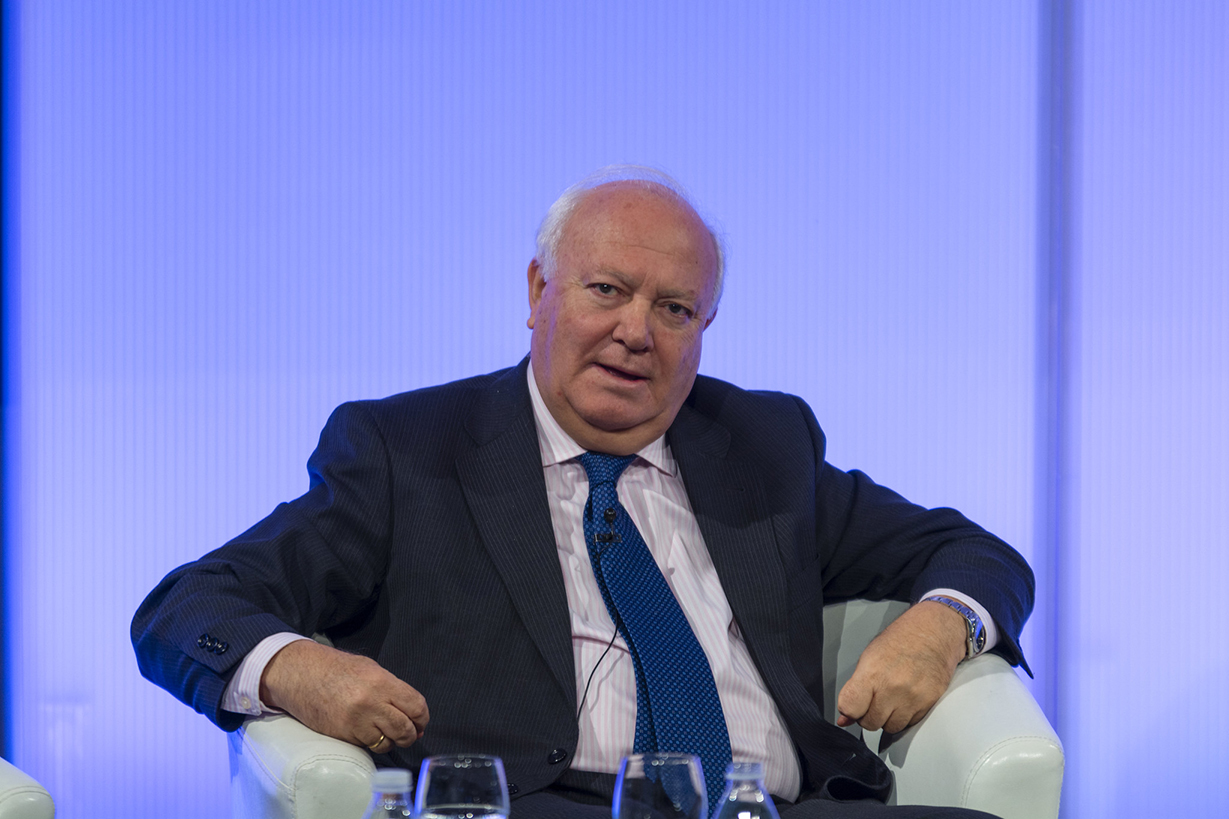
The UK’s continued reluctance to adopt the term ‘Islamophobia’ has been criticised by the United Nation’s (UN) Special Envoy to Combat Islamophobia.
Miguel Ángel Moratinos told MPs, civil society leaders and Muslim organisations on January 12 that the issue was no longer merely social, but a political challenge requiring coordinated action at both national and international levels.
The UN High Representative for the UN Alliance of Civilisations appeared exasperated at the UK government’s continued use of the term “anti-Muslim hatred” instead of Islamophobia, despite the term being backed by 115 UN member states through a historic General Assembly resolution in 2024.
Speaking at a Parliamentary event hosted by the All-Party Parliamentary Group (APPG) on British Muslims, Moratinos said, “So let me begin with a simple but essential truth. Islamophobia is real. It is rising and you know better than anybody and it having serious consequences on people’s lives.”
He explained that “Islamophobia erodes trust between citizens and institutions. It undermines social cohesion and when left unaddressed, it becomes a gateway to other forms of exclusion, radicalisation and democratic vacuum.”
He added, “What I hear consistently from Muslim communities, whether in Europe, North America, Asia or the world, is not a demand for special treatment, but only for equal treatment.”
Given the contradiction between international momentum and the UK’s hesitation, Moratinos’s remarks caused a visible stir in the audience, many visibly agreeing with what appeared to be the elephant in the room.
He also said, “Across many societies, including longstanding democracies – France, Austria, Germany, Spain – we are witnessing a tragic normalisation of anti-Muslim rhetoric. What before existed on the margins in some cases is now part of the mainstream political discourse, media narrative and online space.”
By comparison, the UK government has, for almost a decade, refused to adopt the internationally accepted term ‘Islamophobia’, instead choosing to coin their own – ‘anti-Muslim hatred’.
The impact of Islamophobia manifesting itself in wider society was also addressed.
Labour MP Afzal Khan said, “In the UK we have seen how Islamophobia manifests in multiple ways, through hate, crime, discrimination, exclusion from public life, and the erosion of trust between communities and institutions. These experiences are well documented, yet they persist.” He continued, “This is also about moving beyond awareness alone… acknowledgement without action means nothing.”
British Muslim Trust Chair, Shabir Randeree, added, “Anti-Muslim hatred is not abstract. It is experienced directly by individuals and by communities across our country. It shapes where people feel safe, the zones, the areas, the geography of where they feel safe, how visible they feel able to be practising their faith and their persona shaped by Islamophobia. In particular, when incidents go unaddressed or not reported, confidence in our hate crime system erodes rapidly. People disengage and they withdraw and cohesion suffers as a result.”
He also stressed the importance of robust data, transparent governance and sustained resourcing if Islamophobia was to be tackled effectively. “This cannot be done with a shoestring budget,” he said. “This has to be done professionally and properly, so the data is captured and is believable.”
Mark Dunpride, founder and Director of the Institute for Cultural Diplomacy, said, “This is not a challenge for Muslims alone. Islamophobia damages social cohesion, weakens democracy as a whole, and undermines the values of equality and dignity that we seek to uphold.”
The Ministry for Housing, Communities and Local Government was contacted for comment.
The event was hosted by the APPG on British Muslims in collaboration with the UK Forum for Cultural Diplomacy and the British Muslim Trust.
Photo: Miguel Ángel Moratinos, UN High Representative for the UN Alliance of Civilisations
(Credit: CasAmerica/Flickr CC)
Zahra Adoul, Academic Copy Editor