Elham Asaad Buaras
The UK’s right to protest is being steadily eroded by a web of restrictive laws and aggressive policing tactics that risk criminalising peaceful dissent and undermining democratic accountability, Human Rights Watch has warned.
In a new report published on January 7, the organisation argues that successive governments have transformed protest from a protected civic right into an activity increasingly treated as a public order threat. While many of the most controversial powers were introduced under Conservative administrations, the report finds that Labour has not only failed to roll them back but is now seeking to expand them.
The 47-page report, Silencing the Streets: The Right to Protest Under Attack in the United Kingdom, concludes that UK authorities are acting in breach of their international human rights obligations, creating a climate in which peaceful demonstrators face arrest, prosecution and lengthy prison sentences for actions that would once have resulted in little more than a fine.
“The UK is now adopting protest-control tactics imposed in countries where democratic safeguards are collapsing,” said Lydia Gall, senior Europe and Central Asia researcher at Human Rights Watch. “The UK should oppose such measures, not replicate and endorse them.”
Central to the crackdown, the report says, are the Police, Crime, Sentencing and Courts Act 2022 and the Public Order Act 2023, which significantly widened police discretion to restrict demonstrations, impose conditions on protesters and carry out pre-emptive arrests. Non-violent protest activity that previously attracted community penalties can now lead to custodial sentences.
According to Human Rights Watch, the laws rely on vague statutory language combined with expansive police powers, allowing authorities to curtail protests with minimal oversight. Research conducted in 2024 and 2025 found growing numbers of protesters detained or charged for activities as limited as attending planning meetings, contributing to confusion and a chilling effect on dissent.
One case highlighted in the report is that of Trudi Warner, a retired social worker arrested for contempt of court after quietly holding a sign outside a courthouse reminding jurors of their rights. The High Court dismissed the case as “fanciful”, ruling that she had not attempted to influence jurors. Despite this, the Labour government initially pursued an appeal before later abandoning the prosecution.
Even more stark was the treatment of five Just Stop Oil activists, who in July 2024 were sentenced to between two and five years in prison for participating in a Zoom call to plan a protest. On appeal in March 2025, the High Court ruled the sentences “manifestly excessive” and disproportionate, yet reduced them only marginally, leaving one activist still facing four years behind bars.
Human Rights Watch warns that such cases illustrate a profound shift in the balance of power between the state and the public. As penalties escalate, the report argues, the ability of ordinary people to hold the government to account is being weakened.
Rather than reversing course, the report says, the Labour government is pressing ahead with further restrictions through the Crime and Policing Bill 2025, due to be debated in the House of Lords this month. The bill would give police new powers to ban face coverings at protests, restrict demonstrations near places of worship and impose conditions that could expose people with insecure immigration status, including asylum seekers, to detention or deportation.
Domestic and international human rights bodies have warned that the proposed measures are vague, unnecessary and disproportionate. Human Rights Watch also raises concerns about the growing use of counter-terrorism legislation against peaceful protesters, a practice it describes as unprecedented and deeply troubling.
The UK remains legally bound to protect freedom of expression and peaceful assembly under the Human Rights Act 1998, as well as international treaties including the International Covenant on Civil and Political Rights and the European Convention on Human Rights. The report argues that current protest policing falls short of these obligations.
Human Rights Watch is calling on the government to repeal or amend the 2022 and 2023 protest laws, strengthen protections under the Human Rights Act and establish a public inquiry into arrests and convictions made under legislation that courts have since found to be unlawful.
“The UK should be protecting the right to protest instead of stripping away people’s rights,” Gall said. “Lawmakers should revise the new law to remove measures that would further restrict the right to protest.”
As parliament prepares to debate yet another expansion of police powers, the report’s warning is stark: a democracy that silences its streets risks hollowing itself out from within.
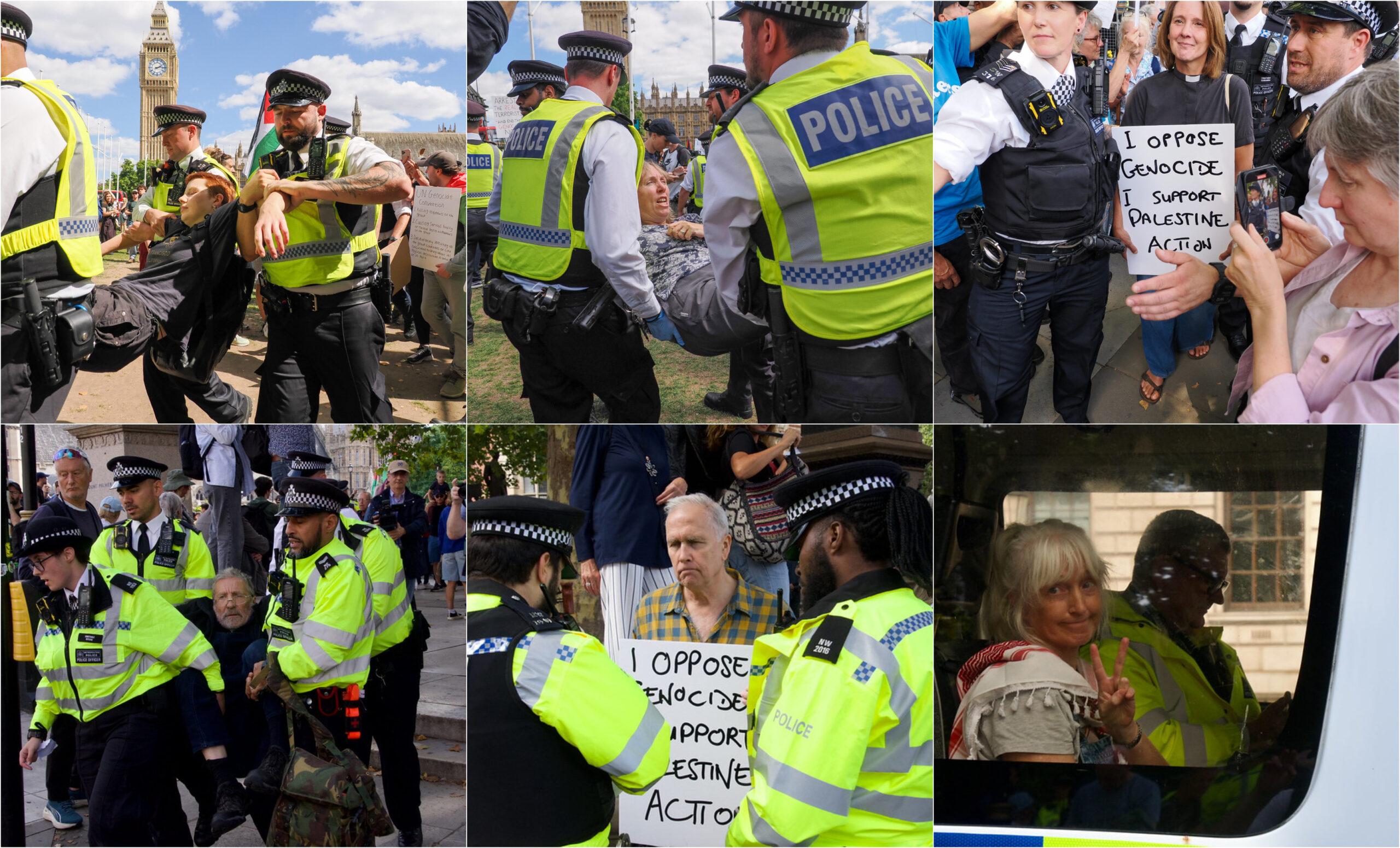
Feature photo: the Defend Our Juries / Palestine Action Protest in London on the 6th of September, 6, 2025. (Credit: Indigo Nolan/Flickr CC)