Elham Asaad Buaras
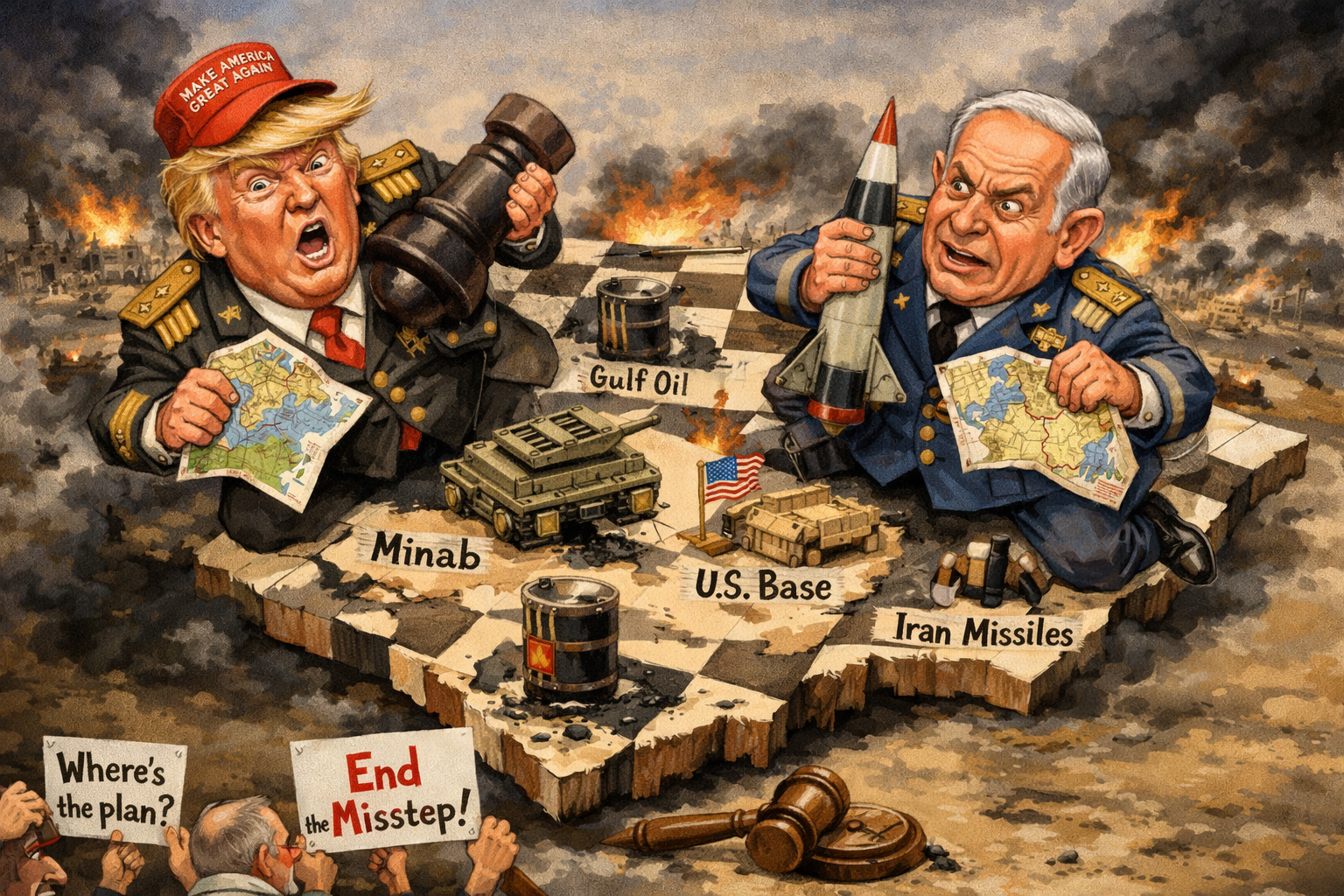
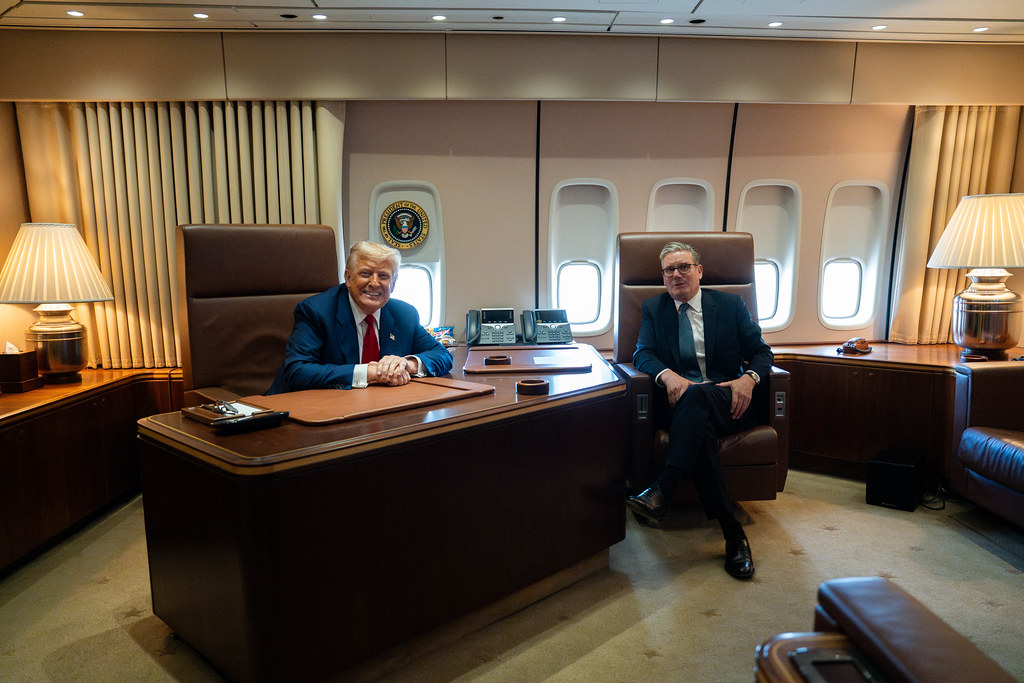
Public opposition to a war with Iran is surging on both sides of the Atlantic, with new polling revealing deep unease over the escalating conflict. Voters are increasingly sceptical of their leaders’ handling of the crisis—with Prime Minister Keir Starmer facing growing scrutiny in the UK and President Donald Trump confronting disapproval from the majority of Americans.
In the US, a series of surveys conducted in the first week of March paints a stark picture of public sentiment. A Reuters/Ipsos poll found that just 27% of Americans approve of the strikes on Iran, while 43% disapprove and 29% are unsure. A CNN poll conducted by SSRS recorded even stronger opposition, with 59% disapproving of the decision to take military action against Iran.
Trump’s overall job approval rating has slumped to around 43%, according to the RealClearPolitics average, with disapproval standing at approximately 55%. More concerning for the President, a Fox News survey found that 60% of Americans disapprove of his handling of foreign policy specifically.
The criticism runs deeper than simple disapproval of the strikes. A Reuters/Ipsos poll revealed that 56% of Americans (including 23% of Republicans) believe Trump is too willing to use military force to advance US interests. This perception of a president overly inclined toward “gunboat diplomacy” has resonance beyond his opponents: 87% of Democrats hold this view, along with 60% of independents.
Even within Trump’s own party, there are fissures. While 77% of Republican voters support the strikes, support drops to 54% among Republicans who do not identify with the MAGA movement. Crucially, 42% of Republicans say they “would reconsider their support” if the operation leads to significant US military casualties, a warning that carries weight given that six American service members were killed during the period of polling.
The economic consequences of the conflict are also causing concern. About 45% of Americans, including 34% of Republicans, say they would be less likely to support the military action if it leads to higher petrol or oil prices. With Brent crude futures rising 10% to around $80 per barrel following the strikes, this economic dimension threatens to erode support further.
Across the Atlantic, British polling from YouGov conducted in the same period shows a strikingly similar pattern. By a margin of 49% to 28%, Britons oppose the US-led strikes on Iran. Support is concentrated among right-leaning voters: 58% of Reform UK supporters and 49% of Conservatives back the military action. Labour, Liberal Democrat and Green voters are broadly opposed, with 63–70% rejecting the conflict.

A follow-up YouGov survey conducted a week later suggested opposition had hardened further. By March 9, 59% of Britons said they opposed the conflict, while support remained relatively stable at around 25%, indicating that public scepticism toward the war had grown in the days following the initial strikes.
The transatlantic convergence extends beyond general support for the strikes. In both countries, public opinion reflects caution about the ultimate objectives of the conflict. In the US, 44% of adults view Iran as a major threat to national security, while 40% see it as a minor threat and 15% as no threat at all. In Britain, only 37% of respondents believe the attacks are likely to produce regime change in Tehran, while 32% see it as unlikely and 31% say they do not know, highlighting deep uncertainty over the war’s purpose.
That uncertainty extends to the rationale for the war itself. A YouGov survey conducted on March 10–11 found that 61% of Britons say the United States’ reasons for attacking Iran are unclear, including 34% who describe them as “very unclear”. Just 27% believe the justification has been clearly explained, with only 8% saying it is “very clear”.
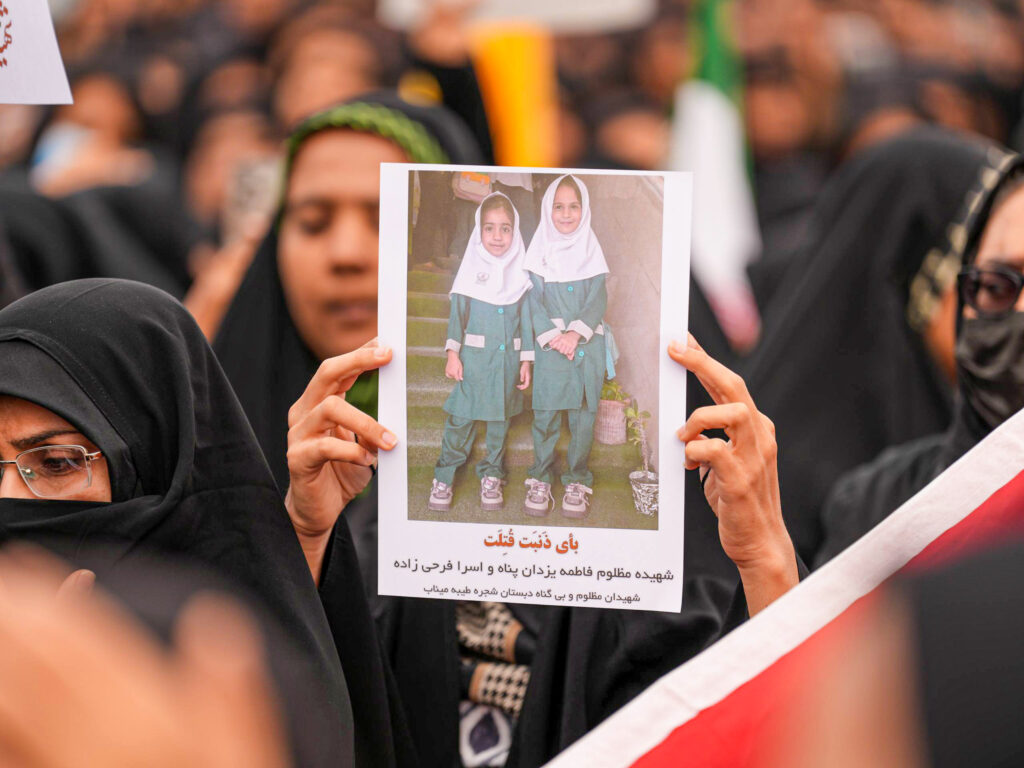
Humanitarian concerns further complicate public attitudes. In the US, recent airstrikes targeting Iranian military and government sites have reportedly killed more than 1,000 civilians, including approximately 175 schoolgirls and staff at a girls’ school, with preliminary investigations suggesting US involvement. Similarly, British opposition to the strikes is reinforced by unease over the UK’s direct participation. Polling from March 2 shows that 48% of Britons oppose Prime Minister Starmer’s decision to allow the US to use RAF bases for attacks on Iranian missile sites, compared with 32% in favour and 18% unsure.
Alongside this caution, both publics favour restraint. In Britain, a plurality of 45% believe the government should neither praise nor condemn the US strikes, while only 21% advocate condemnation and 12% favour praise. In the US, criticism of Trump’s handling mirrors this sentiment, with more than half of adults disapproving of his management of the conflict despite the administration’s insistence that military action is necessary.
Economic anxieties are also evident in Britain. A YouGov survey on March 9 found that 74% of Britons expect the conflict to negatively affect their household finances, including 35% who anticipate a “very negative” impact, reflecting concerns that rising oil prices could push up inflation and the cost of living.
Starmer’s ratings slide on crisis management
The conflict has also taken a significant toll on leaders’ domestic ratings. In Britain, detailed polling from March 4–5 shows growing scepticism about Starmer’s crisis management. Across Great Britain, 52% say he is handling the UK-US relationship badly (30% very badly, 22% fairly badly), compared with just 32% who say he is doing well (6% very well, 26% fairly well). A further 17% are unsure.
Opinion in Scotland closely mirrors the national picture: 52% disapprove of his handling of the relationship with Trump (29% very badly, 23% fairly badly), while 34% approve (7% very well, 27% fairly well). The “don’t know” response in Scotland is slightly lower than the GB average at 15%, suggesting Scottish voters are somewhat more decided in their views.
Partisan divisions in the UK are pronounced. Reform UK voters are overwhelmingly critical of Starmer, with a combined 86% saying he is managing the US relationship poorly (67% very badly, 19% fairly badly). Conservative voters follow closely, with 70% saying badly (43% very badly, 27% fairly badly). In stark contrast, Labour voters are the only major group where a majority approve, with a combined 53% saying Starmer is doing well (12% very well, 41% fairly well). Liberal Democrat voters are evenly split, with 48% saying well and 36% saying badly.
Age and regional factors further shape opinion. Older Britons are far more critical than younger ones. Among those aged 65 and over, a combined 63% say Starmer is doing badly (41% very badly), compared with just 35% of 18–24-year-olds (15% very badly). Regionally, criticism is highest in the Midlands (57% badly) and lowest in London (36% badly), reflecting the capital’s more favourable view of the Prime Minister.
Starmer’s broader management of the US-Iran conflict also draws scepticism. Across Great Britain, 47% believe he is handling the crisis badly (27% very badly, 20% fairly badly), compared with 34% who approve (7% very well, 27% fairly well). Nearly one in five (19%) are unsure.
In Scotland, opinion is slightly more critical than the GB average: 45% say Starmer is doing badly (25% very badly, 20% fairly badly), while 35% say he is doing well (8% very well, 27% fairly well). Notably, Scotland has a higher proportion of “don’t know” responses at 21%, compared with 19% nationally, indicating slightly more uncertainty among Scottish voters.
Public favours restraint in military posture
Despite political divisions, there is a clear consensus on military posture. Both Brits and Americans favour restraint and a defensive approach. In the UK, 46% of adults say the military should be “purely defensive”, tasked with shooting down drones and defending civilian areas and UK military facilities. A further 26% say the role should be “retaliatory only”—confined to attacking military targets that have launched attacks on civilians or British assets. Just 8% of the public supports the UK becoming an active party to the conflict by “actively joining the US and Israel in launching attacks on a wide range of targets in Iran”. One in five (20%) are unsure.
Scottish opinion closely aligns: 45% support a purely defensive stance, 26% a retaliatory-only role, and 7% back full engagement. The “don’t know” response in Scotland is notably higher at 22%, compared with 20% nationally, suggesting Scottish voters are slightly more uncertain about the appropriate military stance.
In the US, while polling focuses more on support for action, the significant majority opposing strikes suggests a similar preference for cautious engagement, with Americans broadly rejecting offensive involvement.
Party differences within Britain highlight the nuances. Labour, Liberal Democrat and Green voters are the strongest advocates of a purely defensive posture, with 59%, 61% and 59% respectively supporting this option. Conservative voters are evenly split between the purely defensive option (37%) and the retaliatory-only option (37%), with 15% supporting active engagement. Reform UK voters are the only group where a “retaliatory” posture is the most preferred choice, with 35% supporting this option. However, a combined 63% of Reform voters still favour either purely defensive (28%) or retaliatory-only (35%) roles over active engagement (24%).
Age and regional factors also influence preferences. Younger voters in Britain are particularly cautious, with only 2% of 18–24-year-olds supporting offensive involvement, compared with 11% of those aged 65 and over. Among those aged 65 and over, 48% support a purely defensive posture, while 11% support active engagement.
Support for a defensive posture is broadly consistent across regions. Regionally, support for a purely defensive role is highest in the Midlands (48%), London (49%) and the Rest of the South (45%), and lowest in Wales (42%)—though even there it remains the most popular option. Wales also exhibits the highest level of uncertainty at 28% “don’t know”. Scotland’s 45% support for the defensive posture places it in the middle of the regional range, closely aligned with the national average.
A public wary of entanglement
The polling paints a clear picture of transatlantic public sentiment. While partisan, age and regional differences remain, both Americans and Britons are broadly opposed to the war in Iran, sceptical about its objectives, and deeply concerned about humanitarian and economic consequences. In the UK, this opposition is coupled with growing scrutiny of Prime Minister Starmer’s leadership and the government’s decisions, particularly regarding the use of British bases and the management of the UK-US relationship. In the US, President Trump faces disapproval from a majority of Americans who question his reliance on military force and worry about the conflict’s impact on the economy and on American lives.
With deep partisan divides on nearly every question and significant uncertainty about the conflict’s objectives, both leaders face the challenge of navigating a crisis that has united their publics in little except their desire for restraint. Scottish opinion, while broadly aligned with GB-wide sentiment, shows slightly more uncertainty on military posture and a marginally more critical view of the Prime Minister’s handling of the Middle East crisis.
Across both countries, the strongest shared instinct is restraint, reflecting a public wary of becoming further entangled in a widening Middle Eastern conflict that, polling suggests, few believe will achieve its stated aims.
Feature photos: In Minab, Iran, grief follows the February 28 US airstrikes on a girls’ primary school. By March 3, graves were dug for the students killed. During the burial, a mother carries a photo of her two daughters, both lost in the attack. The school was hit twice, 40 minutes apart—the second strike maximising casualties among rescuers and bystanders. In all, 160 schoolgirls and teachers were killed. (Credit: Stringer/AA)